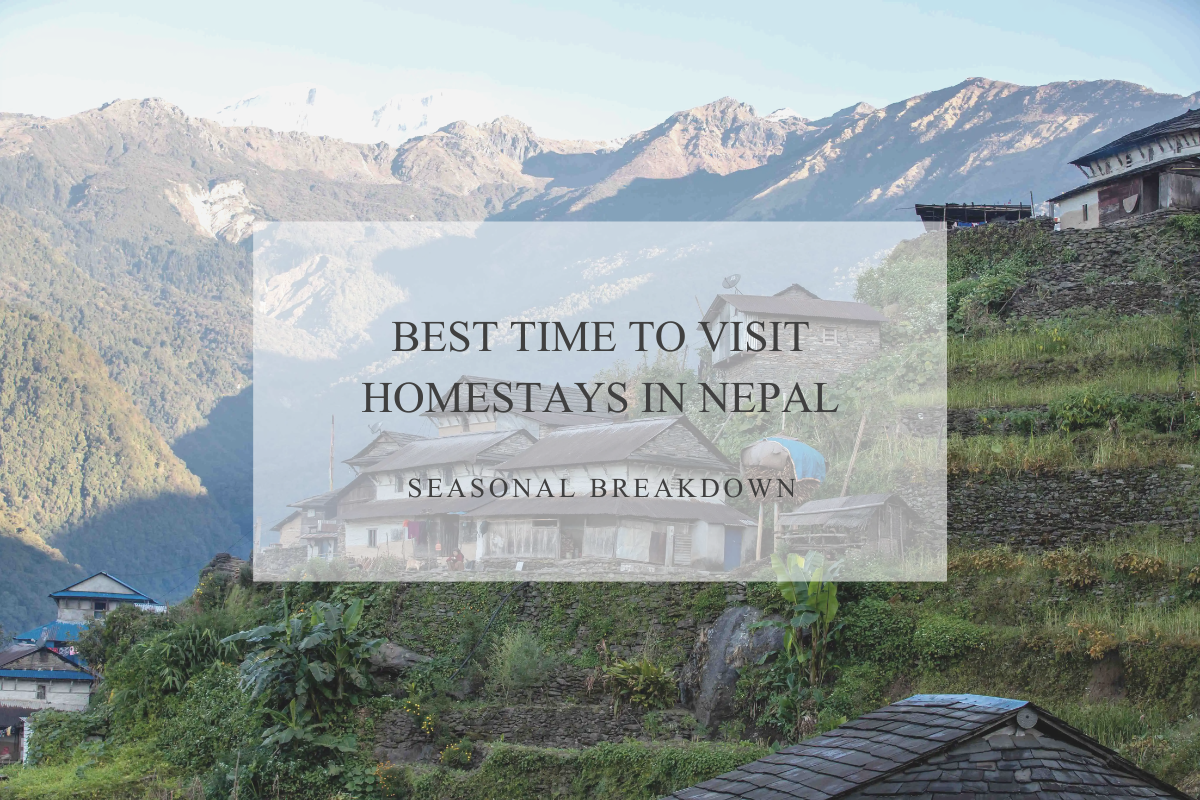
यदि तपाईं नेपालमा होमस्टे भ्रमण गर्ने उत्तम समयको बारेमा सोचिरहनुभएको छ भने, यो गाइड तपाईंको लागि हो। एउटामा बस्नु नेपालमा होमस्टे स्थानीय जीवनको अनुभव गर्ने उत्तम तरिकाहरू मध्ये एक हो, विशेष गरी जब यसलाई इको ट्रेक र नेपालका सामुदायिक होमस्टेहरू जिम्मेवार र अर्थपूर्ण यात्रालाई बढावा दिन्छ। नेपालमा चार मुख्य ऋतुहरू छन्, र प्रत्येकले फरक अनुभव प्रदान गर्दछ।
यो गाइडले प्रत्येक ऋतु कस्तो हुन्छ, के अपेक्षा गर्ने, र तपाईंको लागि कुन समय उत्तम छ भनेर बताउँछ।
वसन्त ऋतु (मार्च देखि मे): सबैभन्दा रंगीन मौसम
वसन्त ऋतु नेपालमा होमस्टे भ्रमण गर्ने उत्तम समयहरू मध्ये एक हो। मौसम न्यानो हुन्छ, आकाश सफा हुन्छ, र पहाडहरू फुल्ने लालीगुराँसले ढाकिएका हुन्छन्। दिनहरू हिँड्नका लागि सहज हुन्छन्, र साँझहरू चिसो हुन्छन्।
के अपेक्षा गर्ने:
रंगीन फूलहरू र हरियाली परिदृश्य
आरामदायक तापक्रम (लगभग १५°C देखि २५°C)
पहाडी र हिमाली क्षेत्रहरूमा होमस्टेका लागि उत्तम समय
वसन्त ऋतुमा होमस्टेका लागि उत्तम स्थानहरू:
अन्नपूर्ण क्षेत्र, गोर्खा र लमजुङका गाउँहरू वसन्त ऋतुमा विशेष गरी सुन्दर हुन्छन्, र यी मार्गहरू नेपालमा ट्रेकिङ र होमस्टेका लागि पनि लोकप्रिय छन् जहाँ तपाईं पहाडहरू अन्वेषण गर्दा स्थानीय परिवारहरूसँग बस्न सक्नुहुन्छ।
के प्याक गर्ने:
हल्का सुती कपडा र साँझका लागि न्यानो ज्याकेट
हल्का हाइकिङ जुत्ता
पुनः प्रयोग गर्न मिल्ने पानीको बोतल र घामका लागि टोपी
वसन्त ऋतुमा किन भ्रमण गर्ने:
वसन्त ऋतुमा मौसम उत्तम र प्रकृति जीवन्त हुन्छ। यो चाडपर्वको मौसम पनि हो, जसमा होली र बिस्केट जात्रा जस्ता कार्यक्रमहरू हुन्छन्, त्यसैले तपाईं ग्रामीण इलाकाको आनन्द लिँदै स्थानीय उत्सवहरू अनुभव गर्न सक्नुहुन्छ।
गर्मी र मनसुन (जुन देखि सेप्टेम्बर): हरियाली र वर्षा
मनसुनको मौसमले वर्षा र आर्द्रता ल्याउँछ, तर यसले नेपाललाई रंग र जीवनले पनि भर्छ। धान खेतहरू चम्किलो हरियो हुन्छन्, नदीहरू तीव्र रूपमा बग्छन्, र वर्षा पछि सबै कुरा ताजा देखिन्छ।
के अपेक्षा गर्ने:
धेरैजसो दिउँसो र साँझमा वर्षा
आर्द्र मौसम र हिलो सडकहरू
कम पर्यटक र कम मूल्यहरू
होमस्टेका लागि उत्तम स्थानहरू:
कम वर्षा हुने क्षेत्रहरू, जस्तै मुस्ताङ वा माथिल्लो मनाङ छान्नुहोस्। यदि तपाईं न्यानो र आर्द्र मौसमसँग सहज हुनुहुन्छ भने तराई क्षेत्र पनि सांस्कृतिक अनुभवका लागि रोचक हुन सक्छ।
के प्याक गर्ने:
रेन ज्याकेट वा पोन्चो
छिटो सुक्ने कपडा र वाटरप्रूफ जुत्ता
कीटनाशक
पावर बैंक र टर्चलाइट वा हेडल्याम्प
मनसुनमा किन भ्रमण गर्ने:
यदि तपाईं शान्त र शान्तिपूर्ण यात्राको आनन्द लिनुहुन्छ भने, यो मौसम अद्भुत छ। तपाईं घरभित्र आरामदायी दिनहरू बिताउन सक्नुहुन्छ, स्थानीय परिकारहरू सिक्न सक्नुहुन्छ, र हरियाली पहाडहरूमाथि वर्षा हेर्न सक्नुहुन्छ।
शरद ऋतु (सेप्टेम्बर देखि नोभेम्बर): सबैभन्दा उत्तम समग्र मौसम
शरद ऋतु नेपाल भ्रमण गर्ने सबैभन्दा लोकप्रिय समय हो। मौसम सफा हुन्छ, हावा ताजा महसुस हुन्छ, र हिमालका दृश्यहरू मनमोहक हुन्छन्। यो बाली काट्ने मौसम पनि हो, त्यसैले तपाईं स्थानीय परिवारहरूसँग बाली काट्ने काममा सामेल हुन सक्नुहुन्छ र ताजा, घरमा उब्जाएको खानाको आनन्द लिन सक्नुहुन्छ।
के अपेक्षा गर्ने:
सफा आकाश र उत्कृष्ट दृश्यता
मध्यम तापक्रम र सुख्खा हिँड्ने बाटोहरू
दशैं र तिहार जस्ता ठूला चाडपर्वहरू
होमस्टेका लागि उत्तम स्थानहरू:
नेपालभरका होमस्टेहरू शरद ऋतुमा मनमोहक हुन्छन्। कास्की, इलाम, दोलखा र सोलुखुम्बु जस्ता क्षेत्रहरू उत्कृष्ट विकल्प हुन्, र प्रामाणिक सांस्कृतिक बसाइ खोज्ने यात्रुहरूले नेपालमा उत्तम होमस्टे कसरी बुक गर्ने सही मिल्दो खोज्न सक्छन्।
यो होमस्टेलाई छोटो ट्रेकसँग जोड्नको लागि पनि उत्तम समय हो।
के प्याक गर्ने:
आरामदायक ट्रेकिङ कपडा
साँझका लागि हल्का स्वेटर वा ज्याकेट
पुनः प्रयोग गर्न मिल्ने पानीको बोतल र सनस्क्रिन
हल्का हाइकिङ जुत्ता
शरद ऋतुमा किन भ्रमण गर्ने:
यस मौसममा तपाईंले चाहेको सबै कुरा पाइन्छ: सफा मौसम, सुन्दर दृश्य, र सांस्कृतिक उत्सवहरू। यो दुर्गम गाउँहरूमा पनि यात्रा गर्न सबैभन्दा सजिलो समय हो।
जाडो (डिसेम्बर देखि फेब्रुअरी): चिसो तर शान्त
नेपालमा जाडो चिसो हुन्छ, विशेष गरी हिमालमा, तर यो शान्त र आरामदायी पनि हुन्छ। दिनहरू घमाइलो र चिसो हुन्छन्, जबकि रातहरू चिसो हुन सक्छन्। यदि तपाईं शान्ति र कम भीड मन पराउनुहुन्छ भने, जाडोमा होमस्टे राम्रो विकल्प हो।
के अपेक्षा गर्ने:
सफा आकाश र शान्त मौसम
चिसो बिहान र रातहरू
छोटो दिनको उज्यालो
होमस्टेका लागि उत्तम स्थानहरू:
चितवन, नुवाकोट र तराई जस्ता तल्लो क्षेत्रहरू जाडोमा रमाइलो हुन्छन्। मुस्ताङ र डोल्पा जस्ता उच्च क्षेत्रहरू धेरै चिसो हुन सक्छन्, त्यसैले यदि तपाईं राम्ररी तयार हुनुहुन्छ भने मात्र त्यहाँ जानुहोस्।
के प्याक गर्ने:
न्यानो ज्याकेट, पन्जा, र ऊनी मोजा
सुत्नका लागि थर्मल कपडा
टर्चलाइट वा हेडल्याम्प
पावर बैंक र अतिरिक्त ब्याट्रीहरू
जाडोमा किन भ्रमण गर्ने:
यदि तपाईं शान्त यात्राको आनन्द लिनुहुन्छ भने, यो अद्भुत मौसम हो। तपाईं न्यानो भान्साको आगोको छेउमा बसेर चिया पिउन सक्नुहुन्छ, र आफ्ना होस्टहरूबाट कथाहरू सुन्न सक्नुहुन्छ। यो शान्त, सरल र धेरै वास्तविक महसुस हुन्छ।
मौसमी सारांश: तपाईंको लागि सही समय छनौट गर्दै
हरेक ऋतुका लागि सुझावहरू
प्लास्टिकका बोतलहरू किन्नबाट बच्न पुनः प्रयोग गर्न मिल्ने पानीको बोतल बोक्नुहोस्।
विद्युत कटौतीको समयमा चार्ज गर्नका लागि पावर बैंक बोक्नुहोस्।
ग्रामीण क्षेत्रका लागि टर्चलाइट वा हेडल्याम्प प्याक गर्नुहोस्।
स्थानीय परिवारहरूसँग बस्दा शालीन पोशाक लगाउनुहोस्।
केही नेपाली शब्दहरू जस्तै “नमस्ते” र “धन्यवाद” सिक्नुहोस्। स्थानीयहरूले सधैं यसको कदर गर्छन्।
नेपालमा होमस्टे भ्रमण गर्ने उत्तम समयबारे अन्तिम विचारहरू
नेपालमा हरेक ऋतुको आफ्नै आकर्षण छ। यदि तपाईं सफा आकाश, आरामदायक मौसम, र चाडपर्वहरू चाहनुहुन्छ भने वसन्त र शरद ऋतु उत्तम हुन्छन्। मनसुनले हरियाली पहाडहरू र शान्त दिनहरू ल्याउँछ, जबकि जाडोले शान्त क्षणहरू र न्यानो आगोको छेउमा साँझहरू प्रदान गर्दछ।
तपाईं जुनसुकै बेला जानुहोस्, होमस्टेको वास्तविक सुन्दरता तपाईंले भेट्ने मानिसहरूमा हुन्छ। खुला, दयालु र जिज्ञासु हुनुहोस्। आफ्ना होस्टहरूबाट सिक्नुहोस्, आफ्ना कथाहरू साझा गर्नुहोस्, र गाउँले जीवनको सरल तालको आनन्द लिनुहोस्। यसैले नेपालमा तपाईंको बसाइलाई साँच्चै विशेष बनाउँछ।
नेपालमा रमाइलो होमस्टेमा बस्ने योजना बनाउँदै हुनुहुन्छ भने, आफ्नो बसाइ नेपाल होमस्टेज
बारम्बार सोधिने प्रश्नहरू
१. नेपालमा होमस्टेमा कति समय बस्नुपर्छ?
धेरैजसो यात्रुहरू स्थानीय जीवनको आनन्द लिन र आफ्ना होस्टहरूसँग वास्तविक सम्बन्ध बनाउन २ देखि ४ रात होमस्टेमा बस्छन्। यदि तपाईं ट्रेकिङ मार्ग वा सांस्कृतिक यात्रामा हुनुहुन्छ भने, लामो समय बस्दा तपाईंलाई गाउँले जीवनको ताललाई अझ गहिरो रूपमा अनुभव गर्न मद्दत गर्छ।
२. नेपालमा होमस्टेहरू अन्तर्राष्ट्रिय यात्रुहरूका लागि सुरक्षित छन्?
हो, नेपालका धेरैजसो होमस्टेहरू समुदायद्वारा व्यवस्थित र सरकारद्वारा दर्ता गरिएका छन्, जसले तिनीहरूलाई सुरक्षित र स्वागतयोग्य बनाउँछ। होस्टहरू मिलनसार हुन्छन् र विदेशी पाहुनाहरूसँग घुलमिल हुन्छन्। समीक्षा पढ्नु र तपाईंले विश्वास गर्ने कसैसँग आफ्नो यात्रा योजनाहरू साझा गर्नु अझै राम्रो हुन्छ।
३. होमस्टेमा बस्दा म कस्ता गतिविधिहरू गर्न सक्छु?
होमस्टेहरूले नेपाली खाना पकाउने, खेती गर्ने, स्थानीय चाडपर्वहरूमा भाग लिने, वा परम्परागत शिल्पहरू सिक्ने जस्ता व्यावहारिक अनुभवहरू प्रदान गर्छन्। तपाईं छोटो पदयात्रामा पनि सामेल हुन सक्नुहुन्छ, नजिकका विद्यालयहरू भ्रमण गर्न सक्नुहुन्छ, वा केवल आराम गरेर आफ्नो होस्ट परिवारसँग कुरा गर्न सक्नुहुन्छ।
४. म होमस्टे अनलाइन बुक गर्न सक्छु वा मलाई स्थानीय सम्पर्कहरू चाहिन्छ?
धेरै होमस्टेहरू अब सामुदायिक पर्यटन वेबसाइटहरू जस्तै नेपाल होमस्टेज प्लेटफर्म वा स्थानीय यात्रा प्लेटफर्महरू मार्फत अनलाइन बुक गर्न सकिन्छ।
५. नेपालमा प्रामाणिक होमस्टे अनुभवका लागि उत्तम क्षेत्रहरू कुन हुन्?
सांस्कृतिक होमस्टेका लागि केही उत्तम क्षेत्रहरूमा गोर्खा, लमजुङ, कास्की, इलाम र दोलखा पर्छन्। यी क्षेत्रहरूले न्यानो आतिथ्य, स्थानीय चाडपर्वहरू, र मनमोहक प्राकृतिक दृश्यहरू प्रदान गर्छन्, जुन संस्कृति र प्रकृति दुवै चाहने यात्रुहरूका लागि उपयुक्त छन्।
Company Admin
नेपालका सुन्दर होमस्टेहरूबारे सच्चा कथा र अनुभव साझा गर्ने यात्रा लेखक।