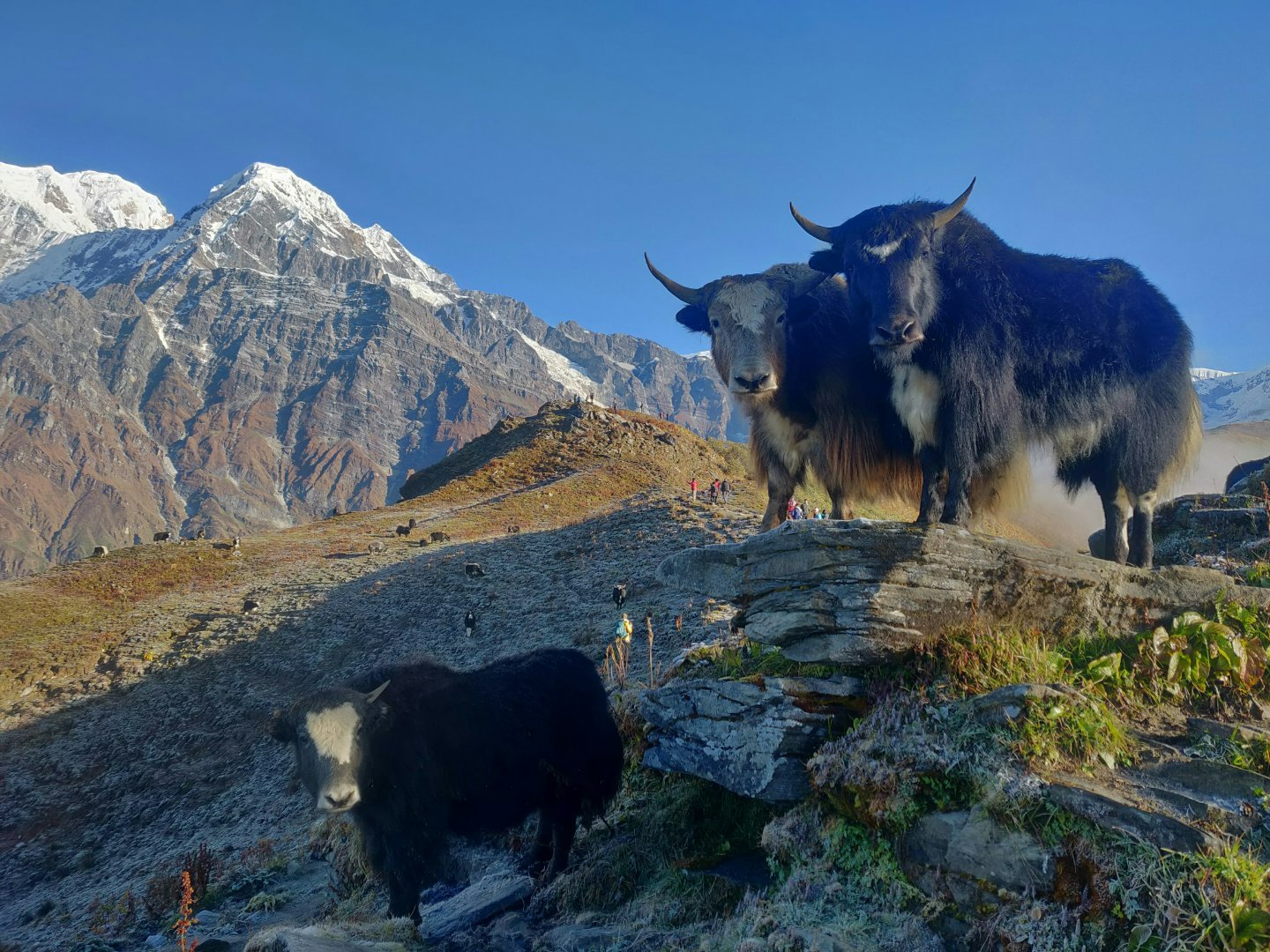
Mustang is Nepal's most otherworldly region: red cliffs, desert plateaus, ancient monasteries, and Tibetan culture that has been intact for centuries. This guide covers homestays in Jomsom, Kagbeni, and Marpha, permits, prices, and how to get there from Pokhara.
The flight from Pokhara to Jomsom takes 20 minutes. In that time the landscape below changes completely. The green Pokhara valley disappears and the Kali Gandaki gorge opens up below you, the deepest river gorge in the world, with the Dhaulagiri and Annapurna ranges on either side. You land on a dirt airstrip at 2,743 metres and step into a wind that comes down off the plateau like it has been travelling for days.
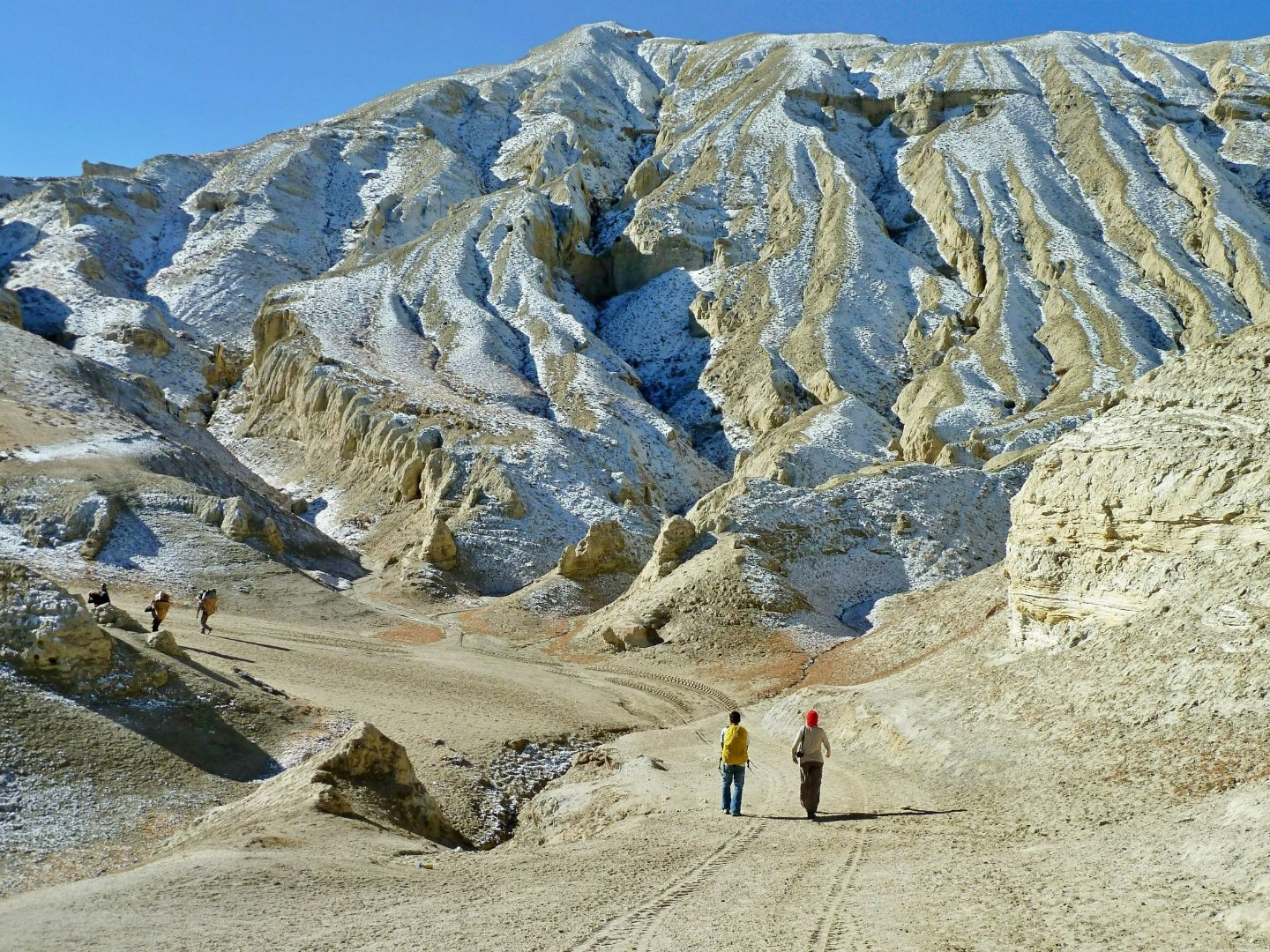
Mustang is unlike anywhere else in Nepal. The lower part of the region, covering Jomsom, Kagbeni, and Marpha, is open to all visitors with a standard ACAP permit. The upper part, north of Kagbeni toward the ancient walled city of Lo Manthang, requires a Restricted Area Permit. Both sections reward the journey in different ways. This guide focuses on where to stay, what permits you need, and what to expect in the villages that most visitors use as their base.
TL;DR
Lower Mustang (Jomsom, Kagbeni, Marpha) requires only the ACAP permit, NPR 3,000 for foreign visitors
Upper Mustang beyond Kagbeni requires a Restricted Area Permit at USD 50 per day plus a mandatory guide
Solo trekking in Upper Mustang is now allowed as of March 2026 but a licensed guide remains compulsory
Four verified homestay and guesthouse listings on Nepal Homestays cover Jomsom, Kagbeni, and Marpha
Best time is March to May and September to November
The Pokhara to Jomsom flight takes 20 minutes; book well in advance as seats fill quickly
Quick Overview: Mustang
Mustang: What Kind of Place Is This
Mustang sits in the rain shadow of the Annapurna range, which means the monsoon that soaks the rest of Nepal barely touches it. The landscape is dry, red, and austere in a way that looks more like the Tibetan plateau than the Nepal most visitors expect. Red and ochre cliffs rise above the Kali Gandaki valley. Mani walls run along the edges of villages. Prayer flags snap in a wind that blows south every afternoon with enough force to make walking uphill genuinely difficult by midday.
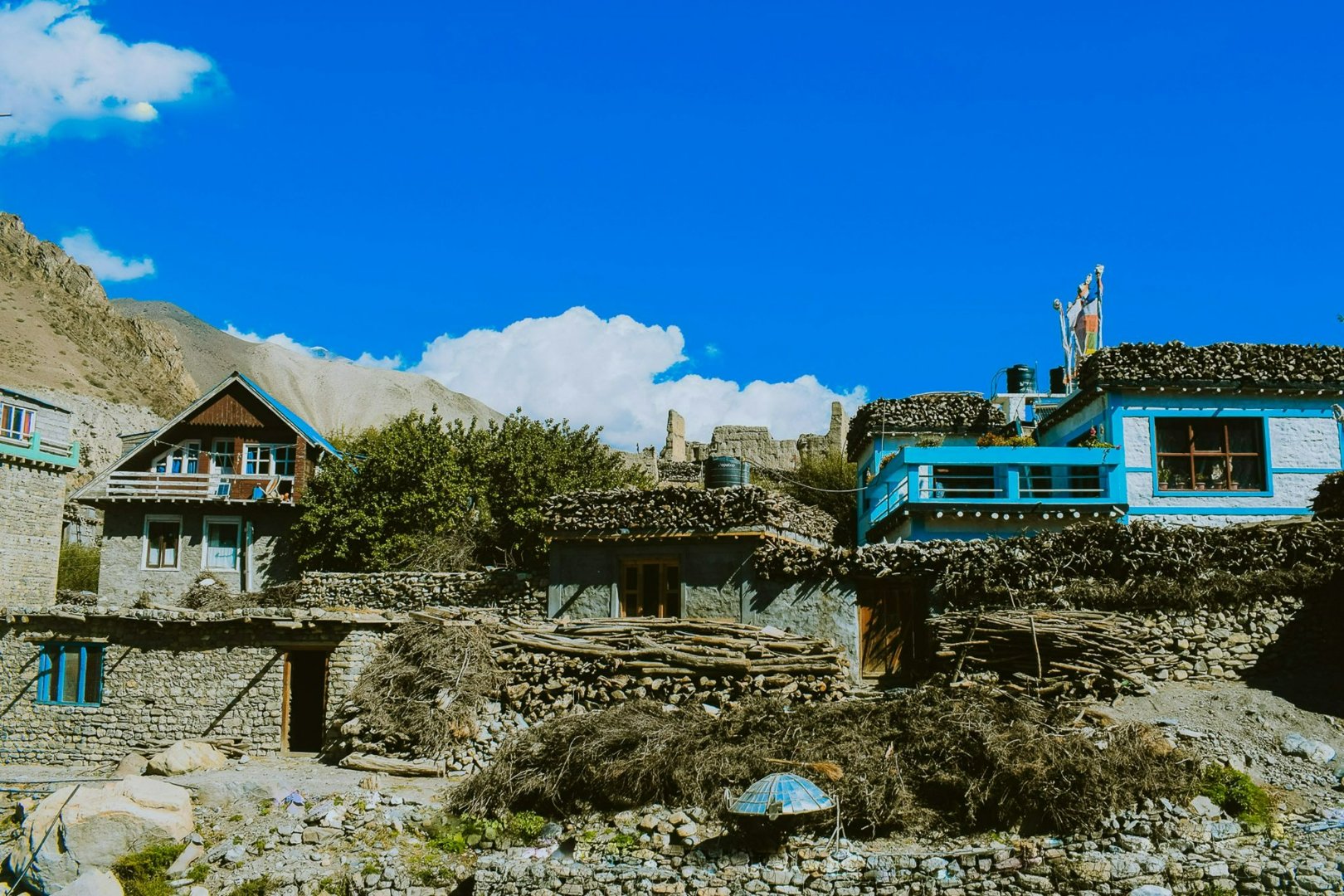
The Kingdom of Lo, which governed Upper Mustang for over 600 years, was one of the last independent Himalayan kingdoms before Nepal absorbed it in 2008. That history is visible in Lo Manthang's walled city, in the gompas along the trail, and in the Tibetan Buddhist culture that has remained largely intact because the region was closed to outsiders until 1992.
Lower Mustang, the section between Jomsom and Kagbeni, is accessible without the Restricted Area Permit and gives you the landscape and the culture without the additional cost. For most first-time visitors, this section alone is worth the journey. The Nepal Tourism Board has published guidelines for visiting the region responsibly, including rules around photography at religious sites and cultural etiquette in villages.
Villages Worth Knowing
Jomsom (2,743 metres)
The main hub. Jomsom has the airstrip, the government offices, the police checkpoint, and most of the trekking agency offices where you register your permits. It is not the most atmospheric village in Mustang but it is where you land and where most logistics happen. The afternoon wind in Jomsom is one of the strongest in Nepal. By 11 AM it picks up, by 1 PM it is difficult to walk against. Plan any outdoor activities for the morning.
Kagbeni (2,804 metres)
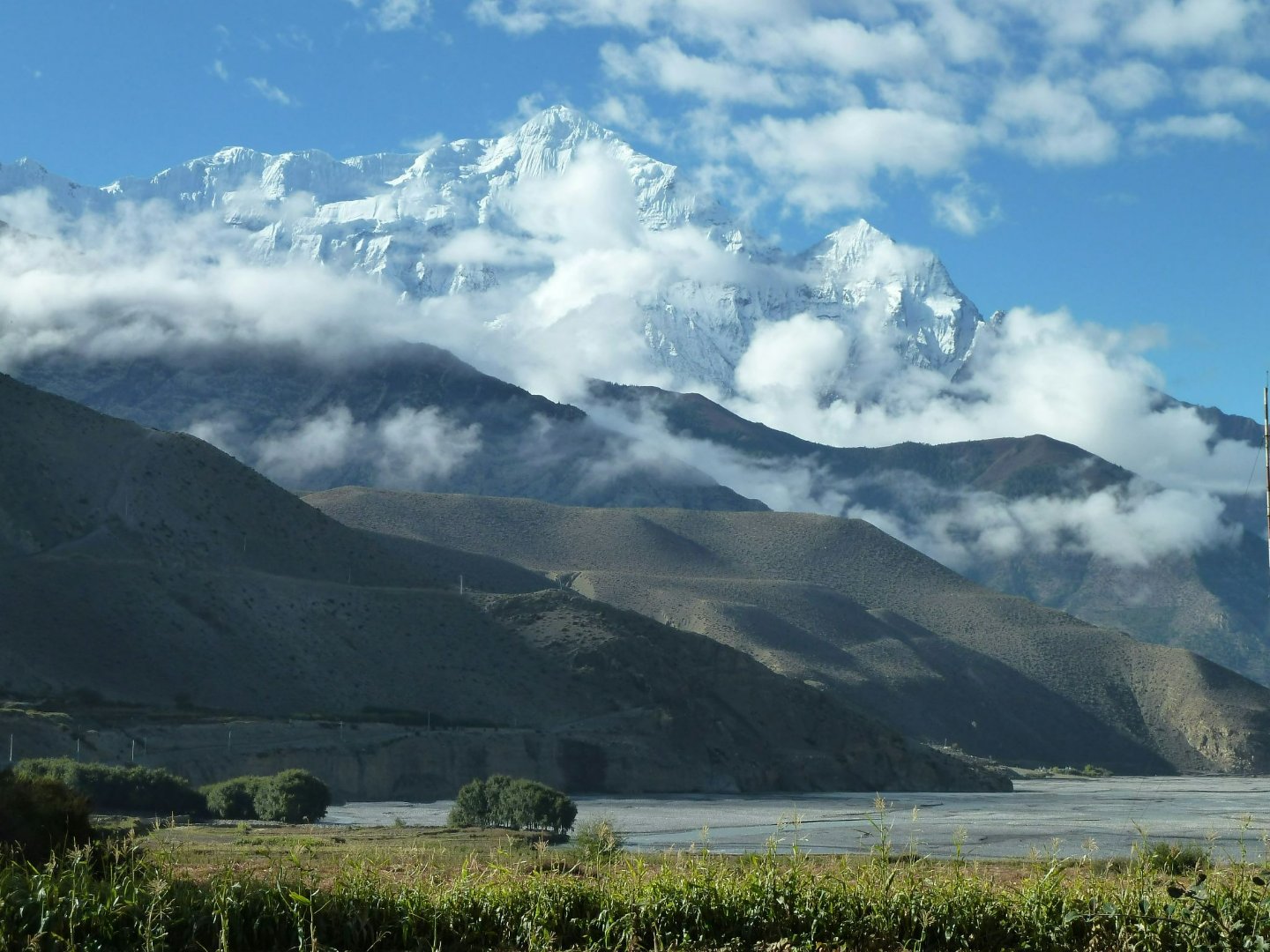
The gateway to Upper Mustang and the most visually striking village in Lower Mustang. Kagbeni sits at the confluence of the Kali Gandaki and Jhong Khola rivers, surrounded by red cliffs, with a medieval village layout of narrow lanes, whitewashed houses, and a central monastery that dates to the 15th century. The Kag Chode Thubten Samphel Ling Gompa dominates the village and is worth a slow visit. Kagbeni is where permits are checked before entry into Upper Mustang.
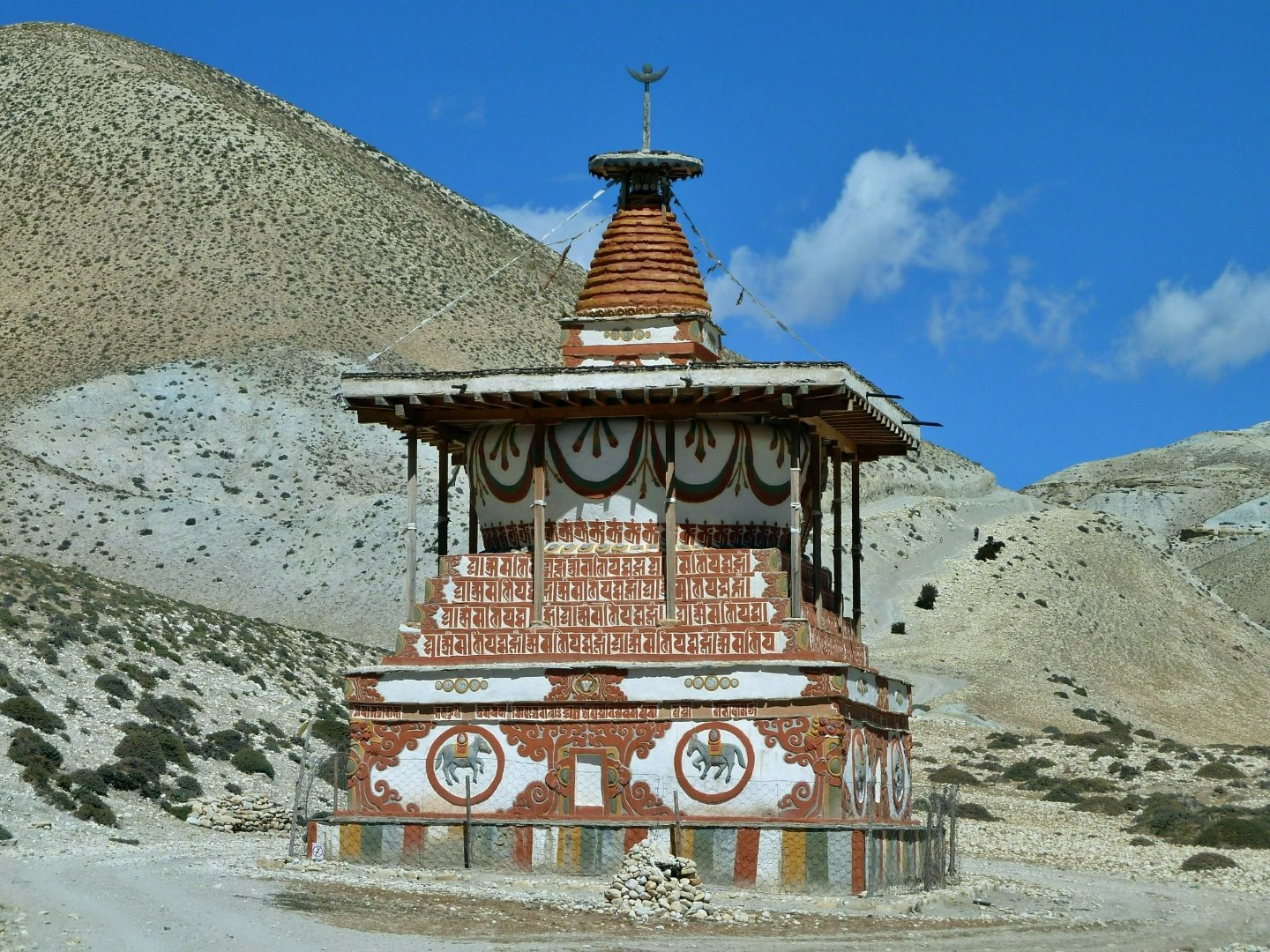
Marpha (2,665 metres)
The apple village. Every family shop on the main lane sells something made from the local orchards: brandy, jam, dried apple slices, apple tea. The village itself is one of the most pleasant in Lower Mustang for a slow afternoon: a single paved main street lined with whitewashed houses, a covered drainage channel running down the center, and views of Dhaulagiri to the west. Quieter than Jomsom and more atmospheric.
Muktinath (3,760 metres)
A major Hindu and Buddhist pilgrimage site at the head of the Mustang valley. The Muktinath Temple is sacred to both traditions and draws pilgrims from across Nepal and India. The eternal flame fed by natural gas seeping through rock is inside the temple. Worth the walk up from Kagbeni if you have an extra day, though the altitude gain from Kagbeni to Muktinath is significant and should be done gradually.
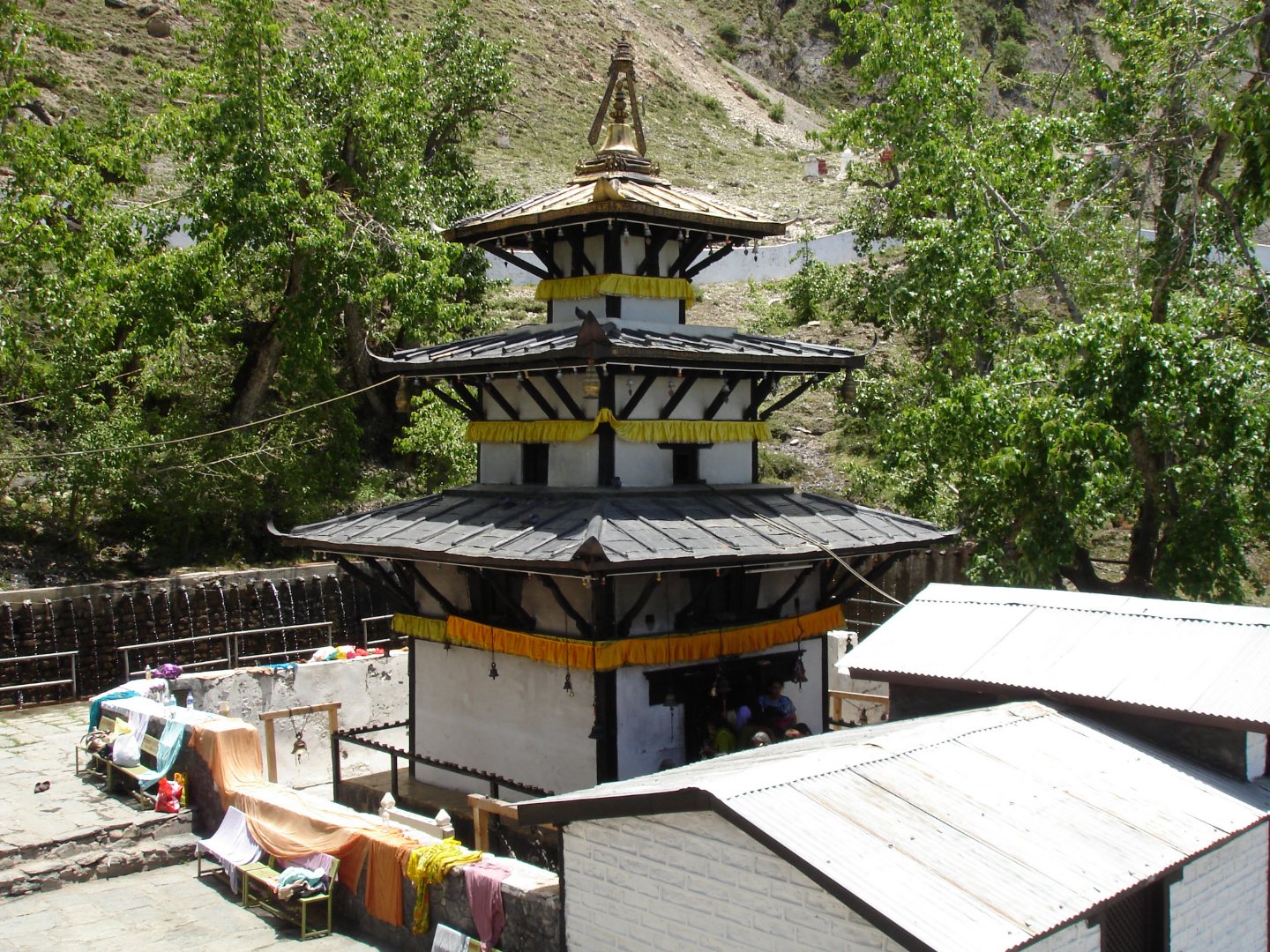
Places to Visit: Lower Mustang at a Glance
Permits: What You Need and What It Costs
Lower Mustang (Jomsom, Kagbeni, Marpha, Muktinath)
The Annapurna Conservation Area Permit (ACAP) is the only permit required. Cost is NPR 3,000 for foreign visitors, NPR 1,000 for SAARC nationals, and free for Nepali citizens. Buy it at the ACAP office in Pokhara or Beni before travelling. It is also available in Jomsom but buying it before you fly saves time.
Upper Mustang (Kagbeni to Lo Manthang)
Three permits are required:
Restricted Area Permit (RAP): USD 50 per day per person. As of late 2025 the old mandatory USD 500 flat fee for 10 days has been replaced by a daily rate, making shorter trips more affordable.
ACAP permit: NPR 3,000 (same as Lower Mustang)
TIMS card: USD 20
All three must be arranged through a registered Nepali trekking agency. You cannot apply independently. A licensed guide is compulsory for Upper Mustang regardless of group size. As of March 2026, solo trekking is permitted but the guide requirement remains.
The Best Homestays in Mustang
Browse the full list of verified Mustang stays on Nepal Homestays. Four properties covering the main Lower Mustang villages:
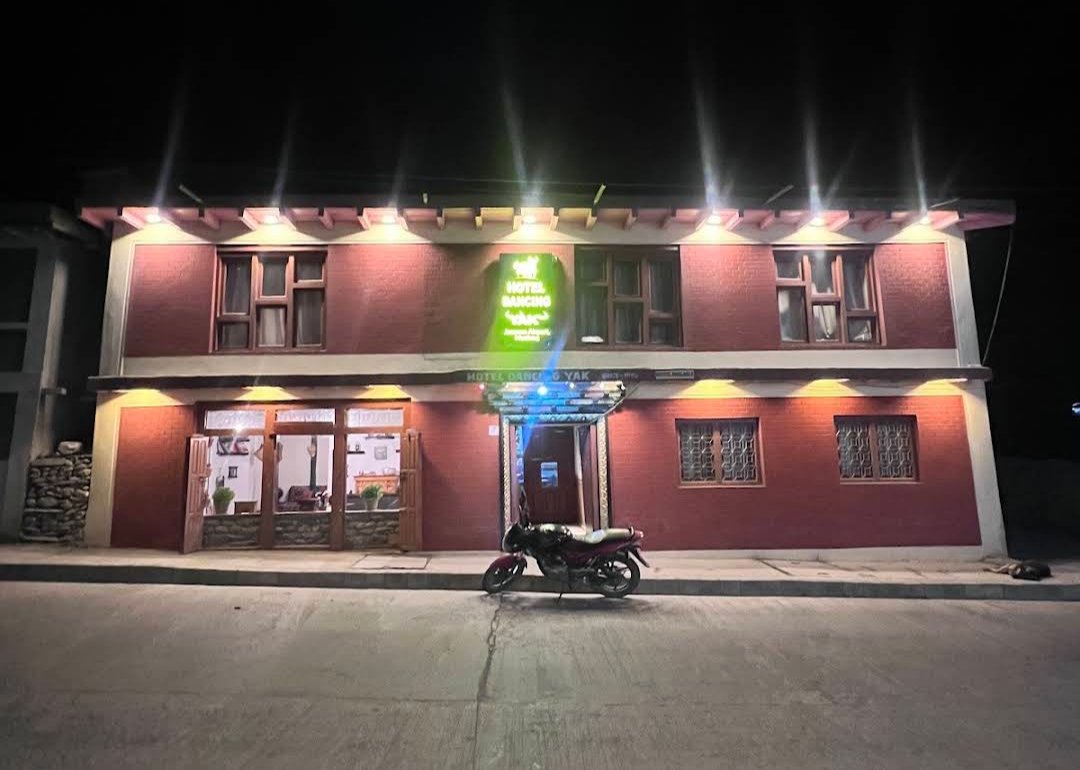
Hotel Dancing Yak (Jomsom)
Hotel Dancing Yak is in Jomsom town, the main hub for flights and logistics. Rooms include WiFi, parking, and geyser. The right base if you are arriving by flight and want to sort permits and onward plans the same day. Contact: 984-3535578.
Hotel Mustang Gateway (Kagbeni)
Hotel Mustang Gateway sits in Kagbeni, the most atmospheric village in Lower Mustang. Rooms include WiFi, parking, and geyser. Kagbeni is where you want to be if you are staying one or two nights in Lower Mustang without going further north. The red cliff backdrop and the medieval village lanes are here, not in Jomsom. Contact: 985-7650508.
Paradise Trekkers Homestay (Kagbeni)
Paradise Trekkers Homestay is also in Kagbeni with WiFi, parking, and geyser included. Homemade meals and local activity arrangements available. The right pick if you want a family-run feel rather than a hotel format. Contact: 9820748748.
Paradise Guest House (Marpha)
Paradise Guest House is in Marpha, the apple village south of Jomsom, with Himalayan views and fresh meals. Marpha is calmer than Jomsom and has more character. If the afternoon wind in Jomsom is too much, Marpha is worth the 5 km walk south. Contact: 984-2850833.
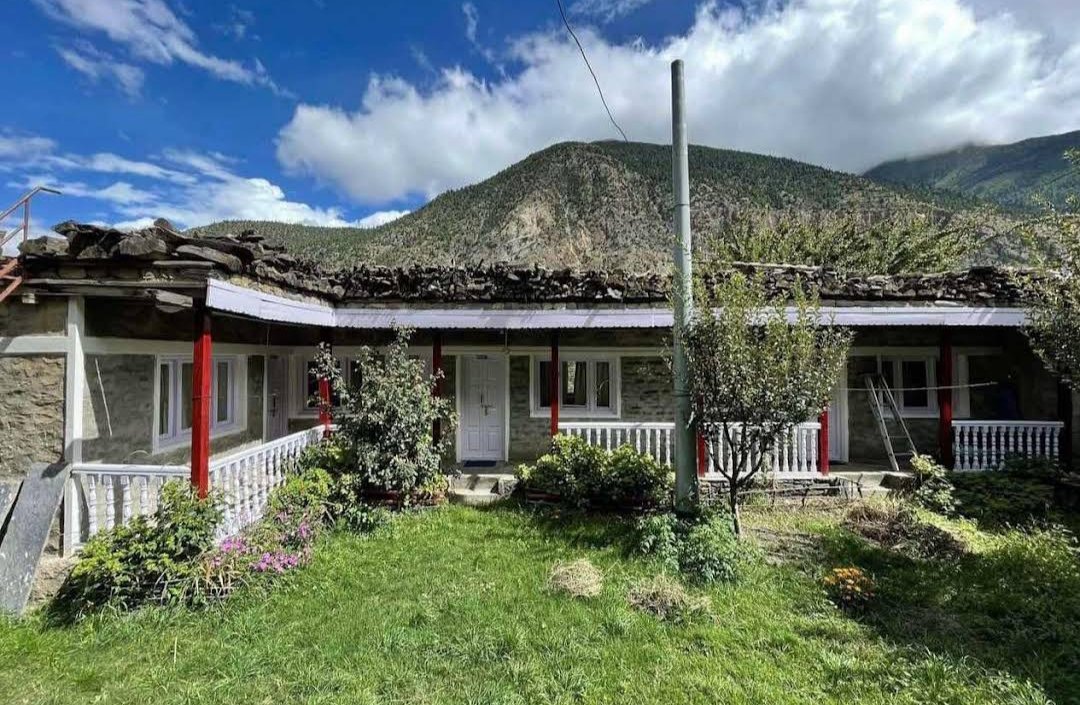
What to Expect at a Mustang Homestay
Mustang guesthouses and homestays are built for trekkers and pilgrims. Here is what to expect across most verified properties in Lower Mustang:
Rooms:
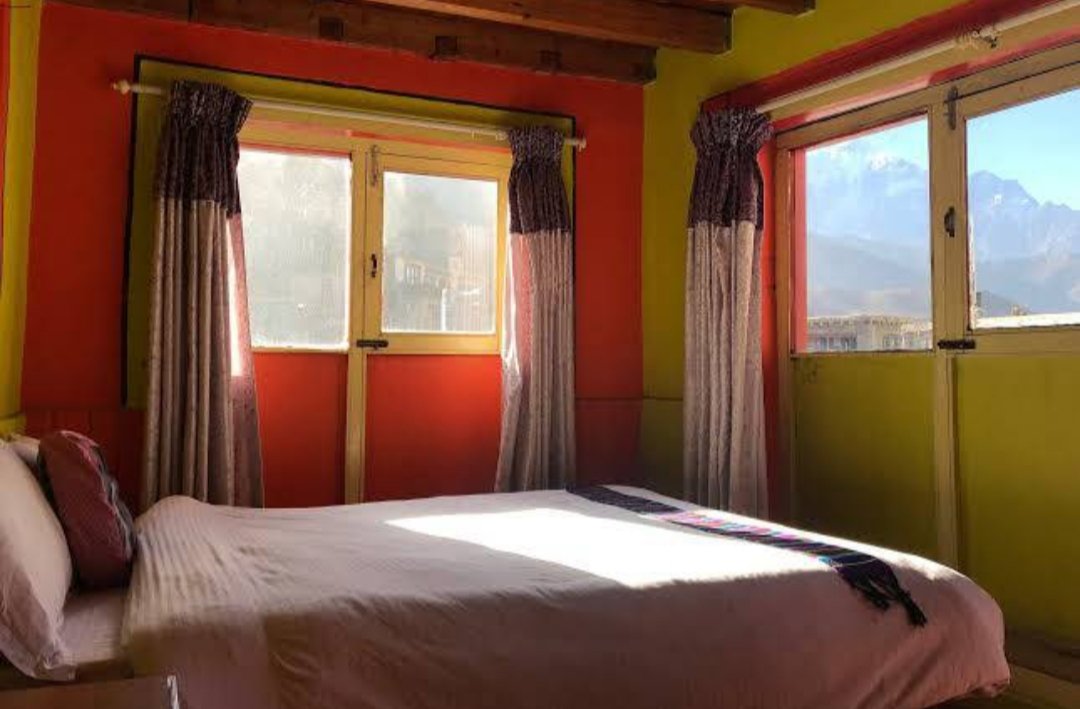
Stone walls, a single window facing the valley, thick blankets for cold nights
Most properties have geyser hot water and WiFi
Electricity is available in all main villages
At this altitude and in this wind, a warm room with a functioning hot shower matters more than it does anywhere else in Nepal
Food:
Nepali dal bhat is available everywhere
In Marpha, apple-based products appear at most meals. Breakfast typically includes apple jam with bread and apple tea
In Kagbeni and further north, thukpa (Tibetan noodle soup) and tsampa (roasted barley flour) are more common
Yak butter tea is available at most guesthouses and functions well at altitude, even if the taste takes some adjustment
The wind:
Morning is calm and the best time for all outdoor activity
By 11 AM the valley wind starts building
By early afternoon it is strong enough to blow dust into every crack and make outdoor photography difficult
Plan all walks, hikes, and sightseeing to finish before noon
For travelers coming from or going to Pokhara, the Sikles homestay guide covers the Gurung villages north of Pokhara that pair well as a first stop before heading up to Mustang.
How to Get to Mustang
By flight from Pokhara: The 20-minute flight from Pokhara to Jomsom is the fastest and most practical option. Tara Air and Summit Air operate the route. Cost is around NPR 10,000 to NPR 15,000 one way. Seats fill quickly in peak season. Book at least two weeks in advance for October and November travel. The flight is weather-dependent and cancellations are common in afternoon slots. Always book the earliest morning departure available.
By road from Pokhara: The Beni to Jomsom road through the Kali Gandaki gorge takes 8 to 10 hours by jeep. The road passes through Tatopani, Dana, and Ghasa before climbing into the Mustang valley. Scenic but long, with sections of rough road. A good option if you want to see the gorge from the inside and have flexibility on timing that flying does not give you.
Getting around Lower Mustang: Jomsom to Marpha is 5 km on foot or a short jeep ride. Jomsom to Kagbeni is 18 km, around 4 to 5 hours on foot or 45 minutes by jeep. Most travellers walk one direction and jeep the other. The morning walk from Jomsom to Kagbeni against the wind is manageable. The afternoon walk back with the wind behind you is faster than you expect.
Prices
Best Time to Visit Mustang
March to May is the first good window. The landscape blooms with mustard flowers in the lower valleys and the skies are clear before the pre-monsoon haze builds. Winds are manageable in March. By April the afternoon wind picks up significantly. The Tiji Festival in Lo Manthang falls in May and is one of the most extraordinary cultural events in the Himalayas: three days of sacred masked dances in the walled city, attended by the entire community.
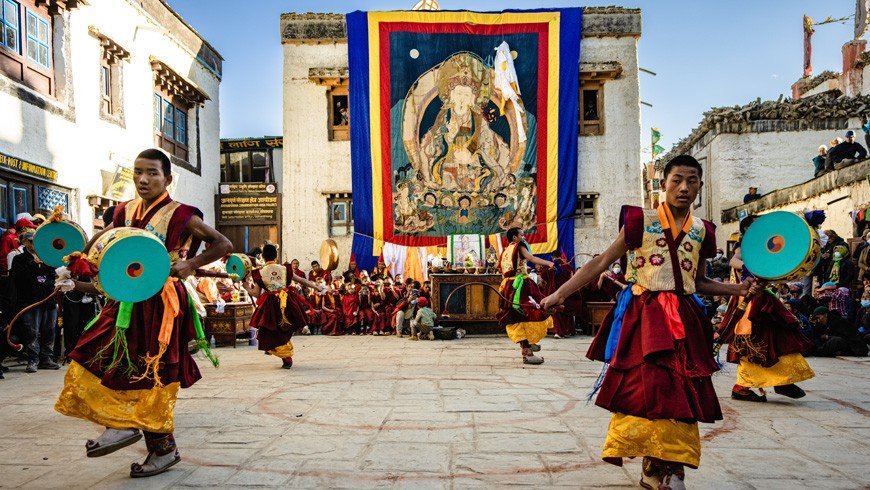
September to November is the best overall window. Post-monsoon skies are the clearest of the year and the Kali Gandaki gorge is at its most vivid. October is the peak season. Book flights and accommodation at least a month in advance.
June to August is monsoon in the rest of Nepal but Mustang's rain shadow means the region stays relatively dry. The Mustang trek is one of the few in Nepal that is genuinely good in the monsoon months. Less crowded, green lower valleys, and no permit queues. The trade-off is occasional road closures and some flight disruptions.
December to February is cold. Jomsom drops to below zero at night. Many guesthouses in smaller villages close. Possible but you need good cold-weather gear and should confirm accommodation is open before going.
Final Thought
Mustang is the one part of Nepal that does not look like Nepal in anyone's imagination. No green terraces, no rhododendron forest, no trekking lodge with a laminated Annapurna menu. Just red desert, ancient stone villages, wind that has crossed from Tibet, and a culture that has been sitting quietly in this gorge for six centuries while the rest of the world found somewhere else to go.
Browse verified Mustang stays on Nepal Homestays and book directly with the property.
Frequently Asked Questions
Do I need a permit to visit Mustang?
For Lower Mustang (Jomsom, Kagbeni, Marpha, Muktinath) you need only the ACAP permit at NPR 3,000 for foreign visitors. For Upper Mustang beyond Kagbeni you need the Restricted Area Permit at USD 50 per day per person, plus ACAP and a TIMS card. All Upper Mustang permits must be arranged through a registered trekking agency.
How do I get to Jomsom from Pokhara?
By flight, 20 minutes, NPR 10,000 to NPR 15,000 one way. By road through Beni and the Kali Gandaki gorge, 8 to 10 hours by jeep. Book morning flights; afternoon slots are frequently cancelled due to wind.
Can I trek solo in Upper Mustang?
Solo trekking in Upper Mustang has been permitted since March 2026. However, a licensed guide is still compulsory regardless of group size. Permits must be arranged through a registered trekking agency.
What is the best village to stay in for Lower Mustang?
Kagbeni for atmosphere and the gateway to Upper Mustang. Marpha for quiet village life and apple orchards. Jomsom for logistics and flight access.
What is the best time to visit Mustang?
September to November for the clearest skies and best mountain views. March to May for mustard flowers and the Tiji Festival in Lo Manthang. June to August is dry in Mustang even during Nepal's monsoon, making it one of the few good wet-season trekking destinations.
How much does a Mustang homestay cost?
Check current prices directly on the listing pages on Nepal Homestays. Most properties include WiFi and hot shower. Meals are arranged separately with the host or guesthouse kitchen.
What should I know about the wind in Mustang?
The Kali Gandaki valley funnels one of the strongest daily winds in Nepal. It starts around 11 AM and builds through the afternoon. All serious walking and photography should be finished before noon. Morning departures for any hiking are essential.
Company Admin
Travel writer sharing authentic stories and experiences from Nepal's beautiful homestays.