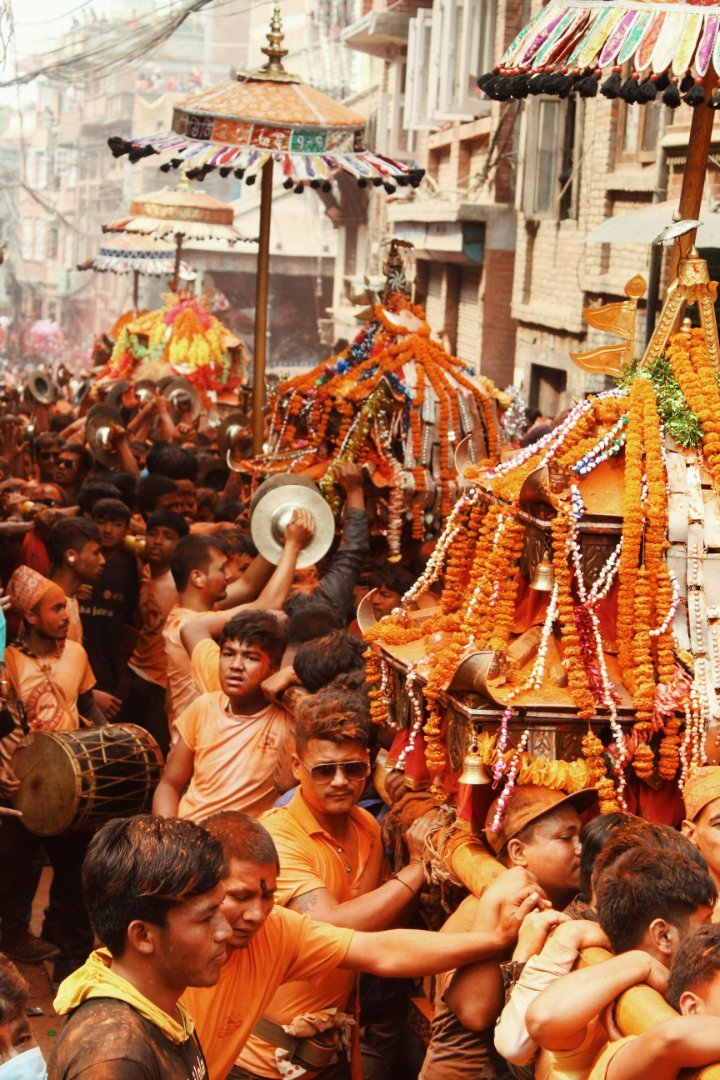
Bhaktapur is one of Nepal’s most cultural cities, and nowhere is its heritage more alive than in its festivals. Music, colors, traditional dances, chariots, rituals, and community gatherings fill the streets throughout the year. The people of Bhaktapur celebrate festivals with strong devotion, excitement, and unity. These celebrations are not just events. They are a very real part of daily life and identity.
This Bhaktapur Festivals Guide explains the major festivals, what they mean, how they are celebrated, and the best time of year to visit. Everything is written in simple words so you can enjoy and understand the culture without feeling confused. If you want a simple overview of the city before exploring this topic, you can also read our Bhaktapur Travel Guide, which explains the culture, squares, food, and daily life of the old city.
Why Bhaktapur Festivals Feel So Special
Bhaktapur has a long history of traditions, and many of its festivals have been celebrated the same way for hundreds of years. When you walk through the city during a festival, you see communities working together, families decorating their homes, and locals preparing traditional foods.
What makes festivals in Bhaktapur unique
• The celebrations are large and full of energy
• Most rituals are performed openly in streets and squares
• Chariots, music, and dances play a big role
• Visitors can watch from very close
• Every festival has a deep cultural meaning
Festivals bring the entire city together. Even small alleys become lively with music, laughter, and tradition.
Bisket Jatra – The Biggest and Most Exciting Festival in Bhaktapur
Bisket Jatra is one of the grandest festivals in Bhaktapur and marks the Nepali New Year. It usually happens in mid-April. The festival is centered around Bhairav and Bhadrakali, two important deities in Newari culture.
What happens during Bisket Jatra
A massive wooden chariot carrying the image of Bhairav is pulled through the streets by large crowds. The pulling of the chariot becomes a show of strength, teamwork, and emotion. People cheer, drums play loudly, and the entire square fills with excitement.
On another day, a long ceremonial pole (lingo) is raised and later pulled down again, symbolizing the start of the new year.
Best places to watch
• Taumadhi Square
• The streets leading to Bhairav Nath Temple
• The open area near the lingo pole
Photography moment
The chariot pull is the most dramatic moment of all Bhaktapur festivals, giving you powerful images of movement and emotion.
Gai Jatra – A Colorful and Emotional Festival
Gai Jatra is held to honor loved ones who passed away during the year. It is a mix of remembrance and celebration, showing how culture and emotions come together.
How Bhaktapur celebrates Gai Jatra
Families who lost someone join a parade through the streets. People dress in colorful costumes, traditional masks, funny outfits, and sometimes even as cows or gods. Music, singing, and dancing fill the air.
Why Gai Jatra feels different
• It is both emotional and joyful
• The festival supports families in grief
• The whole community participates
Best place to watch
• Bhaktapur Durbar Square
Gai Jatra is one of the most touching festivals in Bhaktapur, showing how the community stands together.
Yomari Punhi – The Sweetest Festival in Bhaktapur
Yomari Punhi celebrates the end of the rice harvest and the popular Newari sweet yomari.
What happens during Yomari Punhi
Families make fresh yomari at home and offer them to gods as a symbol of gratitude for a good harvest. The sweet is made from rice flour dough filled with chaku (a sweet molasses-like mixture).
Why this festival is special
• You get to taste fresh yomari everywhere
• Children love learning to make the dumplings
• The streets smell sweet and warm
Best place to experience it
• Any traditional home or eatery inside Bhaktapur’s old city
If you love food, Yomari Punhi is one of the most delightful Bhaktapur festivals to experience.
Indra Jatra & Lakhey Dance – Masked Culture on Display
Indra Jatra is famous across the Kathmandu Valley, and Bhaktapur also celebrates it with strong devotion.
What you’ll see
• Traditional masked dances
• Lakhey dancers moving through the streets
• Music, drums, and energetic performances
The Lakhey dance is a major attraction. The dancers wear large red masks with big eyes and wild hair, moving with loud drums and fast steps. Since Bhaktapur’s festivals and traditions are closely linked to Newari heritage, you might enjoy reading our guide on Newari Culture in Bhaktapur, where we explain daily life, customs, and community traditions.
Why it’s worth watching
• Shows ancient storytelling through dance
• Very lively and energetic
• Amazing for photography
These dances show the rich artistic side of Newari traditions.
Dashain and Tihar – Celebrations Full of Light and Family
Dashain and Tihar are Nepal’s biggest national festivals, and Bhaktapur celebrates them with its own special customs.
During Dashain
• Families gather to receive blessings
• Temples become active with devotees
• Traditional rituals take place in courtyards
During Tihar
• Streets glow with oil lamps
• Houses decorate their doorways
• Beautiful rangoli patterns are made
• Bhailo and Deusi songs fill the evenings
Tihar is especially beautiful in Bhaktapur because the old brick houses look even more charming under the soft warm lights.
Holi – Color, Music, and Pure Joy in Bhaktapur
Holi, the festival of colors, is celebrated with fun and energy.
What to expect
• Locals throwing dry colors
• Singing and dancing
• Families celebrating in squares
Taumadhi Square and Durbar Square become especially lively. It is a cheerful and friendly experience, though visitors should wear clothes they don’t mind coloring.
When Is the Best Time to Visit Bhaktapur for Festivals?
Bhaktapur celebrates festivals all year long, but some months are more active than others.
Best seasons for festivals in Bhaktapur
• March–April: Holi, Bisket Jatra
• July–August: Gai Jatra, Indra Jatra
• October–November: Dashain, Tihar, Yomari Punhi
If you love culture
Visit during Bisket Jatra (April) or Yomari Punhi (November–December).
If you love calm celebrations
Choose festivals like Tihar or Indra Jatra.
Simple Tips for Enjoying Festivals in Bhaktapur
• Arrive early to find a good viewing spot
• Respect local customs and rituals
• Ask before taking close-up photos of people
• Stay hydrated
• Wear comfortable shoes
• Follow the crowd but stay aware of your surroundings
Festivals can get crowded but are safe, friendly, and welcoming.
Final Thoughts
Bhaktapur festivals are full of color, music, togetherness, and history. Whether it is the powerful chariot pull during Bisket Jatra, the sweet smell of yomari during Yomari Punhi, or the warm lights of Tihar, each festival brings the city alive in its own beautiful way.
If you want to experience culture in its most honest and joyful form, visiting Bhaktapur during festival season will stay in your memory for a long time.
Bhaktapur is more than a cultural city. During festivals, it becomes a celebration of life.
FAQs
1. Which is the biggest festival in Bhaktapur?
Bisket Jatra is the biggest and most energetic festival in the city.
2. What is the best month to visit Bhaktapur for festivals?
April and November are the best months because several major festivals happen then.
3. Are Bhaktapur festivals safe for travelers?
Yes. There are crowds during big events, but the environment is friendly and welcoming.
4. Can visitors join the festival celebrations?
Yes, you can watch and participate, but it’s important to respect local customs.
5. Are photos allowed during festivals?
Yes, photography is allowed, but ask before taking close-up portraits.
Company Admin
Travel writer sharing authentic stories and experiences from Nepal's beautiful homestays.