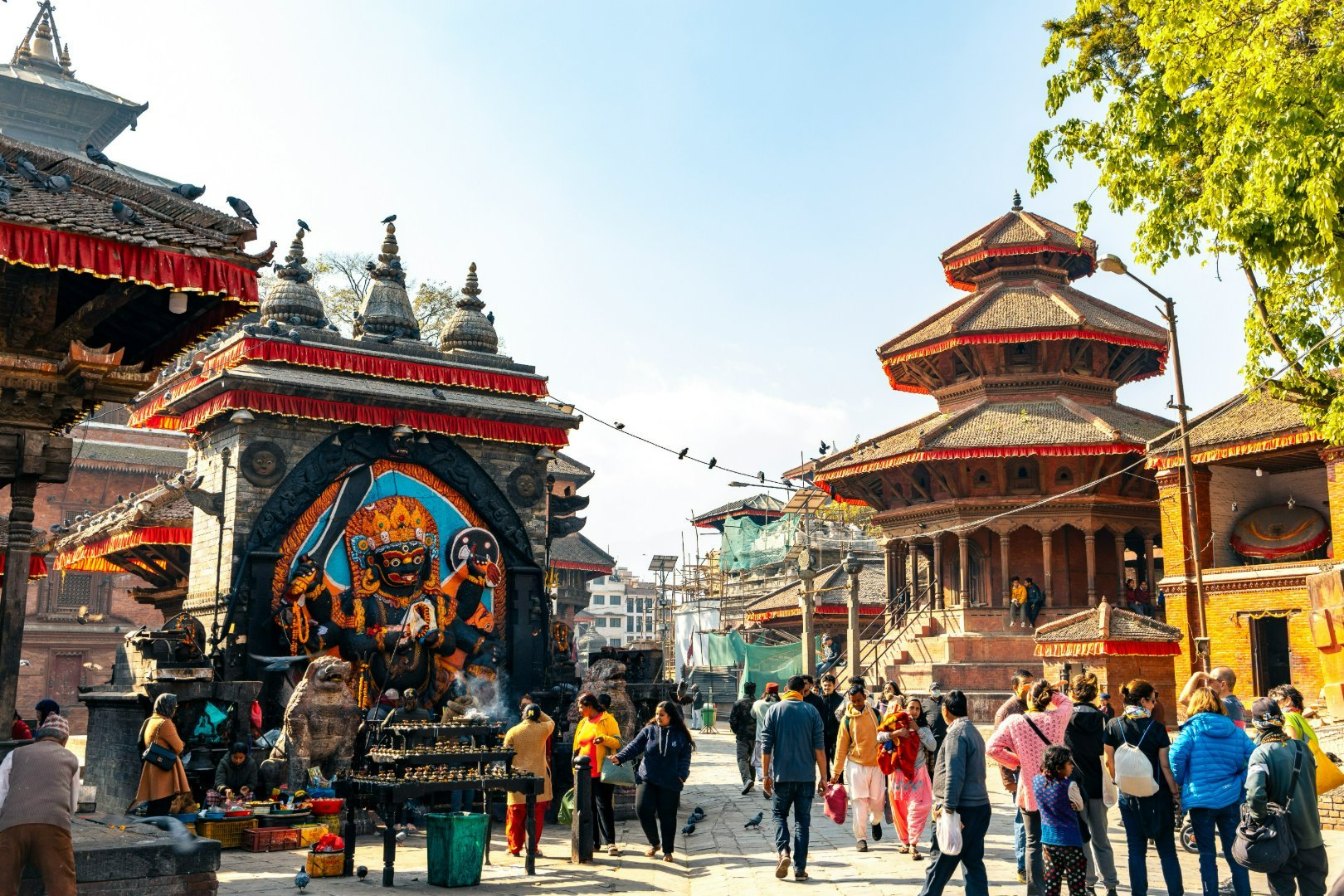
From sacred UNESCO World Heritage Sites to hidden local gems, here are the top 10 places that showcase the best of Kathmandu.
Kathmandu Valley holds some of Nepal's most significant cultural and historical sites. This guide covers the top 10 places to visit in Kathmandu, from ancient temples like Swayambhunath and Pashupatinath to UNESCO World Heritage Sites in Durbar Square, mountain viewpoints in Nagarkot, and Buddhist centers in Boudhanath.
These are not just photo stops. They are places where Kathmandu's history lives, where locals practice daily worship, and where travelers can connect with Nepal's capital beyond surface tourism through authentic experiences in surrounding neighborhoods.
Quick Reference: Top 10 Kathmandu Attractions
Essential Tips for Visiting Kathmandu
Dress Code for Temples:
Cover shoulders and knees at all religious sites
Remove shoes before entering temples
Avoid leather items at Hindu temples
Money and Payment:
Carry small bills (100, 500 rupees) for entrance fees
Many sites don't accept cards
ATMs in Thamel often run empty, withdraw early
Best Photography Times:
Early morning (6-8 AM) for clear light and fewer crowds
Late afternoon (4-6 PM) for golden hour
Avoid midday when haze reduces visibility
Health and Safety:
Drink only bottled or filtered water
Carry hand sanitizer
Watch for aggressive monkeys at temple sites
Air pollution is worst November-February mornings
1. Swayambhunath (Monkey Temple)
Swayambhunath sits on a hill west of Kathmandu with 365 steps leading to one of Nepal's oldest Buddhist sites. The white stupa with Buddha's all-seeing eyes overlooks the valley, surrounded by prayer flags and resident monkeys.
The site dates back over 2,000 years. Early morning brings devoted locals before tourists arrive. From the top, Kathmandu spreads below, and on clear days, the Himalayas appear on the northern horizon.
What to Know:
The climb takes 20-30 minutes.
Arrive before 8 AM to avoid crowds.
Monkeys are bold but harmless if you avoid eye contact and hide food.
Entrance: 200 rupees for foreigners.
To experience the spiritual rhythm beyond a single visit, travelers can stay at homestays in nearby neighborhoods where morning temple visits become part of daily routine.
2. Pashupatinath Temple
Pashupatinath is Nepal's most sacred Hindu temple along the Bagmati River. This is where Hindu cremation ceremonies happen openly, where life and death meet without separation.
The main temple allows only Hindus inside, but visitors observe from the eastern bank, watching ceremonies that have continued for centuries. Sadhus in orange robes sit in meditation. Cremation ghats line the river where families prepare bodies according to ritual before lighting funeral pyres.

During Maha Shivaratri festival in February or March, hundreds of thousands of pilgrims arrive, transforming the site into an overwhelming display of devotion.
What to Know:
Dress modestly, covering shoulders and knees
Photography of cremations requires sensitivity
Entrance: 1,000 rupees for foreigners
Plan 2-3 hours minimum
Understanding the daily spiritual life around Pashupatinath takes time. Staying in a homestay in the Chabahil or Boudha area lets travelers return multiple times, observing morning pujas and evening aartis when the temple shows its most authentic character.
3. Boudhanath Stupa
Boudhanath is one of the largest Buddhist stupas in the world. The massive white dome with painted Buddha eyes creates a focal point for Kathmandu's Tibetan Buddhist community.
The stupa sits at street level, surrounded by monasteries, shops, and restaurants. Kora (walking clockwise) is constant. Tibetan pilgrims spin prayer wheels, monks walk in groups, and tourists join the flow.

The area transformed after Tibetan refugees arrived in the 1960s. Now it holds dozens of monasteries and restaurants where visitors watch the stupa while eating momos and drinking butter tea.
What to Know:
No entrance fee but donations appreciated
Best experienced over several hours or multiple visits
Rooftop restaurants offer free viewing with purchase
Evening butter lamp lighting creates special atmosphere
The Boudha neighborhood rewards longer stays. Travelers staying at homestays in Boudha can experience the area's rhythm, attending morning pujas at monasteries and learning about Tibetan Buddhism from local teachers.
4. Kathmandu Durbar Square
Durbar Square was the royal palace complex where kings were crowned. The square holds temples, courtyards, and the old royal palace, though the 2015 earthquake damaged many structures.

Intricate wood carvings cover temple doors and windows. The Kumari Ghar houses Nepal's living goddess, a young girl chosen through ancient rituals. The square buzzes with activity despite being a UNESCO World Heritage Site, with vendors and locals cutting through as shortcuts.
What to Know:
Entrance: 1,000 rupees (valid same day only)
Arrive in morning for better light
The Kumari appears briefly at her window around mid-morning
Photography of Kumari is strictly prohibited
5. Thamel
Thamel is Kathmandu's tourist center, packed with hotels, restaurants, trekking shops, and tour agencies. The atmosphere is chaotic and commercial but serves important practical functions.
This is where trekkers buy or rent gear, arrange permits, find guides, and plan expeditions. Beyond practicality, Thamel offers cultural mixing with live music venues, international restaurants, and rooftop bars.
What to Know:
Bargaining is expected in shops
Compare prices across several stores before buying
ATMs line main streets but often run empty
Transforms after dark with neon signs and street food
While Thamel serves as a convenient base, travelers seeking local Kathmandu life benefit from staying in homestays in quieter neighborhoods like Lazimpat or Maharajgunj, using Thamel for services while experiencing residential areas where daily routines continue without tourist influence.
6. Garden of Dreams
The Garden of Dreams offers stillness in central Kathmandu, minutes from Thamel's chaos. This neoclassical garden was built in the 1920s by Field Marshal Kaiser Sumsher Rana, inspired by Edwardian gardens.
The garden underwent careful restoration in the early 2000s. Now it functions as a public park with manicured lawns, pavilions, ponds, and a cafe serving decent coffee and pastries.
What to Know:
Open 9 AM to 8 PM daily
Entrance: 200 rupees includes cafe access
Weekday mornings are quietest
WiFi available but unreliable
The garden works best as a break during intensive sightseeing, providing psychological relief after hours walking through temples and dodging traffic.
7. Patan Durbar Square
Patan holds its own Durbar Square that many consider more beautiful than Kathmandu's. The square showcases Newari architecture at its finest, with temples built entirely of brick and wood.
The Krishna Mandir, built in 1637, uses stone rather than wood. The old royal palace contains multiple courtyards, each with its own character. Side streets still hold workshops where visitors watch craftsmen work using ancient methods.
What to Know:
Entrance: 1,000 rupees (includes museum)
Plan minimum three hours
Hiring a local guide (1,000-1,500 rupees) adds context
Small restaurants serve traditional Newari food
Patan's artistic heritage becomes clearer through extended exploration. Staying at homestays in Patan, particularly in areas like Mangal Bazaar or Lagankhel, allows visitors to explore craft workshops at leisure and meet artisan families.
8. Nagarkot
Nagarkot sits 32 kilometers east of Kathmandu at 2,175 meters elevation. This hill station serves one primary purpose: mountain views. On clear days, the Himalayan range stretches from Dhaulagiri to Everest.

Weather determines everything. Winter months (December-February) offer the clearest skies but coldest temperatures. October-November and March-April provide the best balance.
What to Know:
Journey takes 2-3 hours by car from Kathmandu
No entrance fee for the village
Budget hotels: 1,000-2,000 rupees per night
Book north-facing rooms for best views
Bring warm layers regardless of season
For travelers wanting to understand hill village life beyond tourist hotels, community homestays in Nagarkot offer mountain views combined with agricultural community experience.
9. Bhaktapur Durbar Square
Bhaktapur preserved its medieval character better than Kathmandu or Patan. The entire old city functions as a living museum where traditional life continues in centuries-old buildings.
The 55-Window Palace, built in 1427, displays intricate woodwork. The Golden Gate entrance showcases Nepal's finest metalwork. Beyond the square, narrow streets reward wandering with Pottery Square, communal water spouts, and small temples.

Bhaktapur specializes in yogurt (juju dhau), served in clay pots, richer and sweeter than yogurt elsewhere in Nepal.
What to Know:
City entrance: 1,800 rupees for foreigners
13 kilometers east of Kathmandu (40 minutes)
Plan a full day
Visit Taumadhi Square and Dattatreya Square
Try traditional Newari feast (samay baji)
Bhaktapur's medieval atmosphere deepens with longer exposure. Travelers staying at homestays in Bhaktapur or nearby Thimi experience the city after day-trippers leave, when streets are quiet and local life becomes more visible.
10. Kopan Monastery
Kopan Monastery sits on a hill north of Boudhanath, serving as a Tibetan Buddhist monastery and meditation center. Unlike tourist-oriented temples, Kopan functions primarily for serious Buddhist study.
The monastery offers meditation courses ranging from one week to several months. Daily schedules include meditation sessions, Buddhist philosophy teachings, and discussions.
What to Know:
Day visitors welcome outside course times
Dress modestly, remove shoes in temples
Seven-day courses: around $400-500 including meals
7 kilometers from Thamel (30 minutes by taxi)
For travelers interested in meditation, staying at a community homestays in the Kapan area provides access to Kopan and other meditation centers while experiencing family life that blends Buddhist practice with daily responsibilities.
Sample Itineraries
3-Day Kathmandu Itinerary:
Day 1: Swayambhunath (morning), Thamel (afternoon), Garden of Dreams (evening) Day 2: Pashupatinath (morning), Boudhanath (afternoon/evening) Day 3: Patan Durbar Square (full day)
5-Day Kathmandu Itinerary:
Day 1: Swayambhunath, Kathmandu Durbar Square, Thamel Day 2: Pashupatinath, Boudhanath Day 3: Patan Durbar Square, local crafts workshops Day 4: Bhaktapur (full day) Day 5: Nagarkot sunrise, return via Bhaktapur
7-Day Cultural Immersion:
Day 1-2: Kathmandu sites (Swayambhunath, Durbar Square, Thamel) Day 3-4: Patan with homestay experience Day 5: Pashupatinath, Boudhanath with evening meditation Day 6: Bhaktapur with overnight homestay Day 7: Kopan Monastery or free exploration
Transportation Tips
Getting Around Kathmandu:
Taxis: 400-600 rupees for cross-city trips, always negotiate first
Rideshare apps: Pathao and InDriver work in Kathmandu
Local buses: 20-30 rupees but crowded and confusing for tourists
Walking: Possible in tourist areas but challenging due to traffic and broken sidewalks
Hiring a driver: 4,000-6,000 rupees for full day
Day Trip Transportation:
Bhaktapur: 300-400 rupees by taxi, 50 rupees by local bus
Nagarkot: 2,000-2,500 rupees by taxi, 200 rupees by tourist bus
Patan: 200-300 rupees by taxi, 20 rupees by local bus
When to Visit Each Site
Best Season by Activity:
October-November:
Best for: All outdoor sites, mountain views, festivals (Dashain, Tihar)
Weather: Clear, comfortable (15-25°C)
December-February:
Best for: Mountain views from Nagarkot
Weather: Cold mornings (5-15°C), clear skies
March-April:
Best for: Temple visits, city exploration
Weather: Warm (20-30°C), occasional haze
May-September:
Avoid: Mountain viewpoints (clouds)
Okay for: Indoor sites, temples (fewer tourists)
Experience Kathmandu Like a True Local
While visiting these incredible sites will give you a glimpse into Kathmandu's rich heritage, staying at a homestay transforms your visit into genuine cultural immersion. Share meals with local families, learn authentic recipes, hear stories passed down through generations, and understand the living traditions that make Kathmandu special.
NepalHomestays connects you with over 100 carefully curated homestays across Kathmandu, Bhaktapur, and Lalitpur, where warm Nepali hospitality meets authentic cultural exchange. Book your homestay today and discover the heart of Kathmandu beyond the guidebooks.
Frequently Asked Questions
How many days are needed to visit these 10 places in Kathmandu?
A minimum of 5-6 days allows comfortable visits to all ten places. Kathmandu Durbar Square, Swayambhunath, and Pashupatinath take one day each. Patan and Bhaktapur require full days. Nagarkot needs an overnight stay. Seven days provides better pacing and allows repeat visits to favorite places.
What is the best time of year to visit Kathmandu?
October and November offer the best weather with clear skies and excellent mountain views. March and April are also good, though slightly warmer. December through February brings cold mornings but clear days. Avoid June through August when monsoon rains obscure mountain views and make sightseeing difficult.
Is it safe to walk around Kathmandu at night?
Kathmandu is generally safe in tourist areas like Thamel and around major temples. Violent crime is rare. However, streets are poorly lit and sidewalks are broken. Pickpocketing can occur in crowded areas. Women should exercise normal caution in quieter areas after 9 PM. Take taxis for longer distances at night.
Can vegetarians find good food options in Kathmandu?
Yes, Kathmandu is excellent for vegetarians. Traditional Nepali food is largely vegetarian, based on dal bhat with vegetable curries. Indian restaurants offer extensive vegetarian menus. Thamel has numerous international vegetarian and vegan options. The word for vegetarian in Nepali is "sakahari."
Should visitors stay in hotels or homestays in Kathmandu?
This depends on priorities. Hotels in Thamel offer convenience and tourist services, working well for short visits (2-3 days). Homestays in residential neighborhoods like Boudha, Patan, or near Pashupatinath provide cultural immersion, home-cooked meals, and insights into daily life. They suit travelers staying longer (5+ days) who want understanding beyond tourist sites. Many travelers combine both, starting in Thamel then moving to homestays for deeper local experience.
Company Admin
Travel writer sharing authentic stories and experiences from Nepal's beautiful homestays.