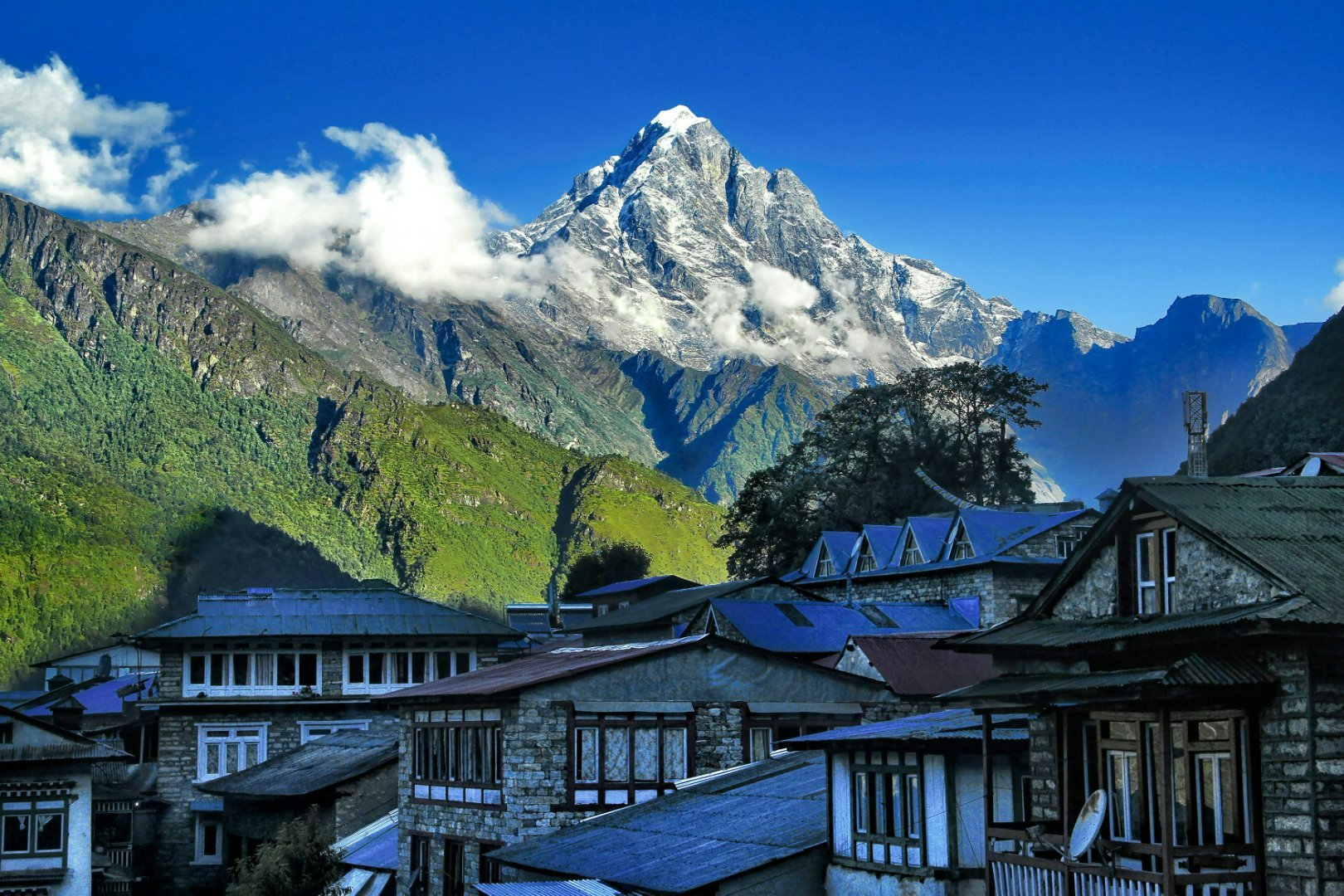
When tourists spend $100 in Nepal, where does it go? This explains tourism leakage and why homestays keep up to 90% of spending local, boosting rural impact.
When a tourist spends $100 in Nepal, how much money actually reaches Nepali communities? The answer depends on where that money is spent, and the differences are huge.
This is about economic leakage. It's about tracking how tourism money escapes local areas through imports, foreign owners, international websites, and supply chains that send money back to Kathmandu or other countries.
Understanding leakage explains why Nepal can have record tourist numbers while rural communities stay poor. It also explains why homestays are the best way to turn tourist dollars into local wealth.
What Is Leakage?
Leakage measures how much tourism money escapes the local area. When a tourist pays for something, that money can take three different paths.
It can stay local when it's paid to local people who spend it in their own communities, creating a cycle of money that helps everyone. It can leak to Kathmandu when it flows to companies in the capital, headquarters, or city suppliers who have no connection to the villages tourists visit. Or it can leak abroad when it pays for imported products, foreign owner profits, or international website fees that leave Nepal completely.
The higher the leakage, the less good tourism does for the places tourists actually visit. This is the hidden problem that makes tourism look successful on paper while leaving communities struggling.
The Leakage Problem in Numbers
Different types of places to stay have very different leakage rates. Think of it like a bucket with holes. Some buckets lose most of their water before it does any good, while others keep almost everything inside where it's needed.
When leakage is 70%, a $100 tourist payment gives only $30 of local benefit. When leakage is 10%, that same $100 gives $90 locally. Homestays are six times better at turning tourist dollars into local wealth.
Where Does the Money Actually Go?
Let's break down what happens to $100 spent at different types of places. This isn't a theory. These are real patterns that experts track across Nepal's tourism business.
International Chain Hotel
When you spend $100 at an international chain hotel, the money goes everywhere except the local community. Between $25 and $35 goes straight to company profits that get sent back to foreign headquarters in Bangkok, Singapore, or Mumbai. Another $15 to $20 pays for imported goods like fancy bed sheets, branded soaps, processed foods, and international drinks that Nepali suppliers can't provide.

The hotel pays $10 to $15 in fees to international booking websites like Booking.com or Expedia. Another $10 to $15 covers management fees, software costs, and brand fees that go to companies outside Nepal. Add $5 to $10 for Kathmandu suppliers, and only $20 to $30 actually reaches local wages and local purchases.
The tourists are in Nepal, but most of their money isn't.
Nepali-Owned City Hotel
Nepali-owned hotels in cities like Pokhara or Kathmandu do better, but still lose a lot of money. About $15 to $20 goes to imported goods that Nepal doesn't make. Another $10 to $15 pays booking website fees to international sites. The hotel's main office in Kathmandu takes $10 to $15, and loan payments to Kathmandu banks (often for building costs) take another $5 to $10.
That leaves $45 to $55 for local wages, local suppliers, and owner income. Better than international chains, but still losing almost half the money before it reaches local hands.
Community Homestay
This is where the money story flips completely. When you spend $100 at a community homestay, almost nothing leaks away. If the homestay uses an online booking website, maybe $5 goes to website fees. The family might spend another $5 to $10 on supplies from the district town for things they can't grow or make locally.

That means $85 to $95 goes straight to family income, local food purchases, and community spending. The tourist's money lands directly in village hands and stays there. This is what smart development looks like.
The Multiplier Effect: When Money Keeps Working
Leakage is only half the story. The other half is what happens to money that stays local, and this is where homestays create magic that hotels simply cannot match.
Experts use something called the Tourism Income Multiplier to measure this. Here's how it works in simple terms. You spend $10 at a local shop. The shopkeeper spends $8 at the local farmer's stand. The farmer spends $6 at the village supplier. Your original $10 just created $24 of buying and selling. That's a multiplier of 2.4x, meaning your money worked more than twice.
Compare what happens in Kathmandu hotels versus rural homestays. Hotels have a spending rate of about 0.70 (they save more, spend less locally) and local keeping of only 0.35 (most spending goes outside the area). This creates a multiplier of just 1.32x. Every rupee creates only 1.32 rupees of local buying and selling.

Homestays tell a completely different story. They have a spending rate of 0.85 (families spend most of what they earn) and local keeping of 0.90 (almost all spending stays nearby). This creates a multiplier of 4.26x. Every rupee spent at a homestay creates 4.26 rupees of local buying and selling. That's more than three times the impact of hotel spending. This homestay advantage is rooted in economic multiplier theory, where each rupee generates multiple rounds of local economic activity.
Why Homestays Have Such Low Leakage
The homestay business model naturally stops money from escaping. It's not that homestay owners are better people or try harder. It's that the business itself makes leakage almost impossible. Here's what makes homestays different from hotels when it comes to keeping money local:
Food comes from kitchen gardens and village markets instead of imported ingredients, so meals create income for nearby farmers rather than international food companies
Families own their homes completely, which means profits stay with the people giving hospitality rather than flowing to foreign investors or Kathmandu property companies
There's no company headquarters taking management fees or creating layers of bosses that take money before it reaches workers
Starting costs are tiny since families use existing homes, so there are no building loans needing payments to banks
Most bookings come through word-of-mouth or local connections rather than international websites taking 15% to 25% fees on every booking
Supply purchases happen at the village shop or from neighbors, keeping money within a few kilometers of where tourists spend it
This isn't a feel-good marketing story. It's just how village money works when tourism fits with existing community life rather than replacing it.
Following the Money: A Real Rs 1,500 Homestay Payment
Let's get specific about where money goes. When Rs 1,500 (about $12) is spent at a village homestay, here's the breakdown that changes a community.
The family keeps Rs 1,000 to 1,200 as direct income. This money gets saved for school fees and doctor visits, covers daily household needs, and gets put back into homestay improvements. Studies show that community-based tourism income substantially raises household earnings compared to surrounding villages.

Another Rs 200 to 400 goes to local food purchases. The host buys vegetables from her neighbor's garden, eggs from village chicken farmers, meat from the local butcher, and rice and lentils from the village shop, creating what economists call the tourism multiplier effect, where money circulates through the local economy multiple times.
Local services take Rs 50 to 150. This includes payment for a local guide if guests want a village walk, a porter if needed, and purchases of crafts from village artists. Only Rs 50 to 150 actually leaks away, mostly for supplies from the district town that aren't available locally and phone or data charges if the family uses mobile booking websites.
The money goes around in a beautiful pattern. The neighbor who sold vegetables spends time at the local shop. The shopkeeper pays for goods from other villagers. The cycle continues, each purchase creating a small wave of wealth.
The Employment Advantage
Low leakage connects directly to more jobs, and this is where homestays beat every other form of tourism places to stay by a huge margin. Hotels create about 5 to 8 jobs per $100,000 spent in the luxury part, and 12 to 15 jobs in the budget part. Homestays create 25 to 35 jobs per $100,000 spent.
Why such a big difference? The answer lies in how homestays and hotels work:
Hotels replace human workers with machines like elevators, big washing machines, and processed food, while homestays use human work for everything from cooking to cleaning
A single 100-room hotel might serve hundreds of guests with just 30 to 40 workers, but that same number spread across 50 homestays employs 100 to 150 people across an entire region.

Homestay guests hire local guides for village walks, buy crafts directly from makers, and eat at family tables where every ingredient was bought from a neighbor
Hotel size reduces jobs per guest, but homestay spread creates jobs across entire valleys and districts
The ratio of workers to guests is completely different. This sounds wasteful until you realize that creating jobs is the entire point of development. Homestays don't just give tourists a place to sleep, they spread money-making chances to families who would never have access to formal tourism jobs. The International Labour Organization recognizes sustainable tourism employment as a critical driver of poverty reduction and economic development in rural communities.
The Geographic Distribution Effect
Leakage isn't just about money leaving Nepal. It's about money leaving rural areas for Kathmandu, and this matters hugely for national development.
Nepal's formal business world sits in the capital. Hotels need infrastructure, supply chains, and worker markets that exist mainly in city areas. Tourism money flows to where hotels are built, not always to where tourists actually go or what they came to see.
Homestays flip this completely. They exist in villages, not cities. Their supply chains are local by definition. Money goes directly to the places tourists actually experience. When a trekker walks the Annapurna Circuit and passes through dozens of villages, homestay sleeping places mean money flows to each village along the route. With hotel-based tourism, money sits in Kathmandu and Pokhara while villages see only foot traffic and trail damage.
What This Means for Nepal's Economy
Nepal's tourism business creates about $2.5 billion every year. If the business averages 50% leakage (a rough guess across all types of places to stay and services), that means about $1.25 billion currently stays in local areas while $1.25 billion escapes.
Now imagine what happens if homestay sleeping places increase from 5% of the market to 30%. Leakage could drop to around 35%, which means local keeping rises to $1.6 billion. That's $350 million more staying in Nepal every year from the same number of tourists spending the same amount.
No extra marketing campaigns. No new airports. No massive infrastructure investment. Just changing where tourists sleep. The opportunity hiding in plain sight could change rural Nepal's money situation. Nepal's Tourism for Rural Poverty Alleviation Programme has already demonstrated how community-based tourism models can mainstream pro-poor policies and create sustainable livelihoods.
Why Booking Through Local Platforms Matters
Here's where your booking choice makes an even bigger difference. When you book homestays through international websites like Booking.com and Airbnb, they take 15% to 25% in fees. That money leaves Nepal entirely, adding unnecessary leakage to a model that otherwise keeps everything local.
Let's look at a real example. When a homestay night costs $50 and you book through an international website, $7.50 to $12.50 goes to website fees and flows abroad. Only $37.50 to $42.50 reaches the homestay family. But when you book that same $50 night through a Nepal-based platform like Nepal Homestays, almost the full amount stays in Nepal. International booking platforms like Airbnb have recently increased host fees to 15.5%, making local alternatives even more attractive."
This is exactly why we built Nepal Homestays as a local solution. We're a Nepali platform that keeps booking fees minimal and keeps them in Nepal. Our small commission helps maintain and improve the platform, but it circulates within Nepal's economy rather than enriching foreign tech companies. When you choose to book through Nepal Homestays instead of international platforms, you're making a conscious decision to maximize local benefit.
Where Should Development Money Go?
Different development plans have completely different leakage profiles, and this should guide where donors and the government invest scarce development money.

Hydropower projects leak 70% to 80% of their value through foreign investors, imported equipment, international contractors, and profits sent abroad. Manufacturing leaks 55% to 65% as it imports materials and equipment. IT and business process work keeps 60% to 70% local, which is better. Commercial farming keeps 55% to 65% locally.
Homestay tourism keeps 85% to 95% local because the product itself (hospitality in a Nepali home) cannot be imported, sent abroad, or automated. The homestay advantage isn't small or theoretical. It's overwhelming.
What $10 Million Actually Buys
Compare a hypothetical $10 million investment across different sectors, and the homestay advantage becomes impossible to ignore. Research on economic leakage in tourism shows that different development sectors have dramatically different retention rates.
Ten million dollars in homestay development creates 10 to 20 times the local economic impact of the same investment in any other sector. The homes already exist. The hospitality culture already exists. The scenic beauty already exists. What's missing is the connection between global travelers searching for authentic Nepal experiences and the grandmother in Ghandruk with a spare room.
The Digital Opportunity
Here's what makes this even more remarkable. Homestays don't need $10 million in investment. A well-designed booking website, Google Maps setup for 5,000 homestays, and targeted digital marketing might cost $500,000. Yet this modest investment could unlock 80% of the demand-side benefits.
Unlike physical infrastructure that needs massive money for each new unit, digital infrastructure grows at nearly zero extra cost. The website connecting 500 homestays can connect 5,000 for minimal extra investment. This is why a focused digital plan could realistically create $50 to $100 million in rural economic activity within five years. That's a 100x return that no physical infrastructure project could ever match.
What This Means for Your Next Trip to Nepal
For travelers, choosing homestays isn't a sacrifice or charity. You get a more real experience, more personal hospitality, and more genuine cultural exchange. And your money reaches the people who actually need it and creates the experience you came for.
For Nepal, putting homestay development first isn't rejecting modernization or progress, it's embracing sustainable tourism development that aligns with UN Sustainable Development Goals 8 and 12. It's recognizing that the most efficient development path runs through existing things (homes, hospitality, landscapes) rather than copying imported industrial models that leak value.
For the tourism industry, reducing leakage isn't idealism. It's recognizing that sustainable tourism needs local benefit. Communities that don't benefit from tourism eventually resist it.Studies of community-based tourism empowerment show that local participation and benefit-sharing are essential for long-term tourism sustainability. Low-leakage models build the local support that keeps tourism working for decades.
Why Gross Tourism Numbers Hide the Real Story
Tourism development typically celebrates big numbers like total arrivals, total spending, and growth rates. But big numbers hide leakage, and leakage determines who actually benefits. A billion-dollar industry with 70% leakage gives less local benefit than a $400 million industry with 10% leakage.
Homestays flip the conventional development model. Instead of building expensive infrastructure that imports materials, needs foreign money, and sends profits abroad, homestays turn existing homes and Nepali hospitality into money-making engines.
The result is clear. Between 85% and 95% of tourist spending reaches local families. A 4.26x multiplier circulates that spending through village economies. Jobs get created where people already live. Development happens without pushing people out, debt, or dependency.
This is why the economics of leakage matter. Not as abstract theory for academic papers, but as practical guidance for where tourist dollars do the most good. Every booking decision is a development decision. The question is whether that decision builds local wealth or takes it away.
Book Your Homestay and Keep Tourism Money Where It Belongs
Ready to make your travel spending count? When you book through Nepal Homestays, you're not just finding a place to sleep. You're sending your money to the families and communities that make Nepal special.
Our website connects you directly with checked homestays across Nepal, from mountain villages on the Annapurna Circuit to rural farms in the Terai. Every booking supports local families, creates village jobs, and builds the kind of tourism that benefits the people you came to meet.
Why book with Nepal Homestays:
Maximum local impact - minimal website fees mean more money reaches host families
Verified quality - every homestay meets our standards for cleanliness, safety, and hospitality
Direct connection - talk with your hosts before arrival
Nepal-based - your booking fees stay in Nepal, not Silicon Valley
Clear pricing - no hidden charges or surprise fees
Browse homestays across Nepal, read genuine reviews from travelers, and book with confidence knowing you're supporting sustainable tourism that actually works.
Frequently Asked Questions
What percentage of my money actually reaches local families when I book a homestay?
When you book a homestay through Nepal Homestays, 85% to 95% of your payment goes directly to the host family and local area. Compare this to international chain hotels where only 20% to 30% stays local. Every dollar you spend creates about $4.26 of buying and selling in village communities through the multiplier effect.
How is homestay tourism different from hotel tourism for local communities?
Homestays create 3 to 4 times more jobs per dollar spent compared to hotels. The money you spend stays in the village where you sleep, rather than flowing to Kathmandu or abroad. Homestay families buy food from neighbors, hire local guides, and spend earnings in their own communities, creating a cycle of wealth that hotels cannot match.
Are homestays less comfortable than hotels?
Homestays offer a different kind of comfort. You won't get 24-hour room service or a swimming pool, but you will get home-cooked meals, genuine hospitality, and cultural experiences that no hotel can provide. Most homestays have clean private rooms, comfortable beds, and Western-style bathrooms. You're trading luxury extras for authentic connection and knowing your money directly supports a family.
How do I know my homestay booking doesn't leak money to international platforms?
When you book through Nepal Homestays, a Nepal-based website, you minimize international leakage. We charge minimal fees compared to global websites like Booking.com (which take 15% to 25%), and the fee we do charge stays in Nepal to maintain and improve the website. Direct bookings through local websites keep more money in the country.
Does staying at homestays really make a difference for Nepal's economy?
Yes, and the math is clear. If homestay sleeping places increased from 5% to 30% of Nepal's tourism market, it would keep an extra $350 million in local areas every year without needing a single extra tourist. That's more impact than most development projects could achieve with billions in investment. Your place-to-sleep choice is one of the most powerful development decisions you make as a traveler.
What happens to the money after I pay the homestay family?
The host family uses your payment for school fees, doctor visits, and household needs. They buy vegetables from neighbors, eggs from local farmers, and supplies from village shops. That money continues going around. The vegetable seller buys from other villagers, the shopkeeper restocks from local suppliers, and the economic benefit multiplies through the community. This is the multiplier effect in action.
Company Admin
Travel writer sharing authentic stories and experiences from Nepal's beautiful homestays.