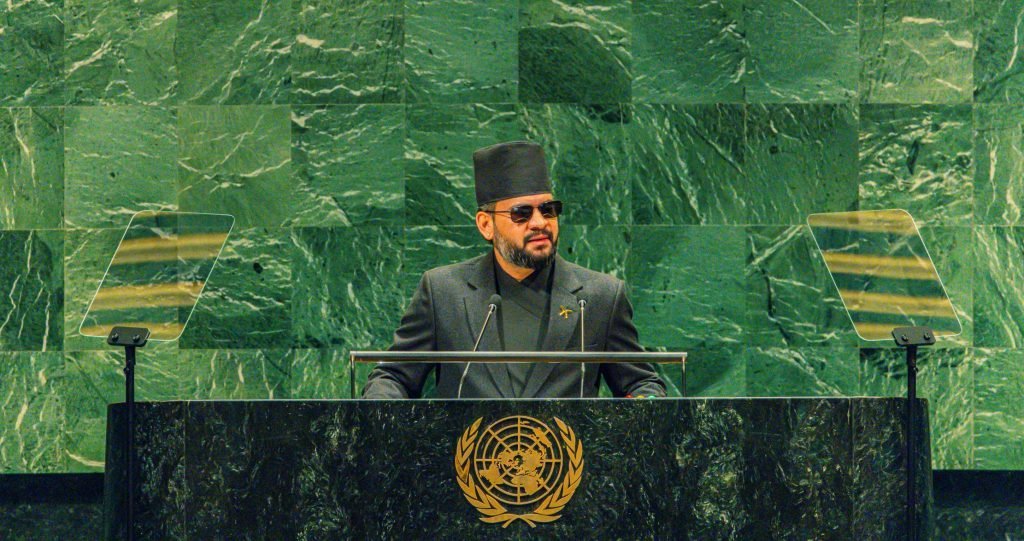
At the 81st UN General Assembly, Prime Minister Balen Shah delivered Nepal's clearest argument yet for climate justice. This blog breaks down what he said, why it matters, and what travelers can do in response.
On September 24, Nepal's Prime Minister Balen Shah stood at the UN General Assembly in New York and said something that needed to be said plainly.
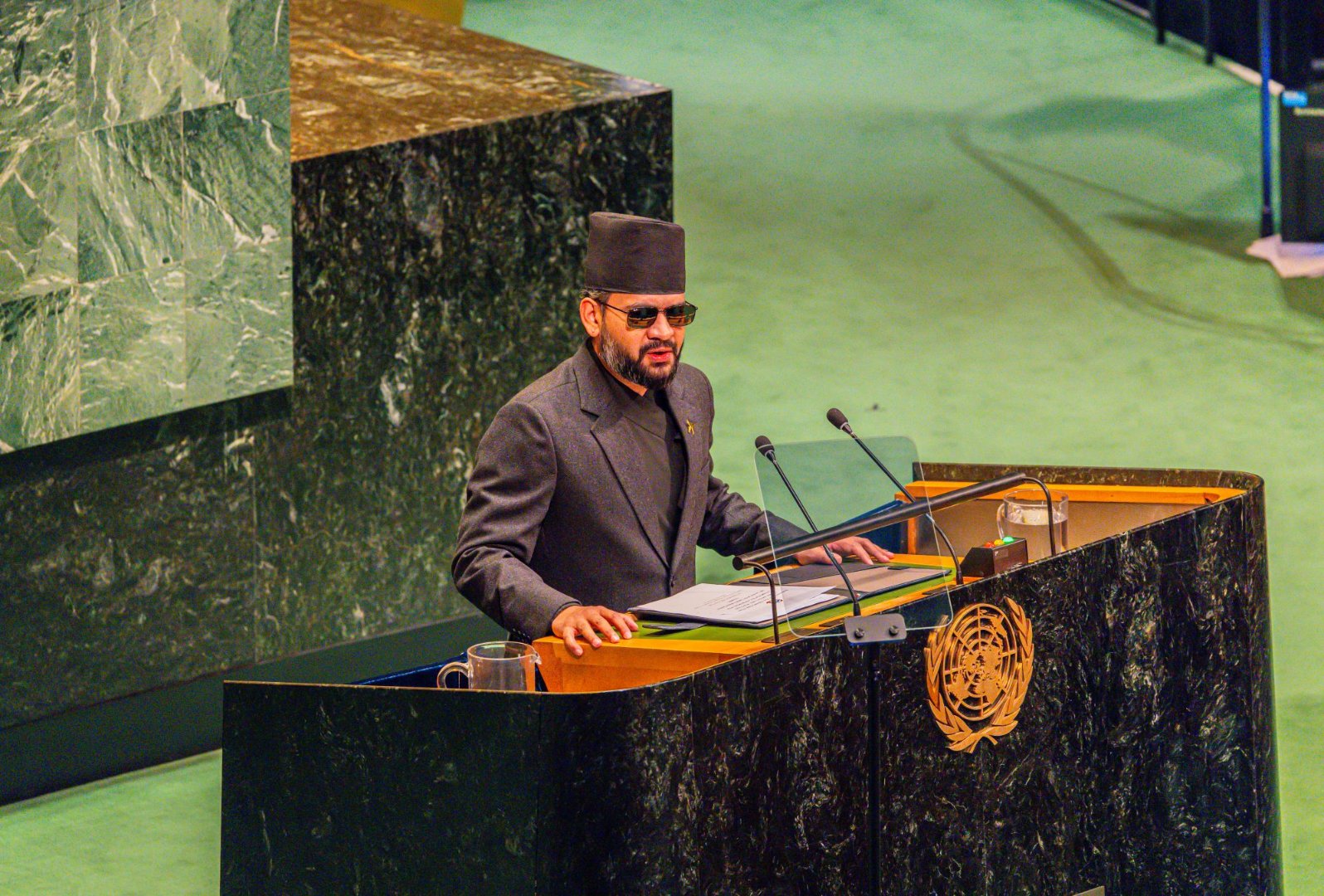
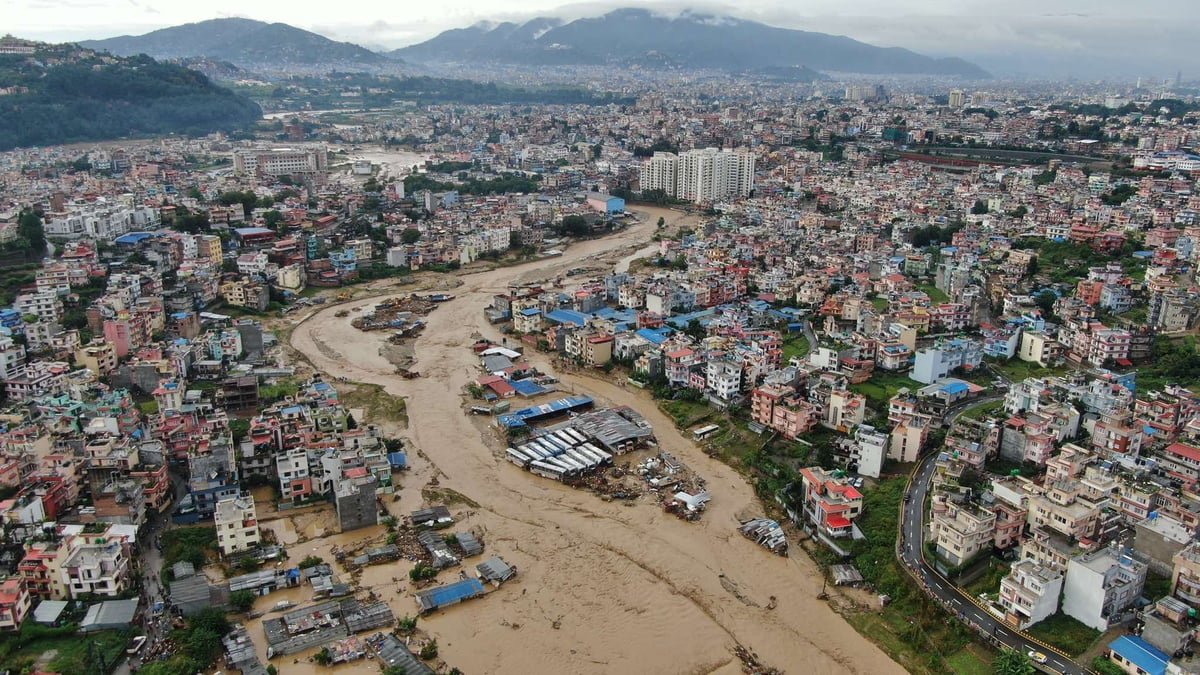
He did not come with the usual diplomatic platitudes. He came with a number: Nepal contributes less than 0.1% of global greenhouse gas emissions. Then he described what the August 26 glacier flood did to his country. Over 1,400 dead. More than 6,000 are still missing. Physical damage estimated at roughly 10% of GDP. Roads, bridges, schools, and homes swept away in hours.
His point was direct. Nepal did not create this crisis. Nepal is paying for it anyway.
TL;DR
Balen Shah addressed the 81st UN General Assembly on September 24, 2026
His core argument: Nepal contributes less than 0.1% of global emissions but bears enormous climate consequences
He called for a Himalayan Climate Resilience Mechanism, climate finance reform, and genuine loss and damage support
He described the global logistics failure: weapons cross borders in 72 hours, a Nepali farmer cannot get fertilizer on time
For travelers, visiting Nepal and spending locally is one of the most direct responses to what he described
What He Actually Said
Shah covered three things. The flood, the injustice behind it, and the broken global system that made it worse.
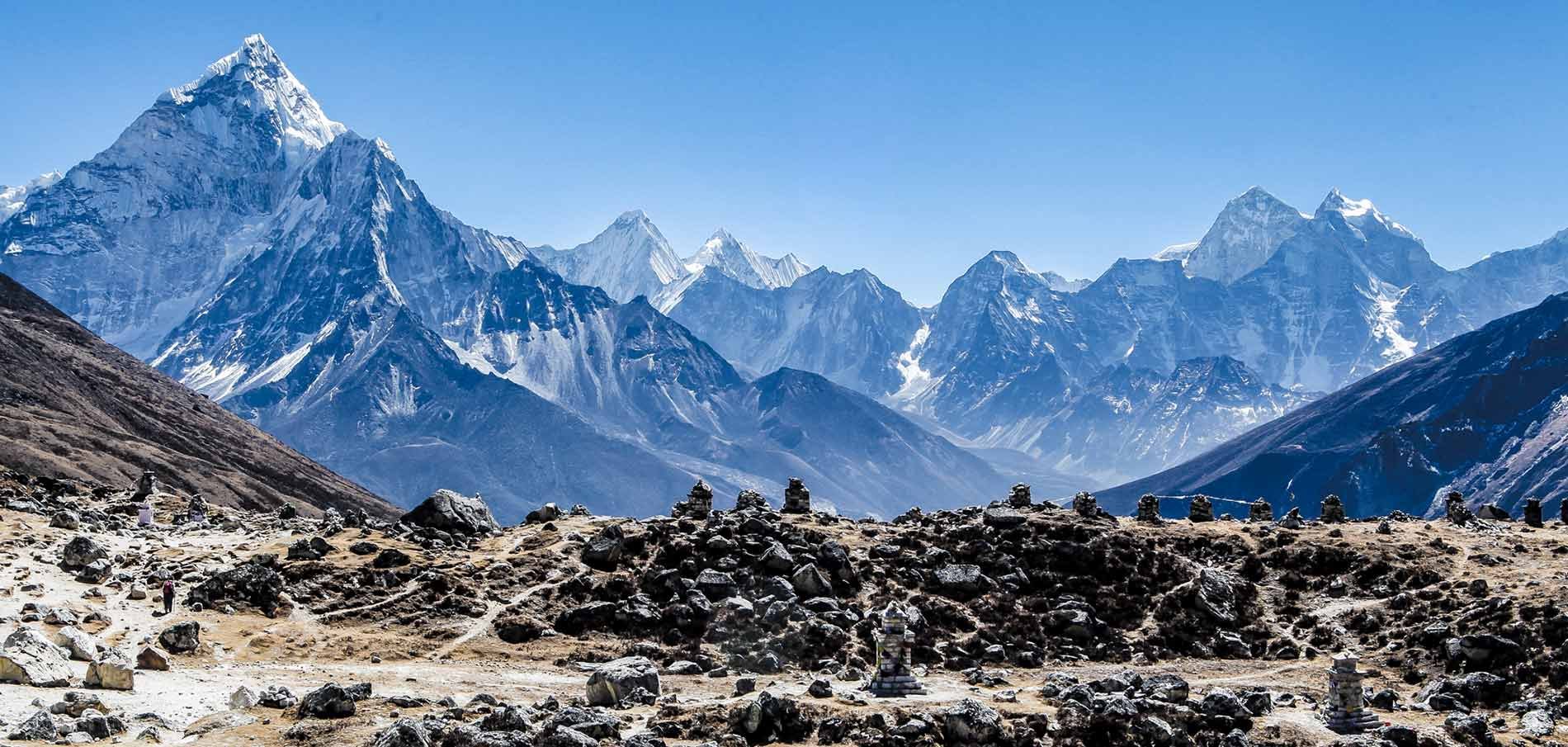
The first was the flood. Shah called the Bhotekoshi disaster a warning to the world, not just a local tragedy. He asked whether the world had heard the Secretary-General's warning from Everest three years ago. His answer, implied rather than stated: no, not loudly enough.
The second was the injustice. Nepal emits almost nothing. Yet every major climate event threatens to erase years of development. The country borrows money to repair damage it did not cause. The Loss and Damage Fund exists on paper but remains, in his words, grossly inadequate. When a house is burning, he said, you do not ask the family to complete fifty forms.
The third part was the one that landed hardest. He pointed out a specific failure of the global order: inter-continental missiles arrive on time. Weapons cross borders, clear every bottleneck, meet every deadline. But a farmer in Nepal cannot buy fertilizer at market price when he needs it. The world has built, in his phrase, flawless logistics for war and broken logistics for food.
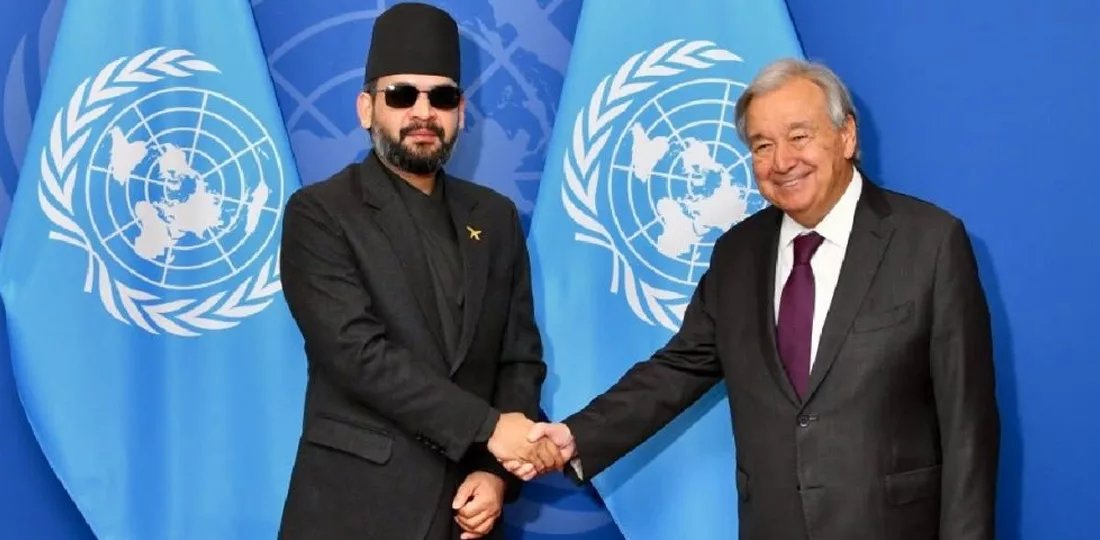
He proposed a Himalayan Climate Resilience Mechanism, a joint effort between Nepal, India, and China to share satellite data, monitor glacial lakes, and coordinate early warning systems. And he called for reform of the global financial architecture so that vulnerable countries are not forced through bureaucratic mazes to prove they need help.
So What Can You Do About It
Policy change at the UN level takes years, and climate finance negotiations even longer. The Himalayan Climate Resilience Mechanism, if it gets built, will take time.
But the economic argument Shah made at the UN has an immediate, ground-level version that travelers can act on today. Studies on where tourist money goes in Nepal show exactly how the economics work differently depending on where you stay.
Nepal's community homestays keep 85 to 95% of spending inside the local economy. The family earns from the room. The guide's income stays in the village. None of it leaks to a platform in Amsterdam or a hotel chain with shareholders elsewhere. This is why homestays are Nepal's most powerful development tool, not just a tourism product.
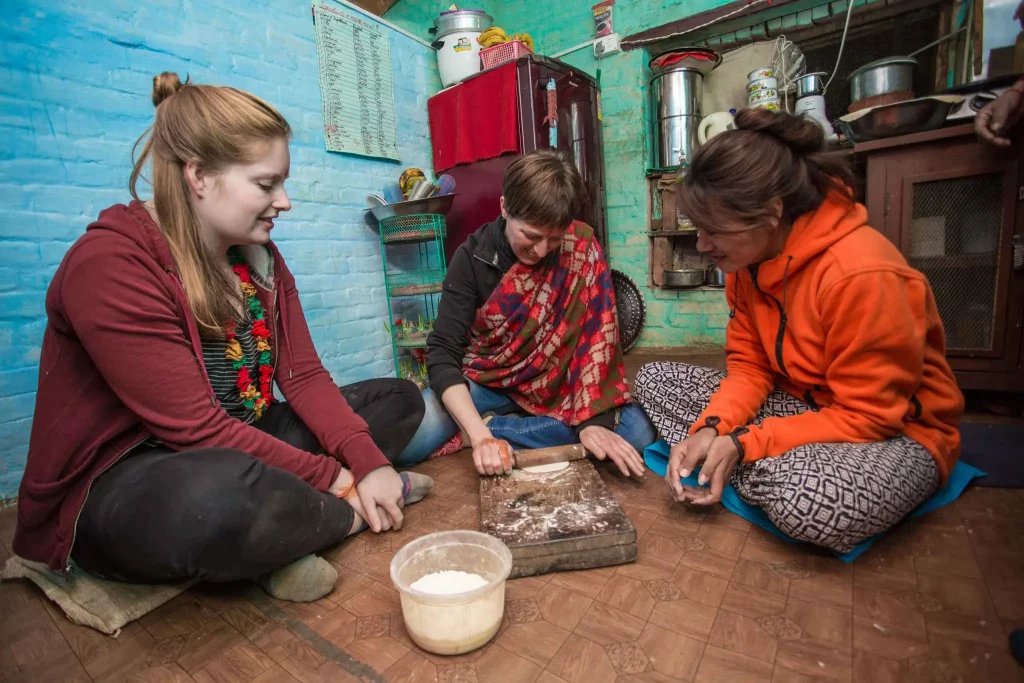
When you cancel a trip to Nepal because of flood coverage about a region that was never on your itinerary, the income stops reaching the families Shah was describing at the UN. The Tharu families in Chitwan, the Gurung communities around Pokhara, the Magar homestays in Namje, the tea garden families in Ilam. None of them were in the flood zone. All of them are experiencing the consequences of bookings cancelled in response to it.
Shah told the world that Nepal cannot build resilience alone against a crisis made worse by the failure of global governance. He is right. But resilience also gets built in October, when a family's homestay bookings come in and they can plan the winter. In most of these households, that means a woman planning the winter, since homestays in Nepal turn women's invisible work into real income.
The community homestays across Nepal that have been running for decades, from Sirubari in Syangja, Nepal's first community homestay, to the Tharu villages in Bardiya, are exactly the kind of local economies that climate justice is supposed to protect. Visiting them is not charity. It is participation in the thing Shah was arguing for.
Final Thought
Balen Shah told the UN that climate justice cannot remain a beautiful phrase in a document. That is true at the policy level. It is also true at the booking level.
The distance between a phrase in a document and a family in Sirubari or Chitwan or Ilam getting through winter is not filled by policy alone. It is filled by people showing up when it is easier not to.
Nepal is open and October is the best month of the year to be there.
Browse verified community homestays across Nepal on Nepal Homestays and book directly with the host family.
Company Admin
नेपालका सुन्दर होमस्टेहरूबारे सच्चा कथा र अनुभव साझा गर्ने यात्रा लेखक।