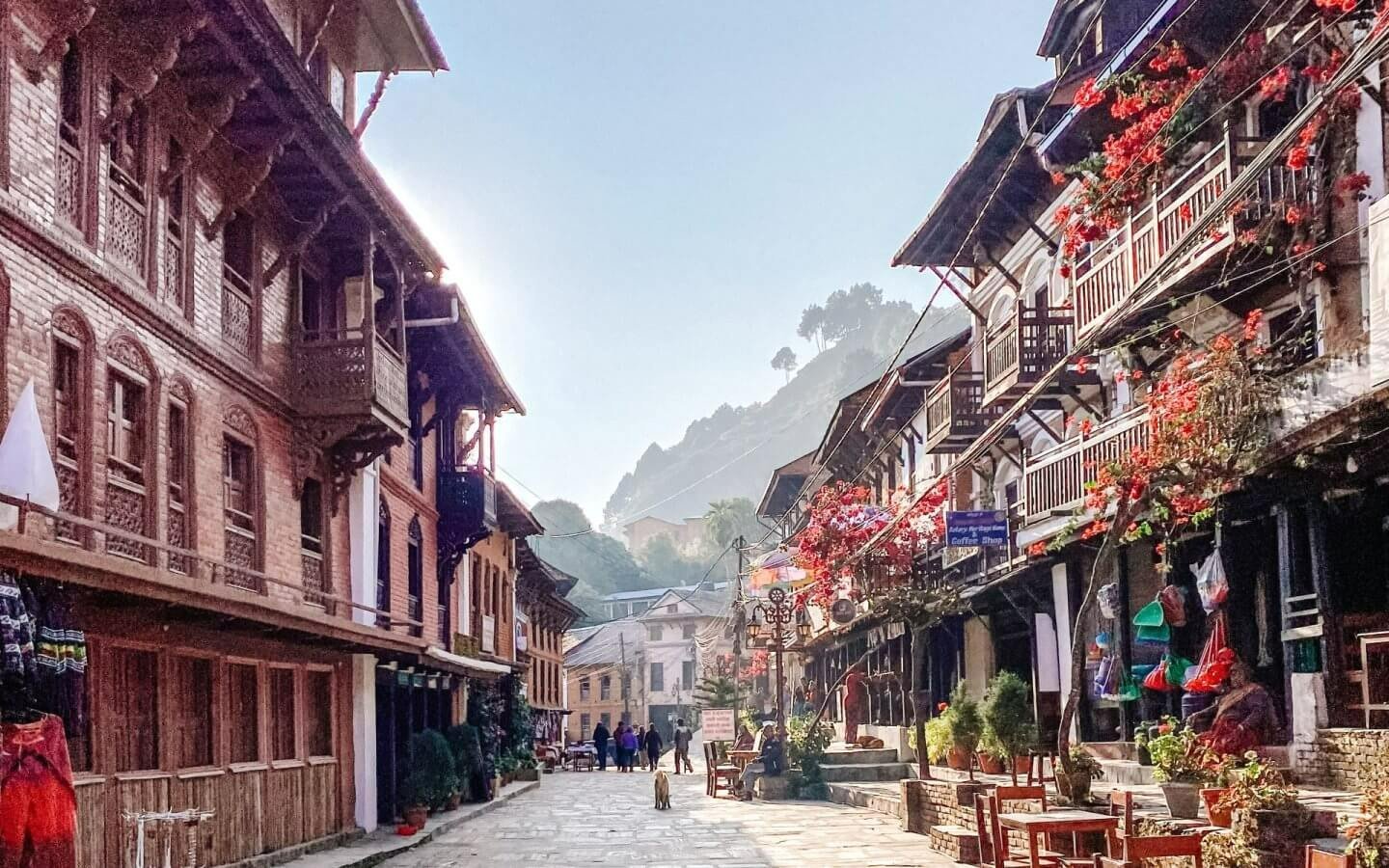
Bandipur sits on a hilltop 143 km from Kathmandu with cobblestone streets, Newari architecture, and Annapurna views that most travelers miss because they stay on the highway. This guide covers what to see, what to do, how to get there, and why two days here beats a rushed Pokhara stop.
The bus from Kathmandu to Pokhara passes through Dumre at the base of a hill. Most passengers stay on the bus. Eight kilometres up that hill is Bandipur, a Newari trading town that has been sitting up there since the 18th century with cobblestone streets, carved wooden balconies, and a view of the Annapurna range that nobody in the valley below can see. The people who get off the bus and climb up mostly stay two or three days longer than planned.
Bandipur is at 1,030 metres, traffic-free in the bazaar area, and genuinely one of the best-preserved examples of Newari hill architecture outside the Kathmandu Valley. It is also 80 kilometres from Pokhara and takes 40 minutes by jeep from the highway. There is no good reason to skip it.
TL;DR
Bandipur is a traffic-free Newari hilltop town 143 km from Kathmandu and 80 km from Pokhara
No entrance fee to the town or main bazaar, Siddha Cave entry is NPR 150
Two days is the right amount of time: one for the bazaar and viewpoints, one for Siddha Cave
Get off the Kathmandu to Pokhara bus at Dumre, then take a 40-minute jeep up
Best time is October to April, avoid monsoon if you are doing the cave hike
Bindabasini Homestay is one verified stay option listed on Nepal Homestays
Quick Overview: Bandipur Nepal
What Is Bandipur?
Bandipur was established by Newar traders from Bhaktapur in the 18th century as a stop on the India-Tibet trade route. When the Prithvi Highway was built through the valley below in the 1970s, the trade traffic moved to the road and Bandipur was essentially left behind. That accident of history is why the town looks the way it does today: three-storey brick buildings with carved wooden windows and overhanging balconies, cobblestone lanes, and a main bazaar street wide enough for foot traffic only.
The Nepal Tourism Board recognises Bandipur as one of Nepal's model tourism villages. The municipality has kept the bazaar area vehicle-free, which is the single decision that separates it from every other Newari town in the country. You walk through it without motorbikes. Bandipur sits in the Gandaki Province, the same region as Sikles and Pokhara. If you are building a longer western Nepal loop, the Sikles homestay guide covers the Gurung villages north of Pokhara that pair well with a Bandipur stop.
Places to Visit in Bandipur
Bandipur Bazaar
The main street is the reason you came. Three to four hundred metres of brick-paved lane lined with buildings that have barely changed since the trading days. Ground floors that once opened as shops still have the same wide doorways. Upper floors have carved wooden screens and balconies that lean slightly over the street. Walk it slowly in the morning before the domestic tourist jeeps arrive from Pokhara. The light is better and the lane is quieter.
Thani Mai Temple and Viewpoint
A 15-minute walk up the hill above the bazaar brings you to Thani Mai temple at 1,150 metres. The view from here is the best in the area: Annapurna II, Annapurna IV, Lamjung Himal, and Manaslu lined up to the north, the Marsyangdi Valley and Prithvi Highway visible far below. Sunset from this point, when the light hits the peaks from the west, is the single best moment in a Bandipur stay.
Khadga Devi Temple
The most important religious site in Bandipur, at the east end of the bazaar. The temple houses a sacred sword relic that is displayed to the public once a year during the Khadga Jatra festival. The temple structure is modest but the festival brings the entire town together in a way that is worth planning around if your dates align.
Siddha Cave (Siddha Gufa)
The largest cave in Nepal and the second largest in South Asia. 437 metres deep, 50 metres high, discovered in 1988 by a group of hikers. Inside: limestone stalactites and stalagmites in shapes that have been given names by local guides, hundreds of bats that you hear before you see, and a cold, damp air that drops noticeably from the entrance. It is genuinely impressive in scale.
Two ways to get there. From Bandipur, follow the signs from the north end of the village down a stone path through jungle. The walk takes 1.5 hours each way and is slippery in places. From Bimalnagar on the Prithvi Highway, it is a 45-minute uphill walk with around 1,200 steps. A guide is compulsory at the cave entrance and costs NPR 200 to NPR 400. Bring a torch even though the cave has lighting, the deeper sections are dark. Entry fee is NPR 150. Open 7 AM to 7 PM daily.
Ramkot Village
A 2-hour walk from Bandipur through terraced fields and small Magar settlements. The trail is not difficult and passes through working farmland with views back toward the Annapurna range. Ramkot itself is a quiet village with traditional houses and very few visitors. Worth doing if you have a second full day and want something beyond the cave.
Gurungche Hill
A short walk above the bazaar with a 360-degree panorama of the surrounding hills and valley. Less dramatic than Thani Mai but closer and useful for morning orientation when you first arrive.
Food in Bandipur
Bandipur's food scene is small but reliable. The bazaar has several local restaurants serving dal bhat, noodle soup, and Newari snacks. A few teahouses on the main street have started serving espresso and filtered coffee to cater to the growing number of travelers stopping here between Kathmandu and Pokhara.
Worth looking for specifically:
Bara: lentil flour pancakes, a Newari staple, served at local restaurants in the bazaar morning and afternoon
Yomari: steamed rice flour dumplings filled with molasses and sesame, available during festivals and at some family kitchens year-round
Newari pickle plates: small portions of various fermented and spiced vegetables served as accompaniment to the main meal
Most homestays in Bandipur serve breakfast and dinner cooked by the family. If you are staying with a local household, the food is almost always better than the bazaar restaurants. Newari cuisine in Bandipur shares roots with what you find in Bhaktapur and Patan, though the hill setting brings in more seasonal mountain vegetables. The village homestays near Kathmandu guide covers similar Newari-influenced food traditions in the hill villages east of the valley.
How to Get to Bandipur
From Kathmandu: Take any Pokhara-bound tourist bus or local bus from the main Kathmandu bus park. Tell the driver or conductor you are getting off at Dumre. Journey time is 3 to 4 hours, cost NPR 400 to NPR 700 depending on the bus. From Dumre, shared jeeps run up to Bandipur regularly through the day. Cost NPR 100 to NPR 150 per person, journey 40 minutes. Last jeep up is typically around 5 PM.
From Pokhara: Pokhara to Dumre is 80 km, about 1.5 to 2 hours by bus or jeep. From Dumre, same shared jeep up to Bandipur. Total journey from Pokhara around 2 to 2.5 hours.
Private vehicle: A private taxi from Kathmandu to Bandipur costs NPR 5,000 to NPR 7,000. From Pokhara, NPR 3,000 to NPR 4,500. The road from Dumre to Bandipur is paved but steep and narrow in sections.
On a Kathmandu to Pokhara itinerary: Bandipur works perfectly as a stop between the two cities. Spend two nights, then continue to Pokhara by jeep down to Dumre and onward by bus. No backtracking required. For travel time planning across Nepal, the Kathmandu to village travel times guide shows realistic journey durations from Kathmandu to different destinations.
Where to Stay in Bandipur
Bandipur has a range of guesthouses and homestays along and near the bazaar. Staying in a family homestay here is different from a hotel in one practical way: your host knows which restaurant is good that week, which trail is slippery after rain, and whether the Saturday crowd is worth avoiding by leaving early or staying an extra day.
Bindabasini Homestay Bandipur is one verified listing on Nepal Homestays in the town. Browse other available Bandipur properties and confirm meal inclusion and room type directly with the host before arriving. Weekends, particularly Friday and Saturday nights, see higher domestic tourist traffic. If you want quiet, plan for Sunday to Thursday. Before you pack, the Nepal homestay packing list covers what you need for a hill town stay at this altitude.
For context on how Bandipur fits into a broader Nepal trip, the top 10 places to visit in southern Nepal guide is useful if you are combining Bandipur with a Terai leg. Travelers heading south toward the national parks after Bandipur can read the Tharu community homestay guide for Chitwan and Bardiya options, or the Chitwan National Park guide for safari planning.
Prices
Best Time to Visit Bandipur
October to December is the clearest window. Post-monsoon skies give the sharpest mountain views from Thani Mai. The Khadga Jatra festival falls in October during Dashain, which is the best time to see the town at full cultural intensity. Book accommodation at least a week in advance during festival periods.
January to March is cold but clear. Temperatures in January drop to around 5 degrees Celsius at night. Mountain views remain strong. The bazaar is quieter and the Siddha Cave hike is drier than any other time of year.
March to April brings warmer days and rhododendron blooms on the trail to Siddha Cave. The light softens and the surrounding hills turn green. Good for photography.
May to September is monsoon. The town itself is fine and very green. The Siddha Cave trail becomes genuinely slippery and some sections wash out. Possible but not recommended if the cave is your main reason for coming.
Frequently Asked Questions
What is Bandipur Nepal famous for?
Bandipur is famous for being Nepal's best-preserved Newari hilltop town, a traffic-free bazaar with centuries-old brick architecture, panoramic Annapurna views, and Siddha Cave, the largest cave in Nepal.
How do I get to Bandipur from Kathmandu?
Take a Pokhara-bound bus and get off at Dumre, 3 to 4 hours from Kathmandu. From Dumre, shared jeeps run up to Bandipur in 40 minutes for NPR 100 to NPR 150 per person.
How many days do I need in Bandipur?
Two days is the right amount. Day one for the bazaar, Thani Mai viewpoint, and sunset. Day two for the Siddha Cave hike. A third day is worth it if you want to walk to Ramkot village.
Is there an entry fee for Bandipur?
No entrance fee for the town or bazaar. Siddha Cave charges NPR 150 entry plus NPR 200 to NPR 400 for a compulsory guide.
What is Siddha Cave?
Siddha Cave is the largest cave in Nepal and second largest in South Asia, 437 metres deep and 50 metres high. It is located below Bandipur and accessible by a 1.5-hour hike from the town or a 45-minute walk up from the Prithvi Highway at Bimalnagar.
What is the best time to visit Bandipur?
October to April. October is best for the Khadga Jatra festival and clear mountain views. March to April for warmer weather and green hills. Avoid monsoon if you plan to hike to Siddha Cave.
Where should I stay in Bandipur?
Family homestays in the bazaar area give you the closest experience to the town's actual rhythm. Bindabasini Homestay is one verified option on Nepal Homestays. Confirm availability and meal options directly with the host.
Can I visit Bandipur as a day trip from Pokhara?
Yes. Pokhara to Dumre is about 1.5 hours, then 40 minutes up to Bandipur. A day trip gives you enough time for the bazaar and Thani Mai viewpoint. For Siddha Cave you need at least one night.
Company Admin
Travel writer sharing authentic stories and experiences from Nepal's beautiful homestays.