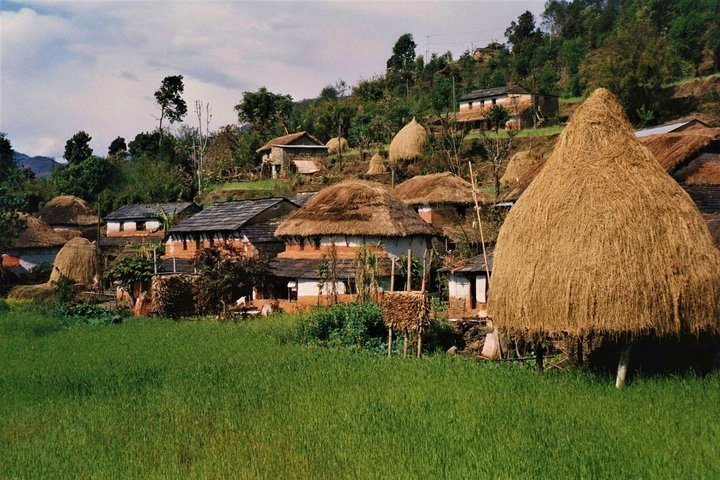
Sirubari in Syangja started Nepal's entire homestay movement in 1997. Nearly three decades later it is still running, still welcoming guests with flowers and panchai baja at the village entrance. This guide covers what to expect, where to stay, and how to get there from Pokhara.
Every community homestay in Nepal traces back to one village. In October 1997, Captain Rudraman Gurung, a retired Indian Army officer from Syangja, opened the first organised homestay in Nepal in Sirubari village. He had spent years in India and Europe and came back wanting to build something for his community. The idea was simple: guests sleep in local homes, eat what the family eats, and participate in village life. The Tourism Management Committee assigns you to a family. You do not choose. That single design decision is why Sirubari still works nearly three decades later.
The village won the PATA Gold Award for Heritage and Culture in 2001 and was declared Nepal's first model tourism village in 2000. Every community homestay that followed, in Ghandruk, Sikles, Lwang Ghalel, Bhujung, across the entire country, draws its lineage from what Rudraman started here. Coming to Sirubari is not just a pleasant Gurung village stay. It is visiting the origin.
TL;DR
Sirubari is Nepal's first community homestay village, established October 8, 1997 by Captain Rudraman Gurung
Located in Andhikhola Rural Municipality-1, Syangja, at 1,610 metres, 64 km from Pokhara
The Tourism Management Committee assigns guests to host families on rotation, you do not choose your host
Main attraction is Thumro Juro viewpoint at 2,023m with panoramic Annapurna, Dhaulagiri, and Machhapuchhre views
Guests are welcomed with flowers and panchai baja music at the village entrance
Best time is October to April
Quick Overview: Sirubari Homestay
Sirubari: Why It Matters
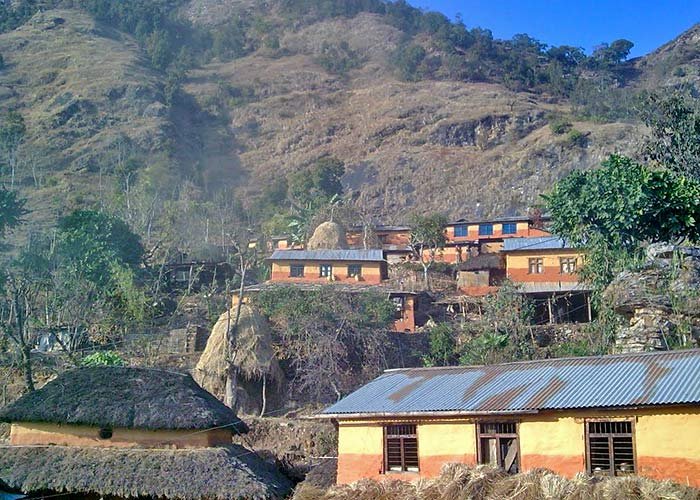
Sirubari sits at 1,610 metres in the hills of Syangja district, southwest of Pokhara, in a typical Gurung settlement of 39 households. The village has a Buddhist monastery at its center, a community forest, a primary health center, and a statue of Captain Rudraman at the village gompa, a quiet reminder of what one person's idea did for an entire country's tourism sector.
The homestay model here is different from most. The Nepal Tourism Board describes it clearly: guests do not select their host family. The village Tourism Development and Management Committee (TDMC) assigns visitors to households on a rotation basis, ensuring income is distributed equally across all participating families. Revenue goes into a community fund that has built the health center, school infrastructure, and forest conservation programs. Most of the families running the homestay day-to-day are women, and the income model here is one of the clearest examples of how homestays in Nepal turn women's invisible work into real income.
This distribution model is what has kept Sirubari intact when other community homestays around Nepal have fragmented into individual competition. It is also why the welcome ceremony at the village entrance, with flowers and panchai baja music from the entire community, is genuine rather than staged. The whole village participates because the whole village benefits.
Every other community homestay in Nepal that follows a similar model, from Sikles and Kaskikot near Pokhara to the Tharu community stays in Chitwan and Bardiya, carries some version of what was pioneered here. The best community homestay circuits in Nepal puts Sirubari in context alongside five other circuits across the country.
What to Expect: The Sirubari Experience
Arrival
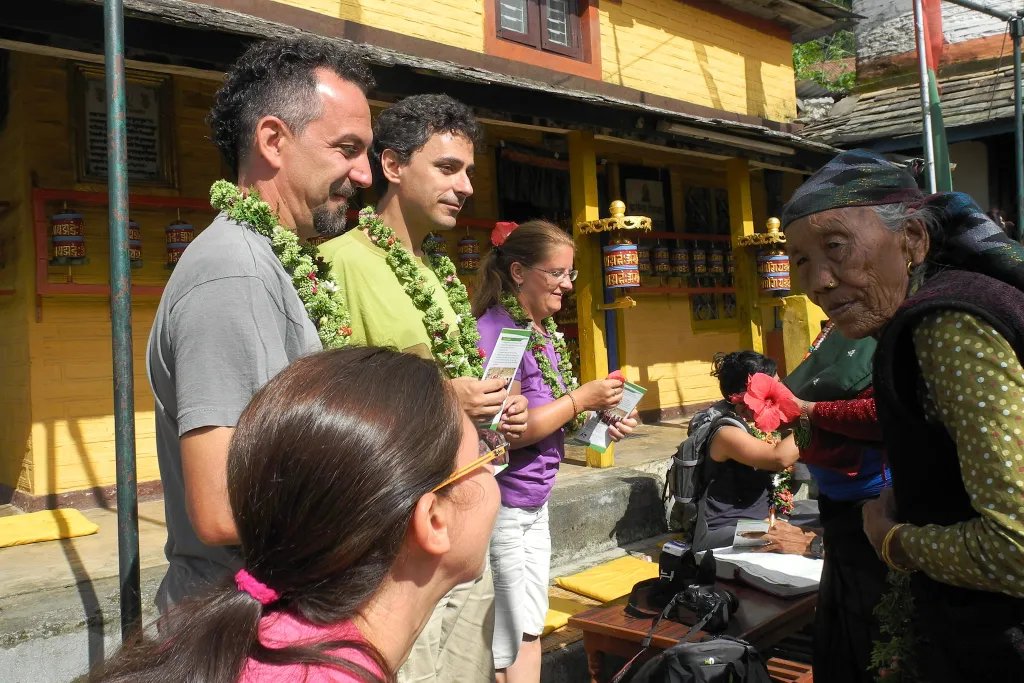
Guests arriving at Sirubari are received at the village entrance with a welcome ceremony. Marigold garlands, tika on the forehead, and panchai baja, the traditional five-instrument ensemble used for auspicious occasions. It is the same ceremony used for weddings and festivals. After the welcome, the TDMC distributes guests to their assigned host families.
Your Host Family
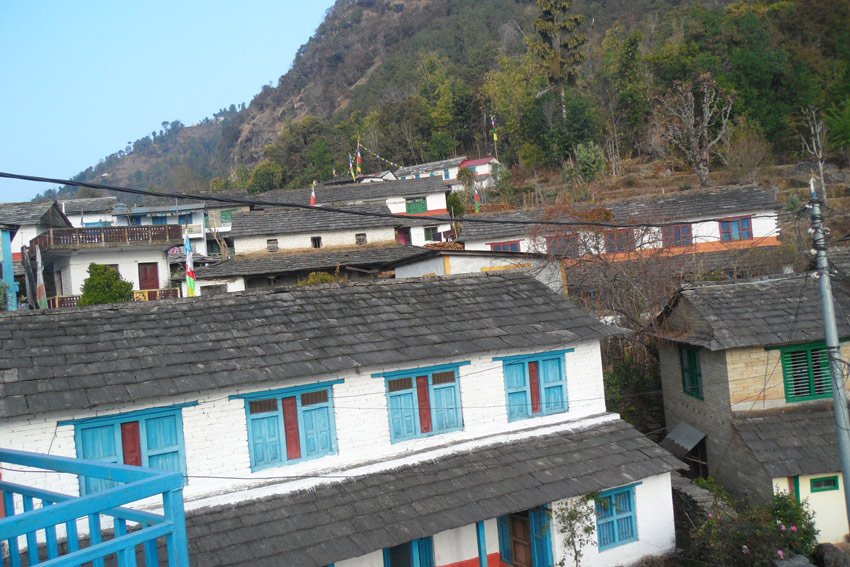
You will spend the stay with a Gurung family in a traditional slate-roofed stone house. The family does not know you are coming until you arrive and the committee assigns you. They are prepared for guests but not performing for them. You join their daily routine: morning tea in the kitchen, meals at the family table, and evenings on the veranda if the weather holds.
Cultural Programme
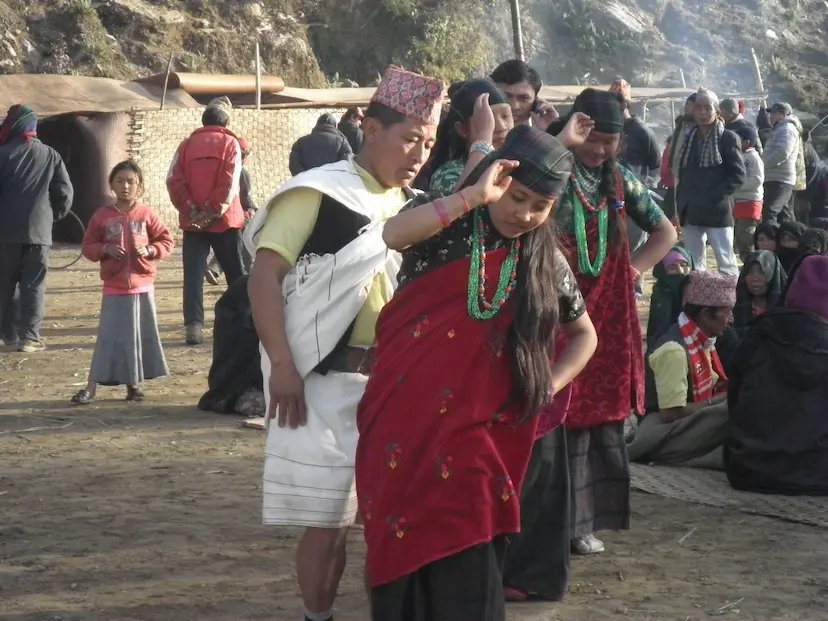
Every evening the village organises a cultural programme at the community hall or gompa courtyard. Rodhi, the traditional Gurung social gathering with music and dance, is the centerpiece. Young people from the village perform and the whole thing runs for an hour or two after dinner. It is not ticketed. It is what the village does.
Food
All meals are home-cooked by your host family. The food is Gurung hill cooking: dhido (millet or maize flour cooked thick), gundruk (fermented dried greens with a sharp, sour flavour), fried corn, soybean pickle, local chicken or goat meat on special occasions, and mohi, a buttermilk drink that arrives cold and is better than anything you will find in Pokhara. The Tourism Management Committee maintains standards across all households, so the quality is consistent regardless of which family you are assigned to. Gurung hill food has a distinct character from what you find in the Terai or the Kathmandu Valley, and the Nepali homestay food by region guide covers how these regional differences play out across different parts of the country.
Thumro Juro Viewpoint
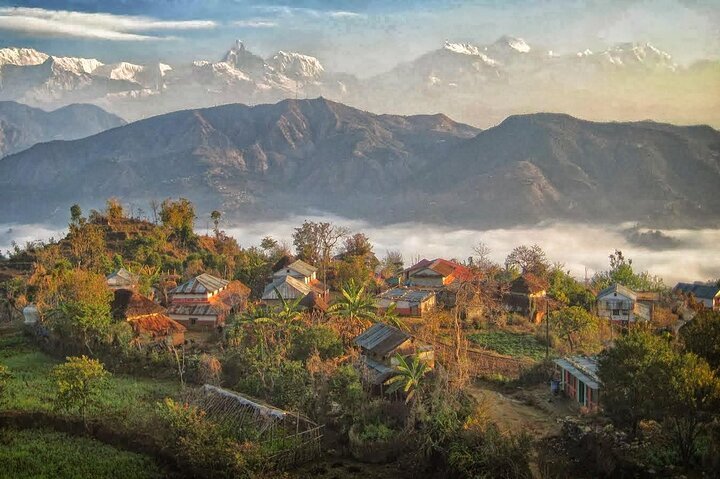
The main hiking destination from Sirubari is Thumro Juro at 2,023 metres, a 1.5 to 2 hour climb above the village. The ridge gives a full panoramic view of the western Himalayan range: Dhaulagiri, Annapurna South, Machhapuchhre, Manaslu, and on clear mornings in October and November, a long sweep of snow peaks stretching east toward Langtang.
Leave the village by 4:30 to 5 AM for sunrise. The trail goes through community forest and the upper section opens onto the ridge with views in both directions. Your host family will pack tea for the walk if you ask the night before. After the viewpoint, a longer trail continues to Gorujure and Maidan Kharka for travelers who want a half-day hike rather than a quick sunrise trip.
Village Walk and What to See
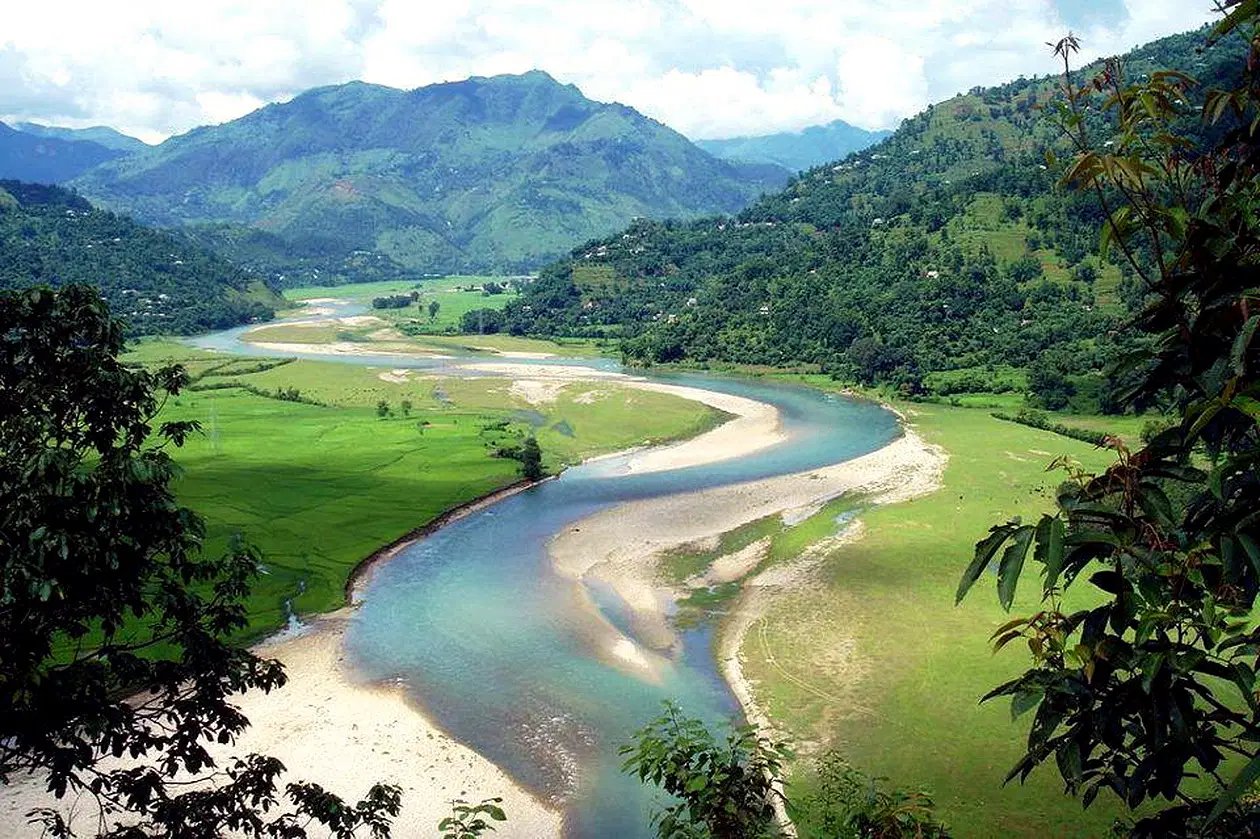
The village itself is worth a slow morning walk. Stone-paved lanes, traditional slate-roofed houses, kitchen gardens on every terrace. The community forest above the village is one of the best-managed in Syangja and birdwatching in the early morning is good without needing to go to the viewpoint at all.
Where to Stay
Sirubari Homestay in Panchamul, Syangja is the verified listing on Nepal Homestays for the Sirubari area. Deluxe rooms at NPR 2,500 per night with parking and geyser. Contact: 974-5996424.
For travelers who want to base themselves in Putalibazar, the nearest market town, Hunikot Homestay is a separate property overlooking terraced fields with Annapurna range views. Also NPR 2,500 per night. Contact: 984-6625344. Putalibazar is around 30 minutes from Sirubari village by road and has better transport connections for onward travel.
The traditional Sirubari village stay through the TDMC rotation system is the more culturally complete experience. The Putalibazar option works better for travelers who want more flexibility, including the ability to choose their accommodation and arrival time independently.
How to Get to Sirubari
From Pokhara: Sirubari is 64 km from Pokhara via Karkineta and Badhkhola. Regular buses depart from Prithvichowk in Pokhara every morning and afternoon to Karkineta. From Karkineta, a jeep or shared vehicle covers the remaining distance to the village. Total journey time is around 4 hours. The Pokhara travel guide covers the city as a base and what to do before or after your Sirubari stay.
From Kathmandu: 254 km via the Prithvi Highway, around 7.5 hours by bus. Take a Pokhara-bound bus and change at Karkineta, or take a direct bus toward Syangja from Kathmandu's main bus park. The Kathmandu to village travel times guide has the full breakdown for this route and others.
Getting around once there: The village itself is walkable. All main attractions including the gompa, school, and community forest are within 20 minutes on foot. Thumro Juro is a 1.5 to 2 hour hike on a clear trail. No jeep needed for the village stay itself.
Best Time to Visit Sirubari
October to December is the clearest window. The post-monsoon air is sharp, the Thumro Juro views are at their best, and the Annapurna range catches the first light cleanly. October and November are peak seasons for Nepali and international visitors. Book the Sirubari Homestay listing in advance.
January to March is cold but quiet. February and March bring warmer days and rhododendron blooms on the forest trails above the village. The cultural programme continues through winter. The Nepal homestay packing list covers what to bring for a hill village stay at this altitude across different seasons.
April to May is warm with slightly hazier views. Still worth visiting for the cultural experience and the village walk. The Thumro Juro sunrise is best before 7 AM before valley haze builds.
June to September is monsoon. The trails are slippery and mountain views disappear behind clouds most mornings. The village runs normally but the hike to Thumro Juro is not recommended.
Final Thought
Sirubari is not the most dramatic destination in Nepal. The viewpoint is good, not extraordinary. The village is tidy and well-run, not remote. What it has that nowhere else does is the weight of being first. Every family in the village participated in building something that spread across the entire country. Captain Rudraman is gone, but the system he designed, one that spreads income equally, welcomes every guest the same way, and keeps the food honest, is still running. That is harder to build than a viewpoint.
Book the Sirubari Homestay in Panchamul directly on Nepal Homestays.
Frequently Asked Questions
What is Sirubari famous for?
Sirubari is Nepal's first community homestay village, established in 1997 by Captain Rudraman Gurung in Syangja district. It was declared Nepal's first model tourism village in 2000 and won the PATA Gold Award in 2001. The village is known for its rotating homestay system, Gurung cultural programmes, and Thumro Juro sunrise viewpoint.
How do I book a Sirubari homestay?
You can book through Nepal Homestays directly at the Sirubari Homestay listing in Panchamul. The village's Tourism Management Committee assigns guests to host families on rotation, so you stay with whichever family is next in line rather than choosing one yourself.
How far is Sirubari from Pokhara?
Sirubari is 64 km from Pokhara, around 4 hours by road via Karkineta and Badhkhola. Regular buses run from Prithvichowk in Pokhara. From Karkineta, take a local jeep or shared vehicle to the village.
What is Thumro Juro?
Thumro Juro is a viewpoint at 2,023 metres above Sirubari village. The 1.5 to 2 hour hike gives panoramic views of Dhaulagiri, Annapurna, Machhapuchhre, and Manaslu. The best time is a pre-dawn start to catch sunrise from the ridge.
What food is served at Sirubari homestay?
All meals are home-cooked by your host family. Typical Gurung hill food: dhido, gundruk, fried corn, soybean pickle, local chicken or goat meat, and mohi (cold buttermilk). The Tourism Management Committee maintains consistent standards across all participating households.
Is Sirubari good for solo travelers?
Yes. The rotation system means solo travelers are assigned to a family and immediately part of a household. The village is safe, the trails are well-marked, and the cultural programme runs every evening regardless of group size.
What is the best time to visit Sirubari?
October to December for the clearest mountain views from Thumro Juro. February and March for rhododendron blooms on the forest trails. Avoid June to September when monsoon clouds block mountain views and make the hike slippery.
Company Admin
Travel writer sharing authentic stories and experiences from Nepal's beautiful homestays.