From dal bhat in the hills to yak sukuti in the Himalayas and spicy fish curry in the Terai, this guide to Nepali homestay food by region shows you exactly what to expect on your plate and how to eat like a local in 2026.
Key Takeaways
Every region in Nepal serves dal bhat (rice and lentil soup), but each one makes it taste completely different.
The Himalayas offer warming dishes like thukpa and dhindo, while the Terai serves spicy biryani and fresh fish curries.
Kathmandu Valley is the best place to try Newari food, including bara and yomari.
Homestay meals are cooked fresh every day using local and seasonal ingredients.
Eating with your right hand is the local custom and part of the experience.
Food at a Nepal homestay is almost always healthier, fresher, and more interesting than restaurant food.
Introduction: The Best Meal You Will Ever Have Is Inside Someone's Home
Imagine sitting on a wooden floor in a stone house, watching the sun go down over green terraced fields. A woman places a warm plate in front of you. On it is rice, golden lentil soup, a vegetable curry, and a spicy pickle. She motions for you to eat. No menu. No bill. Just food made with care, from a garden you walked past an hour ago.
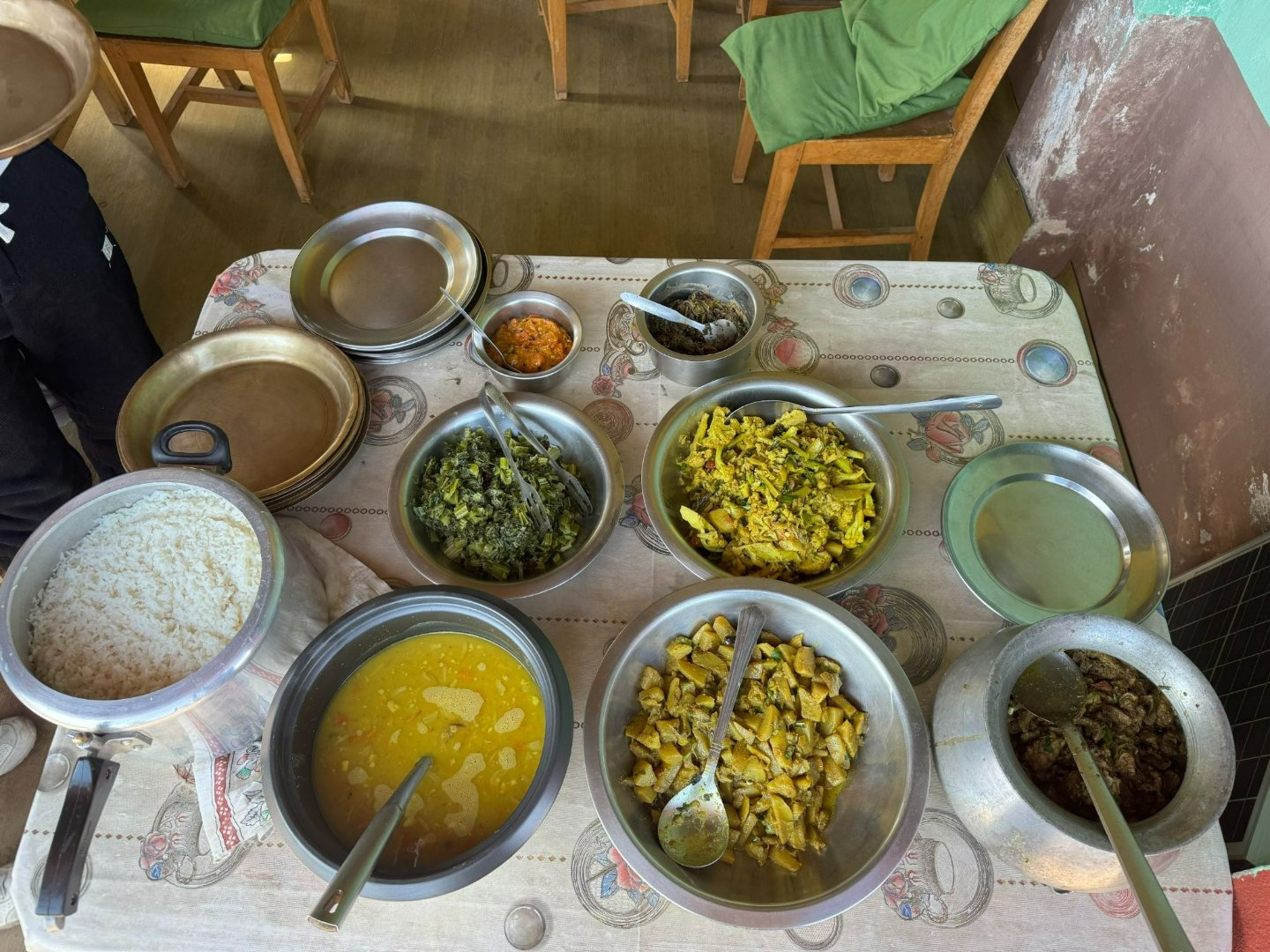
That is what food at a Nepali homestay feels like.
Nepal is not one place when it comes to food. The country rises from hot, flat plains near India to snowy mountain peaks near Tibet. Each region grows different crops, follows different cooking traditions, and has its own special dishes. When you stay in a local home, you get to taste all of that.
This guide will show you exactly what to expect to eat at a homestay in each major region of Nepal:
What dishes are most common in each area and why
The flavors, ingredients, and cooking styles that make each region special
Tips for eating like a local and making the most of your homestay food experience
What Makes Homestay Food in Nepal So Special
Homestay food is not restaurant food. It is home cooking, which means it is made fresh, with local ingredients, and served with real warmth.
Here is what makes it stand out from eating at any hotel or restaurant:
The food changes with the season. Hosts cook with whatever is fresh in the garden or market that week. In spring, you might get fiddlehead fern curry. In winter, you will find root vegetable stews.
Recipes come from generations of knowledge. Many families have been making the same achar (pickle) recipe for decades.
Portions are always generous. Nepali hospitality means your host will refill your plate before you even ask.
The meal is a shared experience. You eat with the family, which is often the best way to understand their daily life.
As one homestay host in the Annapurna region told a travel writer: "Food is our language. We teach guests to cook dhindo. It is how we show care."
Nepal's Three Major Regions and Why They Eat Differently
Before diving into specific dishes, it helps to understand why food changes so much from place to place.
Nepal is divided into three main geographic zones, and each one has a completely different climate, altitude, and access to ingredients. These factors shape everything that ends up on your plate.
The Terai borders India, so its food has a strong Indian influence with more spice and variety. The hills are home to dozens of ethnic groups like the Gurung, Magar, and Tamang, each with their own food traditions. The Himalayan zone is shaped by Tibetan culture and a need for warming, high-calorie meals.
Kathmandu Valley: Newari Feasts and City Comforts
The Kathmandu Valley sits at about 1,400 meters above sea level. It is home to the Newar people, one of the oldest communities in Nepal, and their food culture is one of the richest in the country.
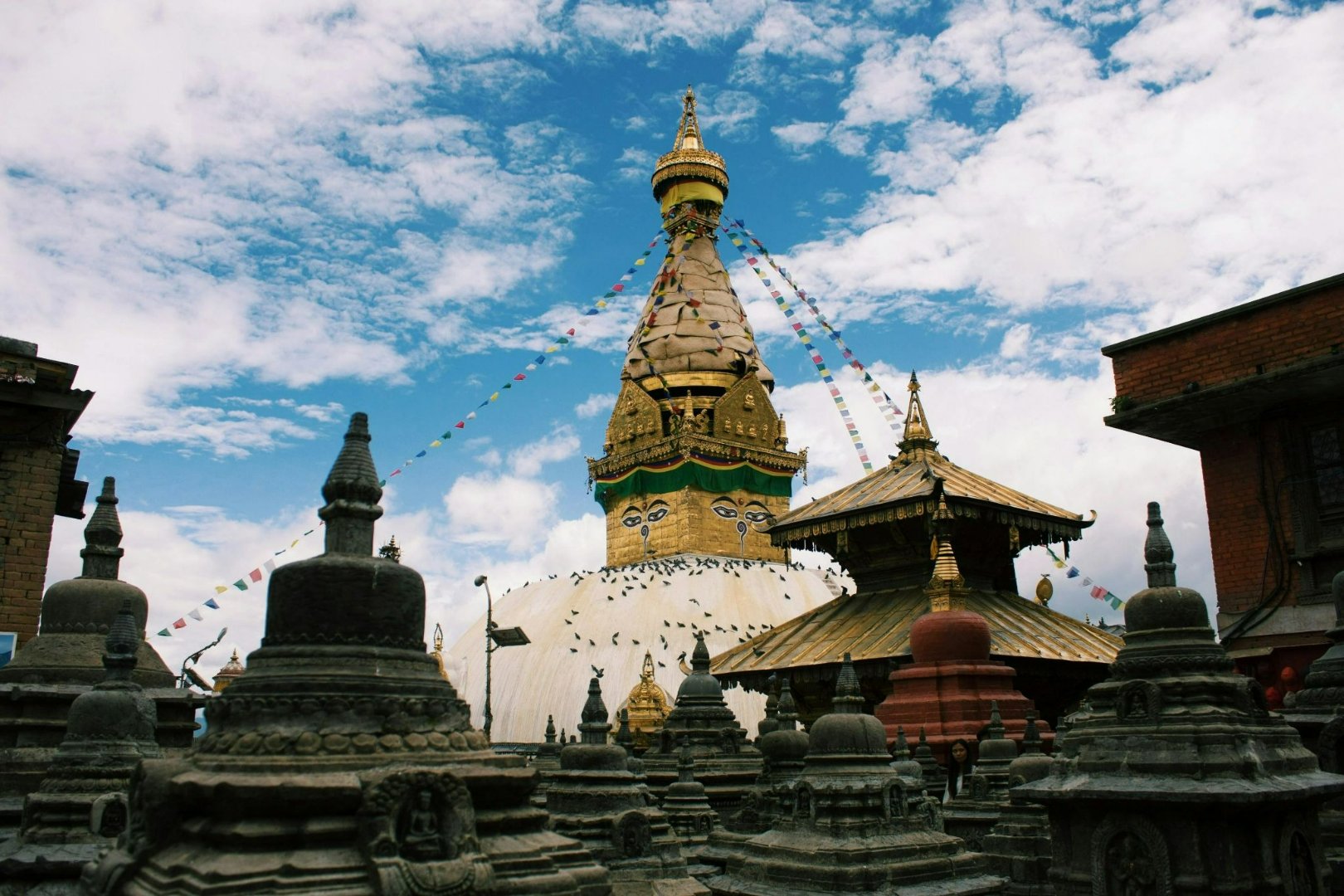
When you stay at a homestay in Kathmandu, you step into a food world that blends ancient Newari traditions with everyday Nepali cooking.
Signature Dishes You Will Find at a Kathmandu Homestay
Newari food is often described as a feast. A traditional Newari meal can include more than 20 small dishes served all at once. Even at a simple homestay, you will likely try several of these:
Bara is a thick, golden pancake made from black lentils. It can be eaten plain, topped with a fried egg, or stuffed with minced meat. It is often served with chutney for dipping.
Samay Baji is a traditional Newari platter that includes beaten rice (chiura), boiled egg, fried meat, pickled vegetables, and spiced soybean. It is usually eaten at festivals but some hosts serve it for special guests.
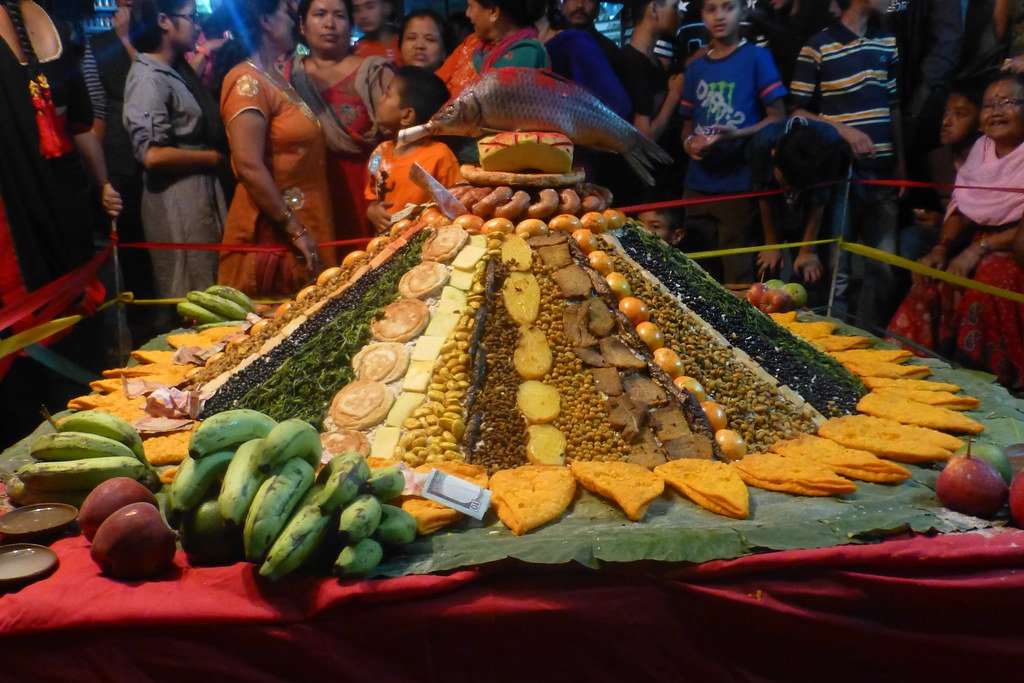
Yomari is a sweet steamed dumpling made from rice flour, filled with jaggery (raw sugar) and sesame seeds. It is traditionally made during the Yomari Punhi harvest festival in winter, but some families make it year-round.
Chatamari is sometimes called the Newari pizza. It is a thin, crispy rice flour crepe topped with minced meat, egg, or vegetables. It is light, savory, and very easy to enjoy.
Aloo Tama is a popular everyday dish of potato and fermented bamboo shoot curry. It has a slightly sour taste that is hard to describe but very easy to enjoy.
What Breakfast Looks Like in Kathmandu
Most homestay breakfasts in Kathmandu are simpler than the evening meals. You can usually expect:
Sweet, milky Nepali tea called chiya, often spiced with ginger and cardamom
Beaten rice (chiura) with yogurt, or sometimes with fried potatoes
Roti (flatbread) with vegetable curry or eggs
Occasionally sel roti, the sweet ring-shaped fried bread that is a festival favorite
Drinking Culture in Kathmandu
Newari culture has a long tradition of home-brewed alcohol. If you visit a traditional Newari household, you may be offered raksi, a strong homemade spirit distilled from millet or rice, or thon, a local fermented rice beer that is mild and slightly sweet. These are offered as a gesture of welcome. You are never required to drink, but trying a small sip is a polite way to appreciate the hospitality.
The Hilly Middle Region: Hearty Meals for Hard-Working Families
The hills of Nepal are home to the largest number of people and the widest variety of ethnic groups. This region stretches across the middle of the country and includes popular trekking destinations like Pokhara and the trails around Annapurna.
Families here are often farmers who grow their own food on stepped hillside terraces. The food reflects that: simple, filling, and made from whatever the land provides.
Dal Bhat: The Heart of Every Hill Homestay Meal
Dal bhat is the most important meal in Nepal, and nowhere is this more true than in the hills. It is eaten twice a day, every day, by most families.
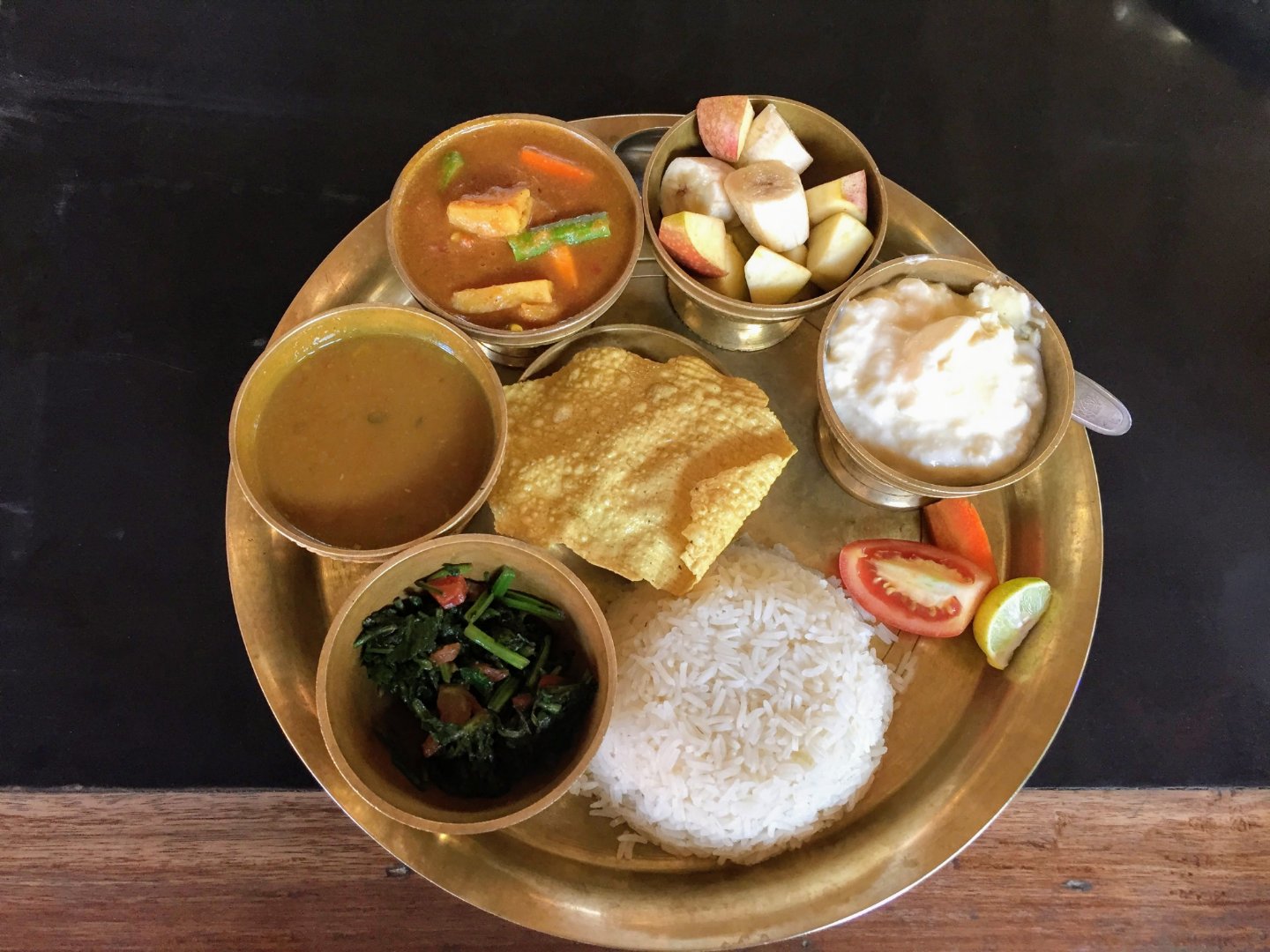
The phrase "dal bhat power, 24 hour" is not just a saying. Dal bhat is a genuinely complete meal with carbohydrates from rice, protein from lentils, and vitamins from vegetables and pickles. Trekkers and travelers often say they have more energy after a full dal bhat than after any other meal.
A typical dal bhat plate includes:
Bhat: Steamed white rice, served as the base of the meal
Dal: Lentil soup poured over the rice or served on the side, often thick and spiced with cumin, garlic, and turmeric
Tarkari: One or two vegetable curries, which change based on the season and what is available
Saag: Leafy green vegetables, usually spinach or mustard leaves, cooked lightly with garlic
Achar: A spicy pickle or chutney, almost always homemade, and often the best part of the meal
One important fact about dal bhat at a homestay: your host will keep refilling your plate. This is not optional. Refusing too many times is considered rude. Eat slowly and enjoy every bite.
Other Common Hill Dishes at Homestays
The hills offer more than just dal bhat. Here are other dishes you might find at a homestay in this region:
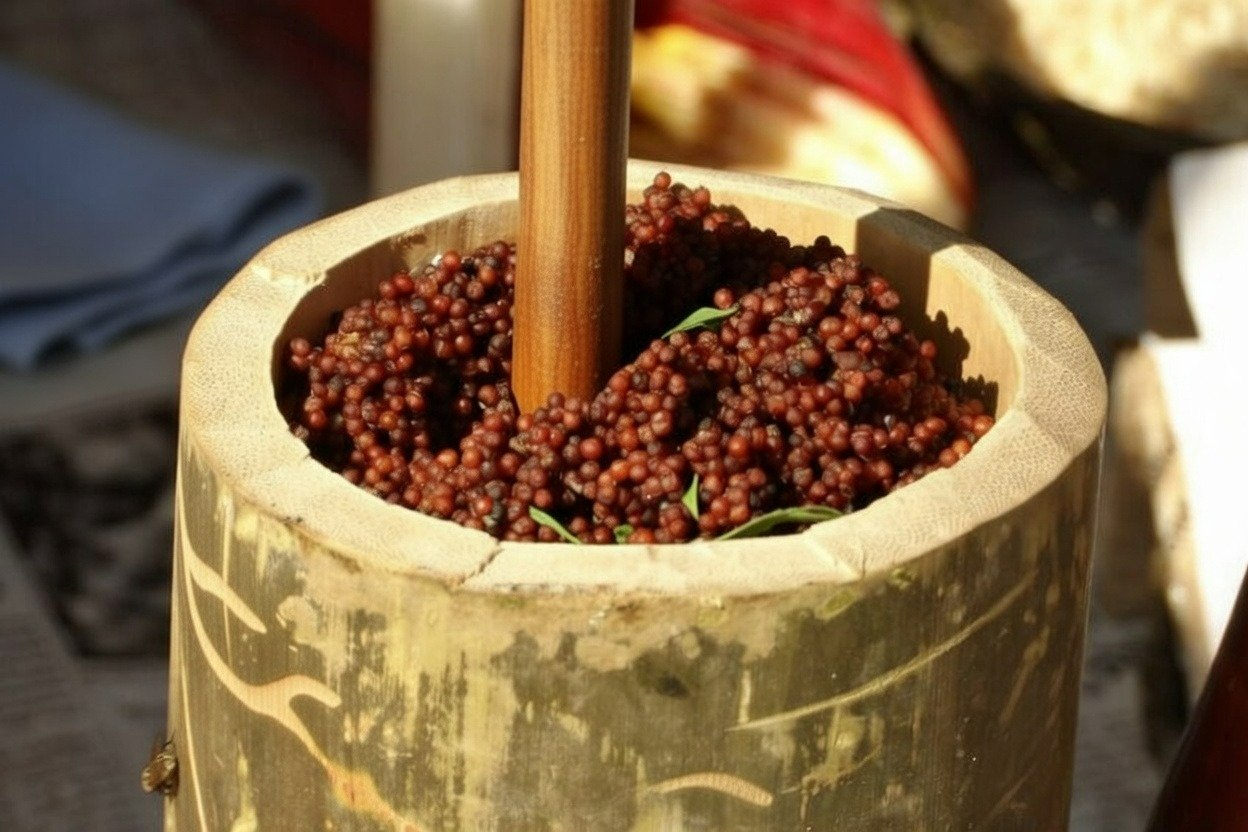
Dhindo is a thick porridge made by cooking millet or buckwheat flour in water until it becomes firm. It is shaped into balls by hand and dipped into dal, vegetable curry, or spicy chutney. It is more filling than rice and has a nutty, earthy flavor.
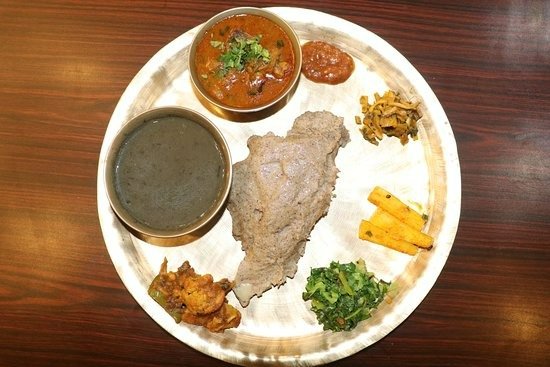
Gundruk is fermented leafy greens, usually made from mustard leaves or radish tops. It is dried, pressed, and fermented over several weeks. The result is a tangy, slightly sour ingredient used in soups and chutneys.
Sukuti is dried meat, usually buffalo or goat, that has been salted and smoked. In hill homestays run by Gurung or Magar families, sukuti is a common snack or side dish served with drinks or as part of a meal.
Momos are steamed or fried dumplings filled with minced meat or vegetables. While originally Tibetan, momos are now a beloved dish across all of Nepal. A homestay host making fresh momos is one of the most special food experiences you can have.
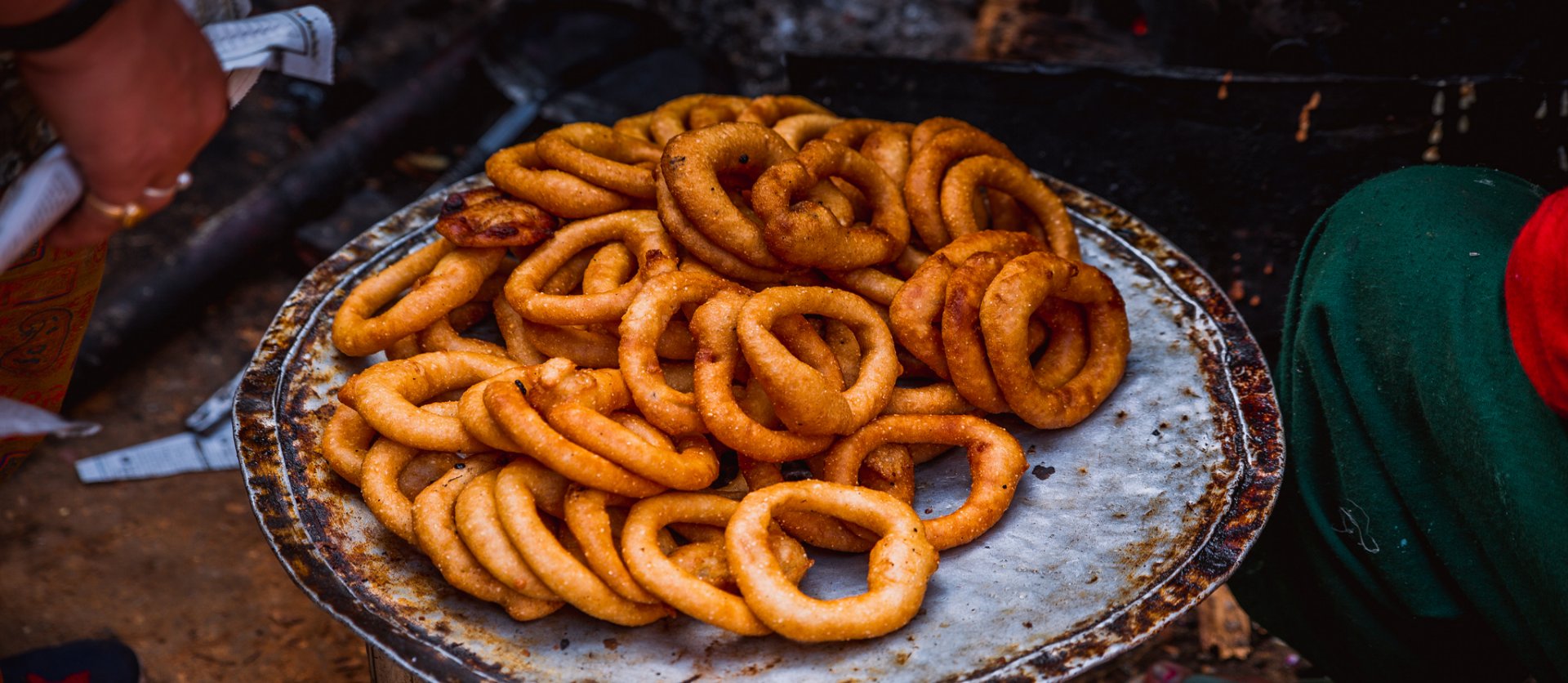
Sel Roti is a ring-shaped sweet bread made from rice flour and fried in oil. It is usually made during festivals like Dashain and Tihar, but some homestay hosts make it for guests as a treat.
What the Thakali Region Adds to Hill Food
The Thakali people, who live along the Kali Gandaki river valley in central Nepal, are famous for running the best bhatti (local inns) in the country. Their food combines highland and lowland traditions. If your homestay is in a Thakali household, expect a richer and more varied dal bhat, the use of jimbu (a dried Himalayan herb that smells like a mix of garlic and onion), buckwheat pancakes and breads, and generous use of mustard oil in cooking
The Himalayan Zone: Warming Food for Cold Heights
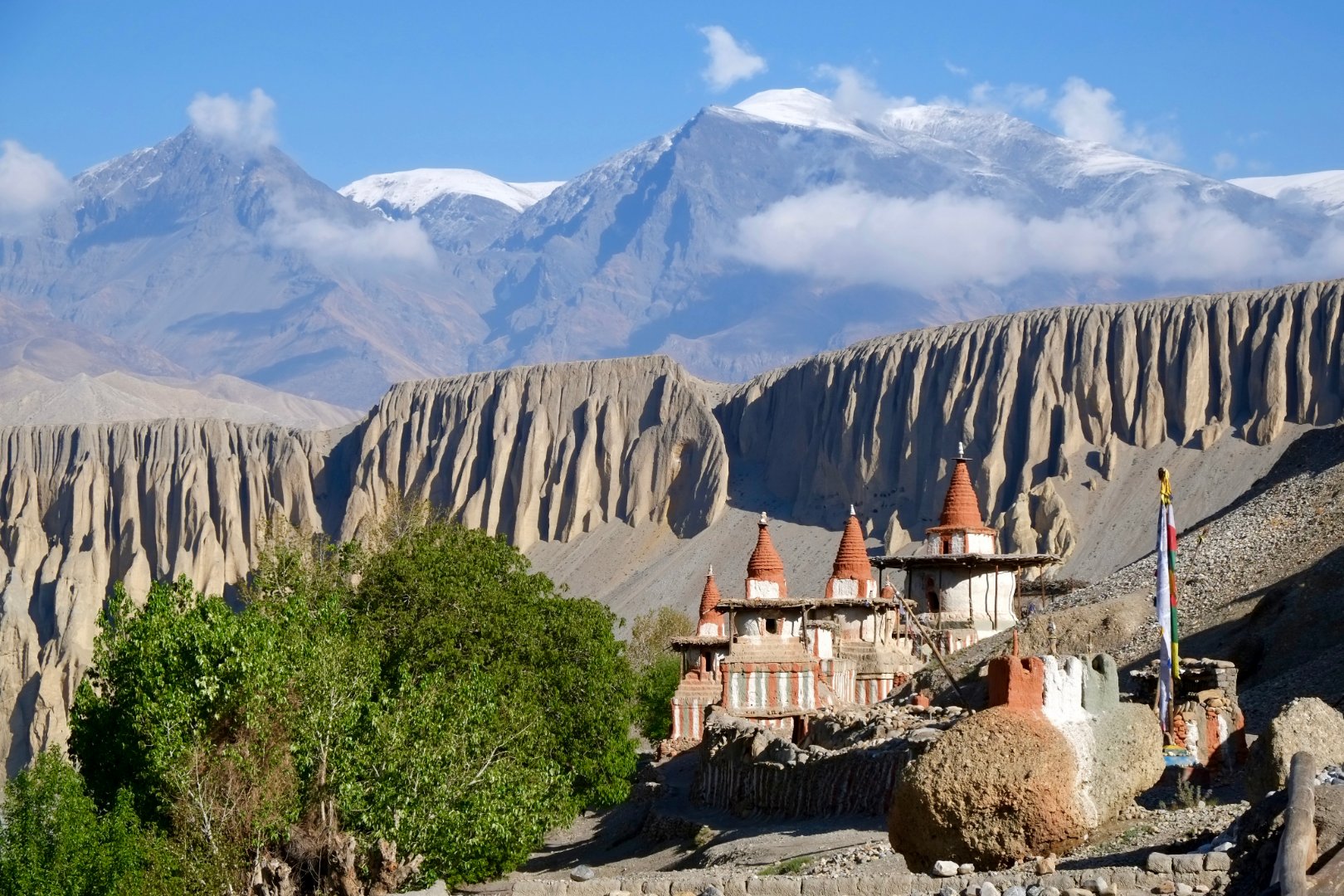
At altitudes above 2,500 meters, the climate becomes cold and harsh. Rice does not grow well here. Fresh vegetables are scarce during winter. The food in this region has been shaped by centuries of surviving in one of the most challenging environments on earth.
Homestays in this region are found in villages along trekking routes like the Annapurna Circuit, the Everest Base Camp trail, and the remote Upper Mustang.
The Food You Will Eat at a High Altitude Homestay
High-altitude cooking is focused on two things: staying warm and staying full. The dishes are rich in calories and almost always served hot.
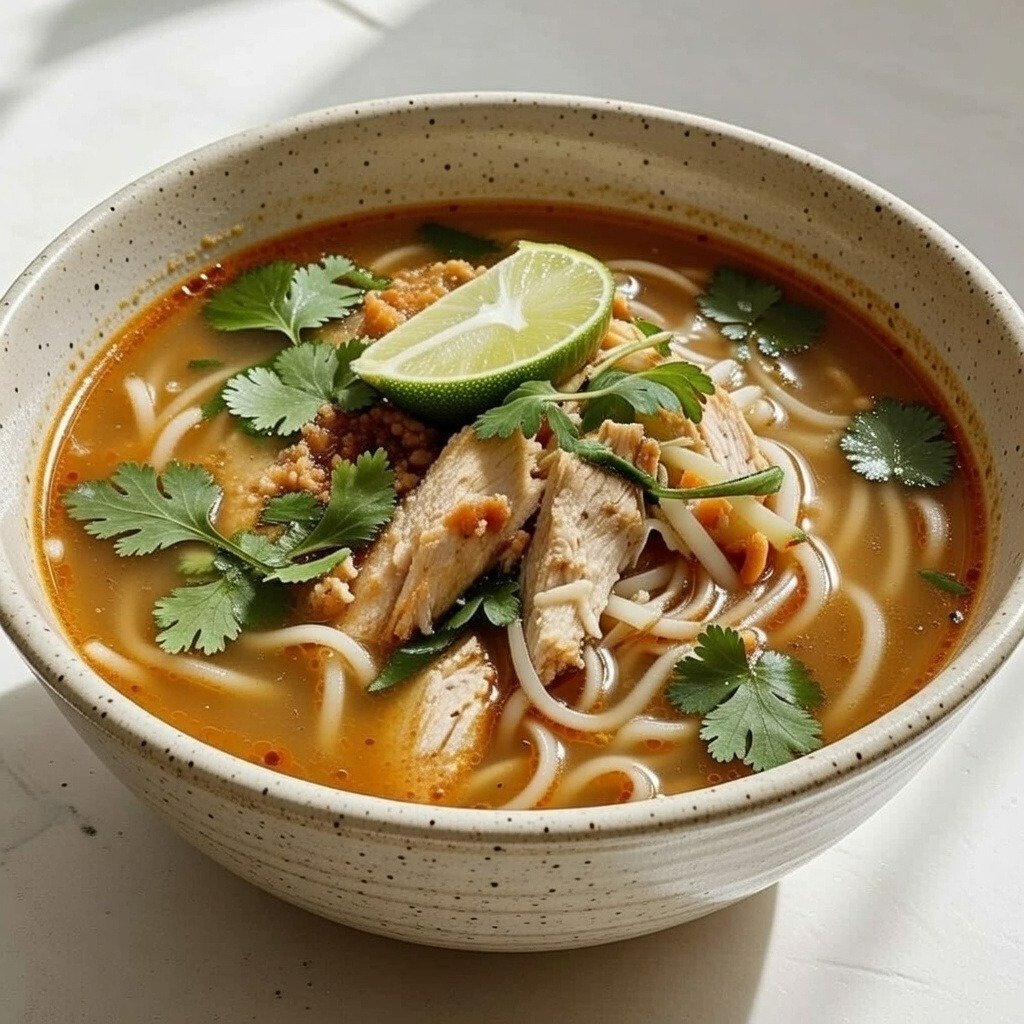
Thukpa is a thick noodle soup made with vegetables and sometimes meat in a savory broth. It has Tibetan origins. After a long day of trekking in cold weather, a bowl of hot thukpa is one of the most satisfying things you can eat.
Dhindo is even more common here than in the hills. In areas where rice is imported and expensive, dhindo made from buckwheat or barley is the everyday staple.
Yak Sukuti is dried, smoked yak meat seasoned with local spices. In remote Himalayan villages, preserving meat by drying and smoking it is a traditional way to ensure food through the long winter.
Butter Tea (Suja) is made with black tea, yak butter, and salt. It is creamy, salty, and warming. It is very high in calories, which is exactly what your body needs at high altitude.
Tongba is a warm drink made from fermented millet. It is served in a bamboo mug and you drink it through a bamboo straw. It is mildly alcoholic and warming.
Tsampa is roasted barley flour mixed with butter tea or water to form a dough. It is the traditional everyday food of Tibetan-influenced communities in northern Nepal.
Upper Mustang: Where Tibet Meets Nepal at the Dinner Table
Upper Mustang is a remote, arid region that was once an independent kingdom with strong ties to Tibet. At a homestay here, you might be served shabalay (deep-fried bread stuffed with yak mince), butter tea and tsampa as a standard breakfast, barley-based stews, and yak cheese offered as a snack.
The Terai: Spicy, Tropical, and Full of Surprises
The Terai is the flat, hot strip of land along Nepal's southern border with India. It is the most fertile region in Nepal and grows the country's rice, wheat, sugarcane, mangoes, jackfruit, and much more.
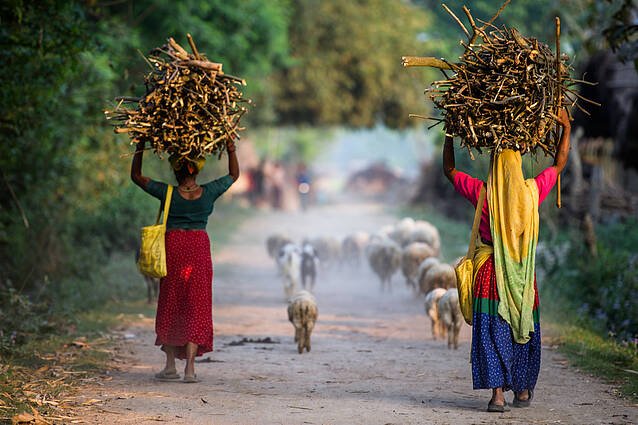
The food here is the most heavily influenced by Indian cuisine. Spices are used more generously, and the dishes are often spicier and more varied than what you find in the hills.
The Diverse Communities of the Terai and Their Food
Terai is home to several distinct communities, each with its own cooking traditions.
Tharu Community Food
The Tharu are the indigenous people of the Terai lowlands. Their food traditions are unique and quite different from mainstream Nepali cooking.
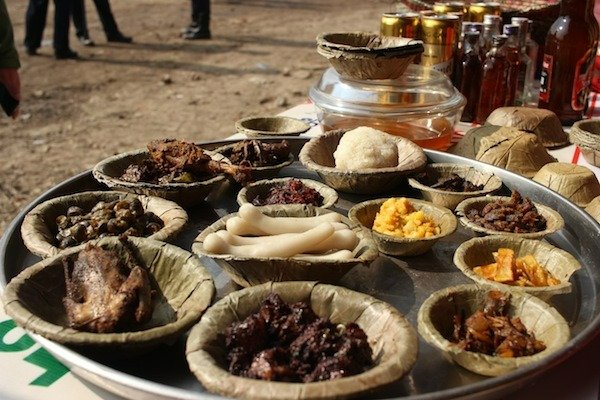
At a Tharu homestay, you might be served:
Dhikri (or Bagiya): Steamed dumplings made from rice flour, often filled with sweet or savory fillings. These are a beloved Tharu specialty, especially during festivals.
Ghonghi: This is a dish made from small freshwater snails found in paddy fields and streams. The snails are cleaned, boiled, and cooked with spices. It is a special dish that many travelers find surprising but often enjoy.
Sidhara: A mixture of dried fish, taro root, and turmeric pressed into cakes and dried for preservation. It is a traditional way of storing protein in a hot climate.
Bhakka: A soft, fluffy steamed cake made from rice, often eaten during the Maghe Sankranti festival.
Madhesi and Maithili Community Food
The Madhesi communities of the Terai eat food very similar to food in the Indian state of Bihar. A typical meal might include basmati rice cooked with ghee, fish curry or goat curry, deep-fried vegetable fritters called tarua, fresh mango or lemon pickle, and thekua, a sweet cookie made from wheat flour, ghee, and sugar that is traditionally made for the Chhath festival.
A typical Terai homestay dinner is a generous spread. Expect big portions, strong spices, and very flavorful food.
Tropical Fruits at a Terai Homestay
One thing that surprises many travelers in the Terai is the abundance of fresh tropical fruit. If you visit between April and July, your host may serve fresh mango varieties you cannot find anywhere else, litchi picked straight from the tree, jackfruit curry made with unripe jackfruit and spices, and papaya often eaten green and pickled as a side dish.
Eastern Nepal: Fermented Flavors and Mountain Traditions
Eastern Nepal is home to communities like the Rai, Limbu, and Sunuwar people. Their food culture is distinct and features several fermented ingredients that you will not find anywhere else.
What to Expect at a Homestay in Eastern Nepal
Eastern Nepali food is bolder and more fermented than food in other regions. Here are the key dishes:
Kinema is a fermented soybean dish made by the Limbu, Rai, and Sunuwar communities. It has a strong, pungent smell that can take some getting used to, but the flavor is rich and savory.
Yangben is a unique dish made by cooking pork with edible lichen and local spices. This dish is specific to Limbu culture and is one of the most unusual dishes you will find at a homestay anywhere in Nepal.
Tongba is also very common in eastern Nepal. The Rai and Limbu communities often serve it as a welcome drink for guests.
Gundruk and Sinki are both fermented vegetables commonly eaten in this region. Sinki is made from fermented radish roots and has a very sour flavor.
Western and Far-Western Nepal: Simple, Honest, Hearty
The western and far-western regions of Nepal are less visited by travelers but offer some of the most genuine homestay experiences in the country.
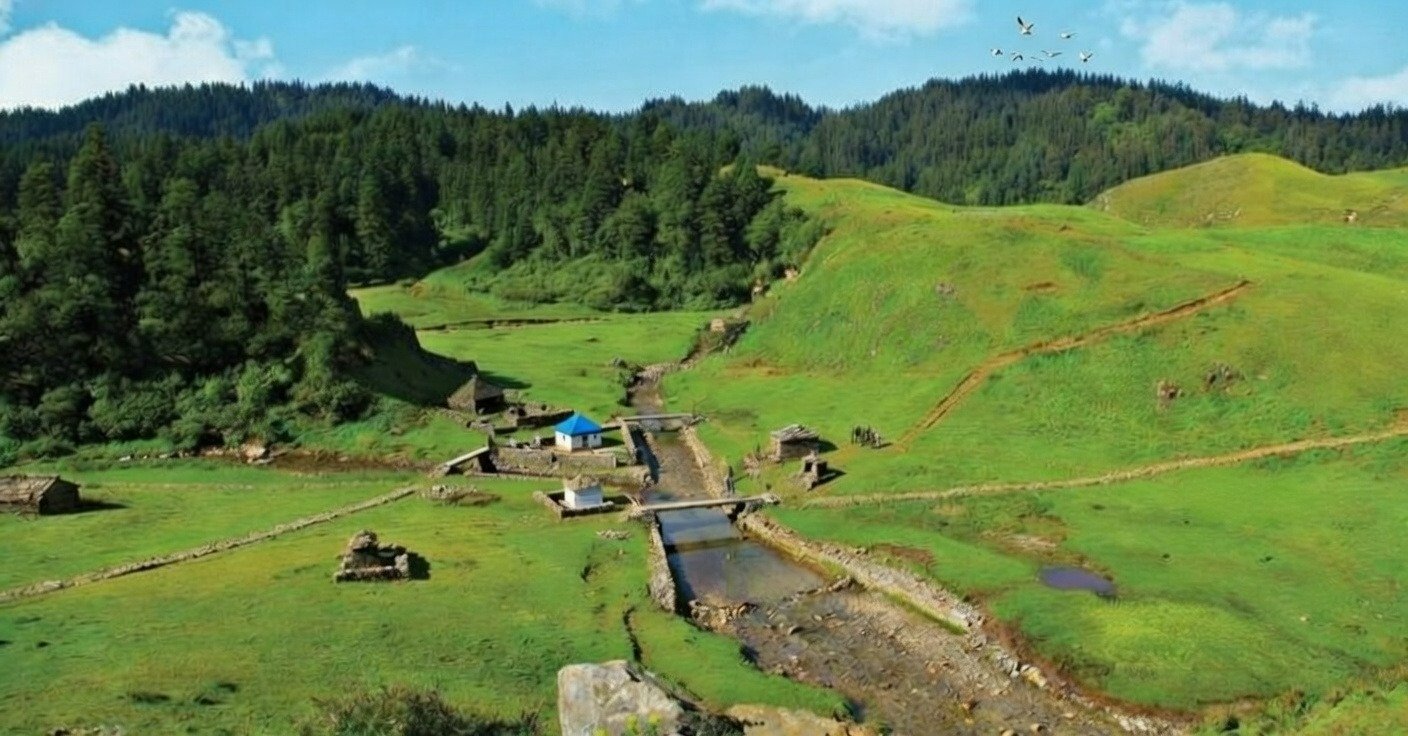
Food here is simple and filling. There is less variety than in the east or the Kathmandu Valley, but what you eat is honest and nourishing.
Common Foods in Western Nepal Homestays
The west of Nepal relies heavily on grains, foraged greens, and dried or fermented ingredients.
Gundruk Jhol is a soup made from fermented greens (gundruk) and is a daily staple in many western homes. It is sour, warming, and very nutritious.
Buckwheat Roti is a thick flatbread made from buckwheat flour. It is darker in color than regular roti, has a slightly bitter taste, and is incredibly filling. It is usually eaten with dal or a simple vegetable curry.
Kodo Ko Roti is a flatbread made from kodo millet, a grain commonly grown in the hills and western regions. It is dense and nutritious, and often served with yogurt or achar.
Meat is rare and special. In western Nepal, meat is usually eaten only during festivals or when a guest arrives. If your host kills a chicken for your meal, that is a significant gesture of hospitality.
What Every Nepali Homestay Meal Has in Common
No matter which region you stay in, there are some things about Nepali homestay food that stay the same everywhere.
Achar Is Always on the Table
Achar means pickle or chutney. Every Nepali meal includes at least one kind of achar, and often several. The most common is a spicy tomato chutney, but you might also find:
Fermented radish pickle
Sesame seed chutney
Hemp seed chutney
Raw mango or tamarind chutney in the Terai
Many travelers end up loving the achar so much that they ask for the recipe before they leave.
Chiya Is Offered at All Times
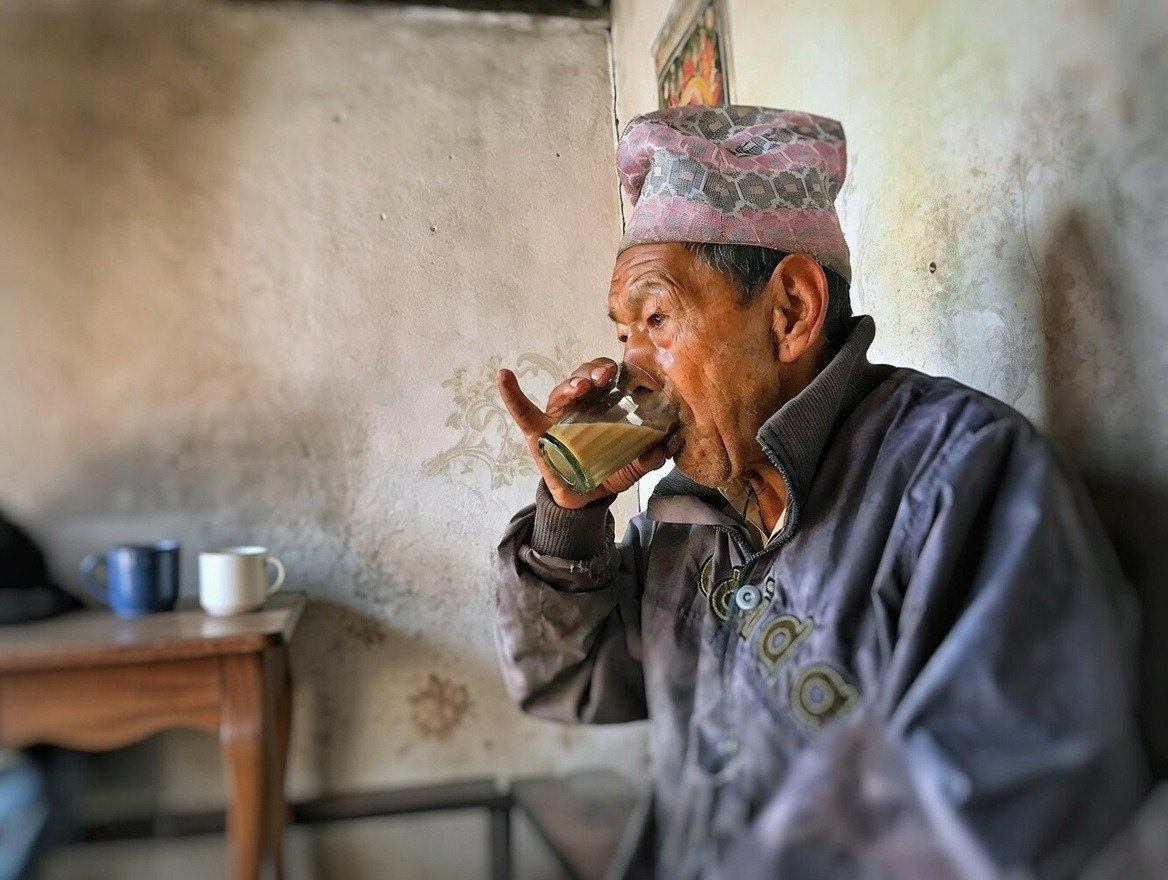
Chiya is Nepali spiced milk tea. It is made with black tea, fresh milk, sugar, and usually ginger, cardamom, and sometimes cinnamon. It is offered when you arrive, between meals, and when you leave.
Refusing tea is not rude, but accepting it is a warm way to connect with your host. Sit down, hold the glass with two hands as a sign of respect, and enjoy it slowly.
Meals Are Eaten with the Right Hand
Nepali people traditionally eat with the right hand. Using your left hand for food is considered unclean in the culture. If you want to try eating the local way, here are some tips:
Wash your hands thoroughly before sitting down
Use only your right hand to mix and pick up food
Roll the rice and dal together into a small ball with your fingertips
Dip the ball into curry and eat it in one bite
Try not to let food touch your palm, only your fingertips
If you are not comfortable eating with your hand, asking for a spoon is completely fine. No host will be offended.
Food Is a Form of Love
In Nepal, feeding someone well is one of the most direct ways to show that you care about them. Your host will watch you eat and will want you to enjoy everything. If you like something, say so. If you want more, accept it gratefully.
Being a good guest at a Nepali homestay is not about knowing all the dishes by name. It is about showing up with curiosity, eating with an open mind, and appreciating the effort that goes into every meal.
Dietary Considerations at a Nepal Homestay
If you have dietary restrictions, here is what you need to know before you arrive.
Vegetarian Travelers
Nepal is one of the best countries in the world for vegetarian travelers. Most dal bhat meals are completely vegetarian, and many families do not cook meat on a daily basis. Telling your host that you do not eat meat is easy, and they will simply prepare your meal without it.
Vegan Travelers
Vegan travelers will have a slightly harder time, since many Nepali dishes include ghee (clarified butter), yogurt, or dairy-based tea. However, with some advance notice, hosts can adjust. Dal bhat without ghee, cooked in mustard oil instead, is a delicious and fully vegan meal.
Gluten-Free Travelers
Rice is the main grain in most of Nepal, so gluten-free eating is manageable. Dhindo made from millet or buckwheat is also naturally gluten-free. The main things to watch for are roti (wheat flatbread) and momos (wheat dough dumplings).
Spice Sensitivity
Nepali food can be spicy, especially in the Terai. If you are sensitive to spice, tell your host before the meal. Most hosts are happy to cook a milder version. The word "piro" means spicy in Nepali, so you can simply say "ali ali piro" which means "a little bit spicy" or "piro chaina" which means "no spice please."
Tips for Making the Most of Your Homestay Food Experience
Here are some practical tips that will help you enjoy the food and connect more deeply with your host family.
Ask your host to teach you one recipe. Most hosts are genuinely happy to share their cooking knowledge. Even learning how to make achar or how to roll a momo together is a bonding experience.
Try everything that is offered at least once. Even if a dish looks unfamiliar, take a small bite. You will almost always be surprised by how good it is.
Drink only boiled or filtered water. Homestays usually serve boiled water, but ask to be sure. Never drink tap water or river water.
Bring a small gift from your home country. It does not need to be expensive. A pack of chocolate, some tea from your hometown, or a small craft item is a meaningful gesture of appreciation.
Compliment the food genuinely. If something is delicious, say so. The Nepali phrase "mitho chha" means "it is delicious" and using it will make your host's day.
Do not take photos of food or kitchens without asking first. Some communities have cultural or religious reasons for keeping kitchens private. Always ask before pointing your camera.
Eat slowly and enjoy the experience. A meal at a Nepali homestay is not just fuel. It is a window into a way of life that is completely different from most places in the world. Sit with it. Appreciate it.
Regional Food Quick-Reference Guide
Use this table when planning which region to visit based on the food experience you want.
Conclusion: Food as the Gateway to Nepal
If you want to really understand Nepal, eat in someone's home.
The food at a Nepali homestay is more than just a meal. It is a story about the land, the climate, the people, and the traditions that have shaped this country for thousands of years. A bowl of thukpa in the mountains, a plate of bara in Kathmandu, a Tharu feast in the Terai; each one takes you somewhere specific and real.
Every region of Nepal offers its own food experience, and every homestay family puts their own love into every dish they make. Go with an open mind, eat with both hands (well, your right one), and say "mitho chha" when it is good.
And it will almost always be good.
FAQ: Nepali Homestay Food by Region
What food is served at a homestay in Nepal?
Most homestays in Nepal serve dal bhat (rice and lentil soup with vegetables and pickle) as the main meal. Breakfast usually includes tea, beaten rice or roti, and sometimes eggs. The specific dishes vary by region, with Himalayan areas serving thukpa and dhindo, the Terai serving spicier, more varied food, and Kathmandu offering unique Newari dishes.
Is the food at a Nepal homestay safe to eat?
Yes, homestay food in Nepal is generally very safe because it is freshly cooked at high heat. The main thing to be careful about is drinking water. Always ask for boiled or filtered water and do not drink tap water. Avoid raw, uncooked vegetables or salads if you have a sensitive stomach.
Can vegetarians eat well at a Nepali homestay?
Absolutely. Most Nepali home cooking is naturally vegetarian or can easily be made vegetarian. Dal bhat with vegetables, dhindo with gundruk soup, and most Newari dishes can all be made without meat. Tell your host when you book your stay and they will plan accordingly.
What is the most common dish at a Nepali homestay?
Dal bhat is the most common dish at every homestay across Nepal. It is eaten twice a day by most Nepali families and is the foundation of every regional food tradition. The exact version of dal bhat you get will differ based on the region, the ethnic group of your host family, and the season.
What is the difference between food in the Himalayas and the Terai?
Himalayan food is designed to be warming, high in calories, and easy to make with limited fresh ingredients. You will find dishes like thukpa (noodle soup), butter tea, and dhindo (grain porridge). Terai food is tropical, spicy, and heavily influenced by India. You will find rice with ghee, fish and goat curries, and a wide variety of fresh fruits.
Is it rude to refuse food at a Nepali homestay?
Not accepting food at all can seem rude, especially if your host has cooked especially for you. The polite approach is to take a small portion and eat it, even if you are not very hungry. If you genuinely cannot eat something for health or dietary reasons, explain it with a smile and your host will understand.
What drinks will I be offered at a Nepali homestay?
Chiya (spiced milk tea) is the standard welcome drink in every region. In higher altitude areas, butter tea and tongba (warm fermented millet drink) are common. In Newari homes in Kathmandu, you might be offered raksi (homemade grain spirit). Clean water, usually boiled, is always available.
Do I need to eat with my hands at a Nepali homestay?
No, eating with your hands is a cultural tradition but not required for guests. You can always ask for a spoon or fork. However, if you want to try the local way, eating with your right hand is a fun and meaningful part of the homestay experience.
Company Admin
Travel writer sharing authentic stories and experiences from Nepal's beautiful homestays.