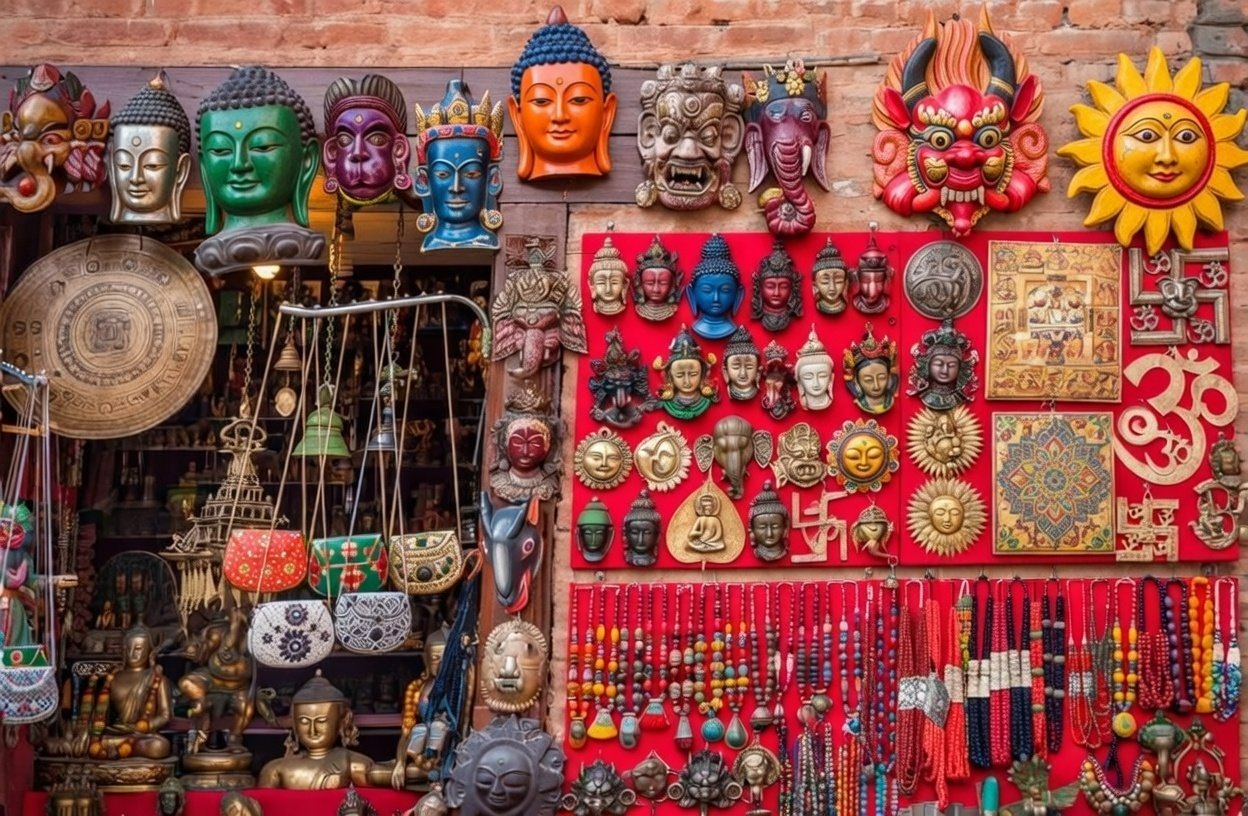
In a Nepal homestay, craft is not a souvenir. It is clay under your nails in Bhaktapur, counted threads on a Palpa loom, gold leaf on a thangka canvas in Patan. You learn slowly, inside a family home, where the skill is lived daily and shared, not performed.
Key Takeaways
Nepal has one of the richest craft traditions in Asia, including pottery, weaving, thangka painting, and handmade paper making.
A homestay puts you inside a family home where these crafts are part of real daily life, not a show put on for visitors.
Most programs require zero prior experience and welcome complete beginners.
Learning a craft directly from a Nepali family helps keep that tradition alive and puts money directly into the household.
The best Nepal craft homestays involve at least three to five days of hands-on practice, not a one-hour demonstration.
Nepal-specific keywords like "pottery homestay Nepal" and "weaving village Nepal" are good starting points when searching for programs.
Why Nepal Is One of the Best Places in the World to Learn Traditional Crafts
Nepal sits at a crossroads of some of the oldest craft traditions in Asia. Tibetan, Newari, and indigenous hill community influences have blended over centuries to create a craft culture that is unlike anywhere else. Many of these skills are still practiced the same way they were hundreds of years ago, not as museum pieces but as living, everyday skills.
The Newari people of the Kathmandu Valley are especially known for their craftsmanship. Pottery towns like Bhaktapur and Thimi have been producing handmade clay work for over a thousand years. Weaving communities in the hills still use traditional hand looms to make the fabrics worn at festivals and ceremonies. Thangka painters in Kathmandu train for years under family masters before they are trusted to work on a full painting alone.
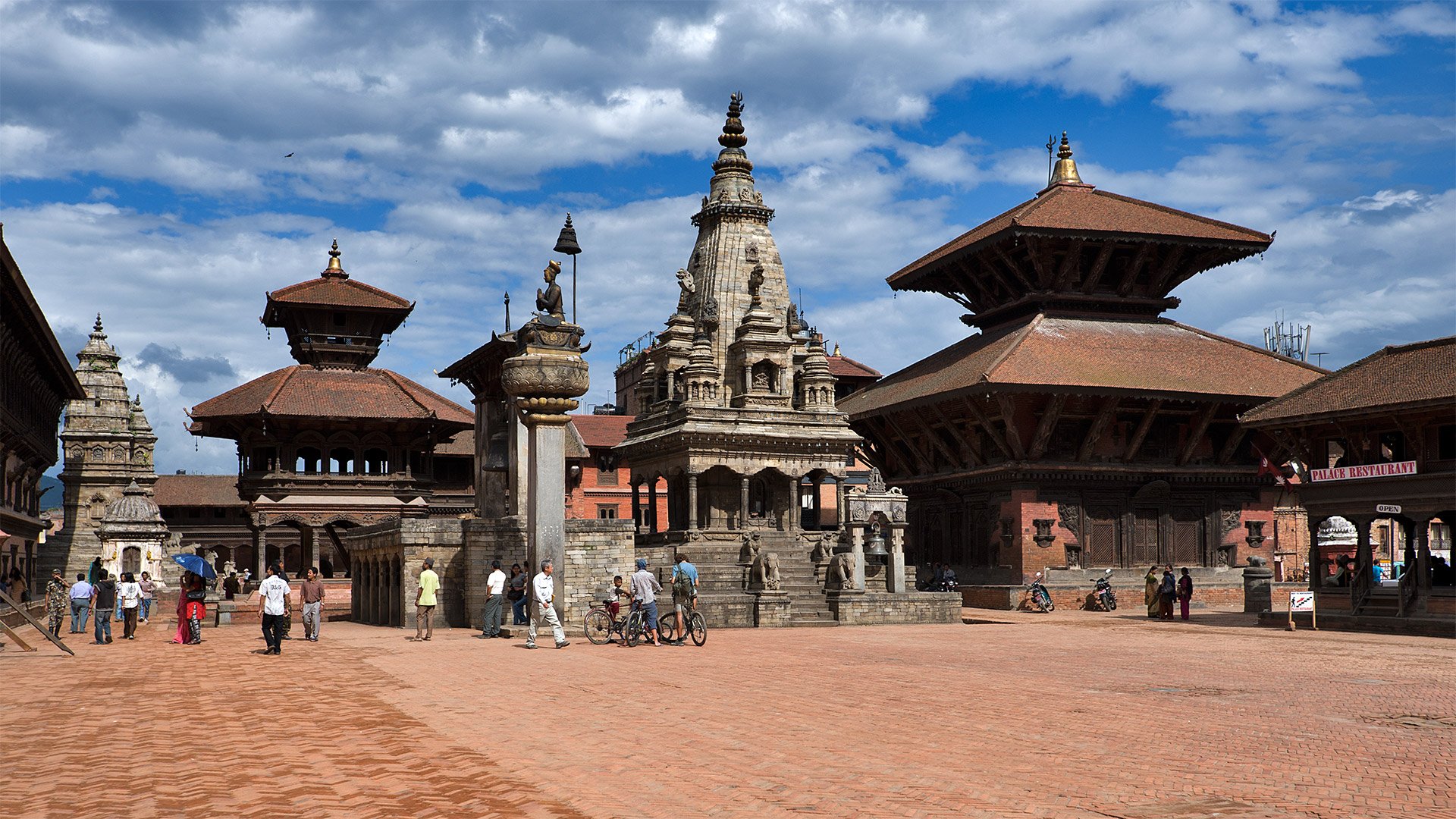
UNESCO has recognized several of Nepal's craft traditions as part of the world's intangible cultural heritage. At the same time, many of these crafts are under real pressure as younger generations move to cities and cheaper imported goods replace handmade ones. Homestay programs that connect travelers with craft-practicing families create a direct financial reason for those families to keep teaching and keep practicing. And for travelers who care about culture beyond just crafts, Nepal homestays for culture lovers offer a way to live inside festivals and village life alongside the same families teaching these skills.
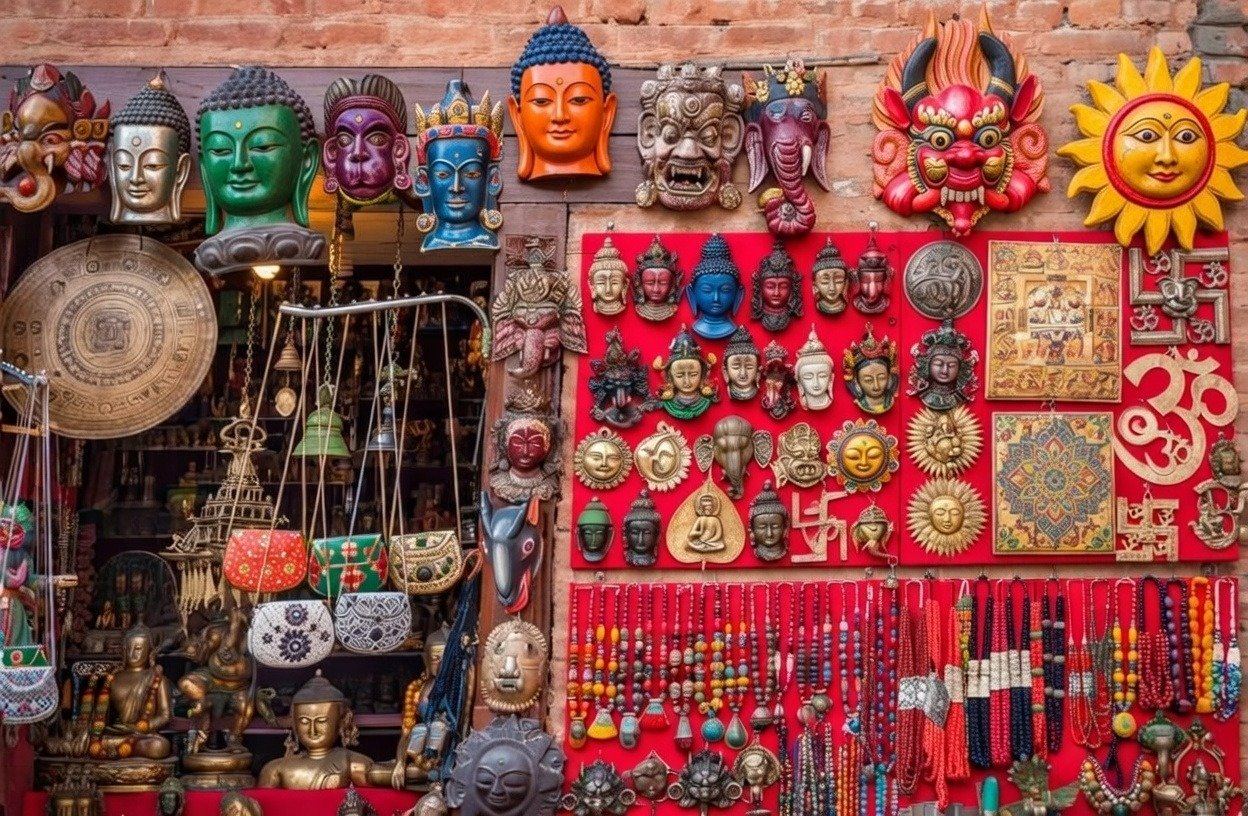
The Main Crafts You Can Learn Through a Nepal Homestay
Here is an overview of the craft experiences most commonly available through Nepal homestay programs.
None of these require experience to get started. What they do require is patience, a willingness to try things slowly, and comfort with making mistakes in front of someone who is very, very good at what they are teaching you.
Pottery: Learning From the Families of Bhaktapur
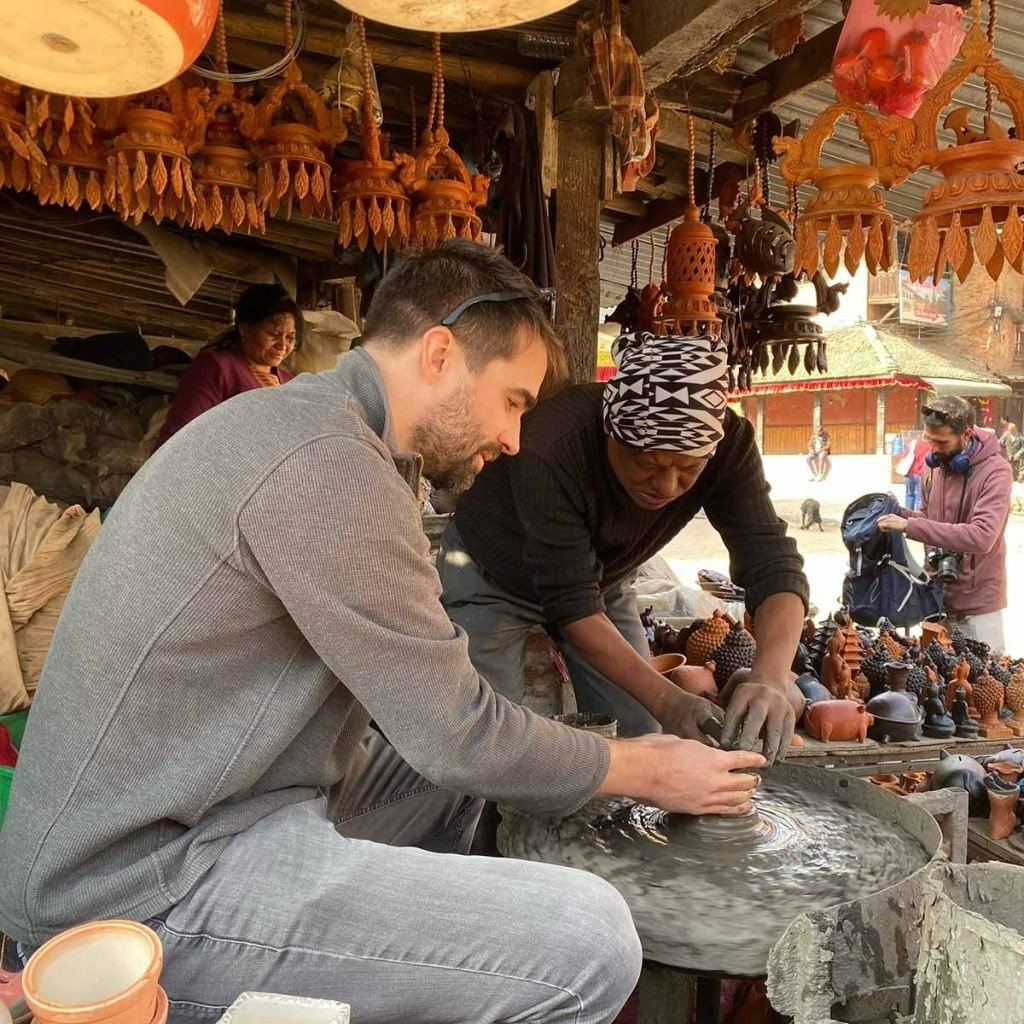
If you want to learn pottery in Nepal, Bhaktapur is where you go. The old city has a neighborhood called Pottery Square, and it is exactly what it sounds like. Families have been shaping clay here for over a thousand years. On a normal morning you will see finished pots drying in the sun, wheels turning in open courtyards, and children watching their parents work in the same way those parents once watched their grandparents.
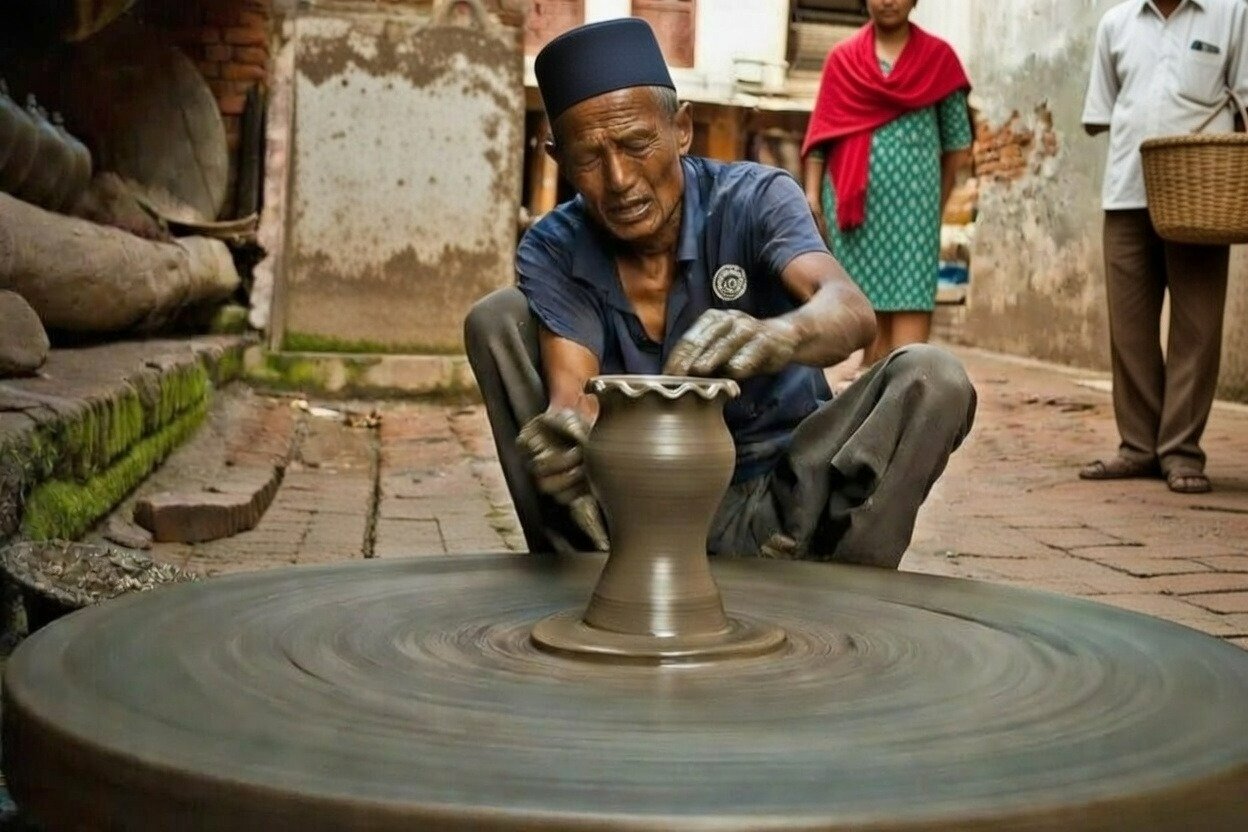
Traditional Nepali pottery uses a foot-powered wheel that is different from the electric wheels most people have seen in hobby studios. The technique takes more body coordination and feels strange at first. But that is part of what makes learning it meaningful. You are not just picking up a generic skill. You are learning a specific and ancient way of working.
A pottery homestay in Bhaktapur or nearby Thimi typically covers the following:
Preparing the clay by hand removes impurities and air pockets, and this step alone teaches you how much work goes into the material before anything is even shaped.
Learning the foot wheel rhythm is the hardest part for most beginners, and your host will demonstrate it many times before you find your footing, literally.
Shaping basic forms like pots and bowls is where the real practice happens, and you will go through several collapsed attempts before something starts to hold its shape.
Smoothing and decorating with traditional patterns is where the cultural meaning comes in, and your host will often explain what certain shapes and markings represent in Newari tradition.
Watching the drying and firing process if your stay is long enough, because seeing a finished piece come out of the kiln gives the whole experience a proper ending.
Many pottery families in Bhaktapur have been hosting learners for years and are warm, patient teachers. The experience of learning in their courtyard, surrounded by the old architecture of the city, is something you cannot get anywhere else. Meals between sessions are just as memorable, and if you want to know what to expect on the plate, a traveler's guide to Nepali homestay food by region is a good place to get familiar before you arrive.
Weaving: Dhaka Fabric and Hill Loom Traditions
Nepal has two main weaving traditions that travelers can learn through homestays. The first is Dhaka weaving, a colorful hand-loom technique originally from the Palpa district in western Nepal. The second is the broader hill community tradition of backstrap and frame loom weaving found in villages across the middle hills.
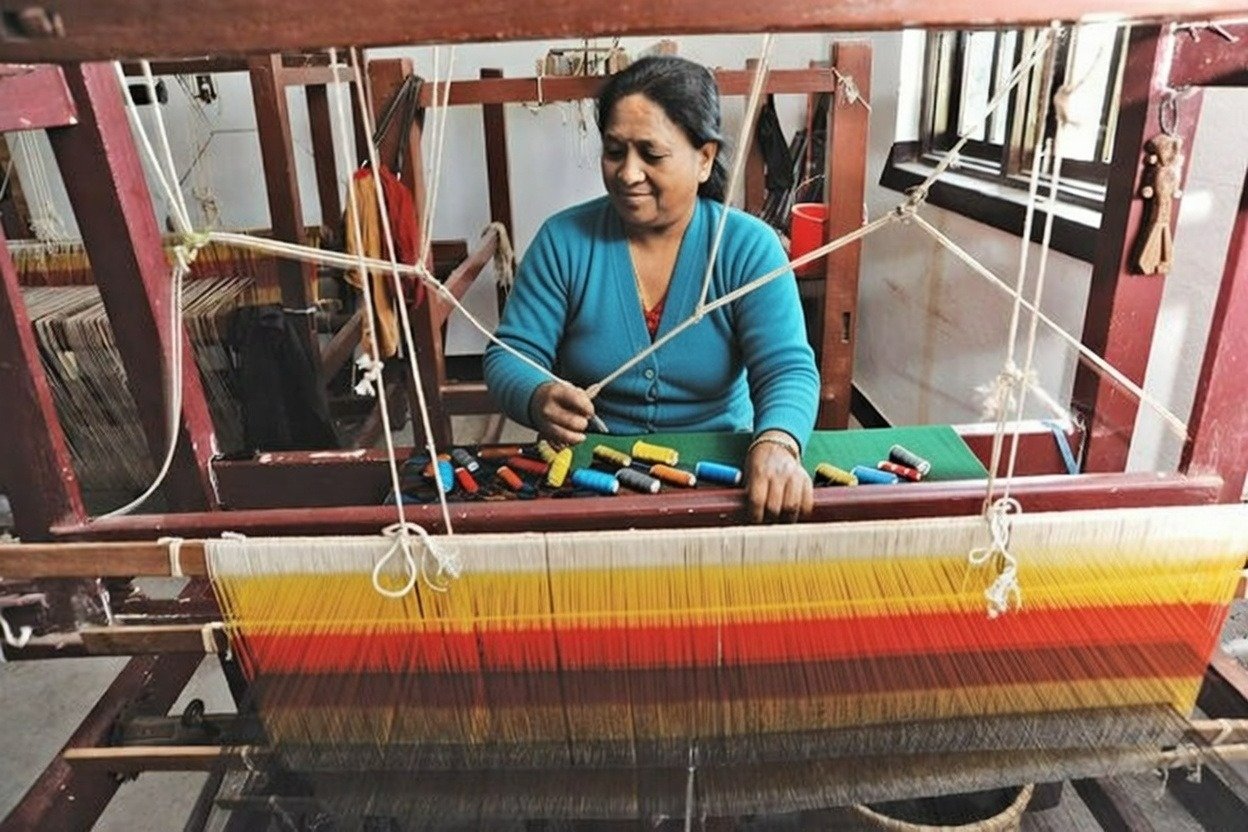
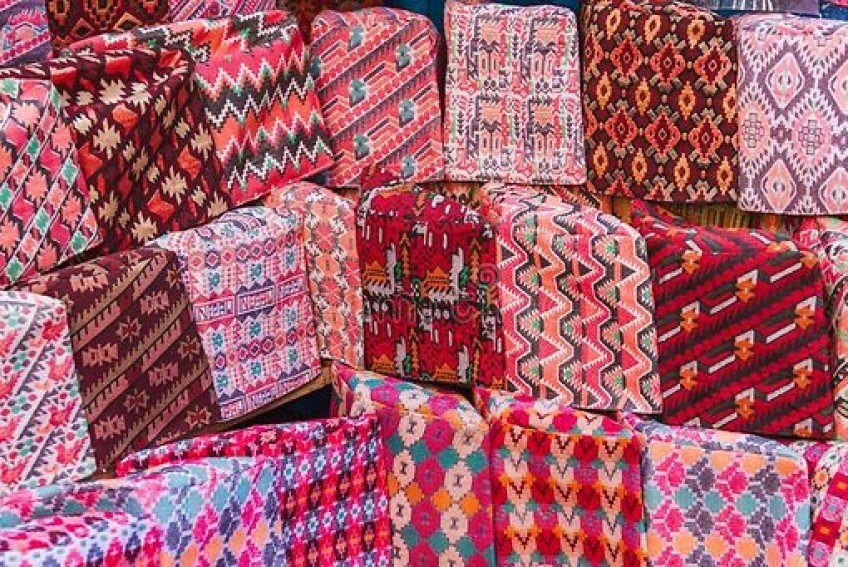
Dhaka fabric is woven in tight geometric patterns using cotton thread on a traditional wooden loom. It is used to make the cloth for traditional Nepali topi hats, shawls, and festival clothing. The patterns are complex and take years to master fully, but the basic technique can be learned in a few days with a patient teacher. Palpa town is the most well-known place to learn Dhaka weaving, and several families there have been weaving and teaching for generations.
In hill villages, weaving is often part of daily household production. Families weave cloth for their own use, making blankets, clothing, and carrying cloths on simple looms set up inside the home or on the porch. Learning here feels less like a lesson and more like joining someone's afternoon routine.
Here is what a weaving homestay experience in Nepal generally includes:
Learning to set up and thread the loom is time-consuming and is often skipped in short tourist workshops, but doing it yourself is essential for understanding how the craft actually works.
Understanding how patterns are planned and counted before any weaving begins, because in Dhaka weaving especially, every row has to be thought about in advance.
Practicing the rhythm of the shuttle and the foot pedals until it starts to feel less like a puzzle and more like a physical habit you are building slowly.
Hearing the family history connected to specific patterns, because many Dhaka designs are tied to particular towns, seasons, or occasions and carry meaning beyond just looking nice.
Finishing a small piece of cloth yourself that you can take home, which most programs make possible even within a short stay.
Thangka Painting: The Craft That Asks the Most of You
Thangka painting is in a different category from pottery or weaving. It is a highly detailed Buddhist art form that depicts deities, mandalas, and spiritual scenes on cloth or paper. Professional thangka painters train for many years before they are considered skilled. You will not become a thangka painter in a week.
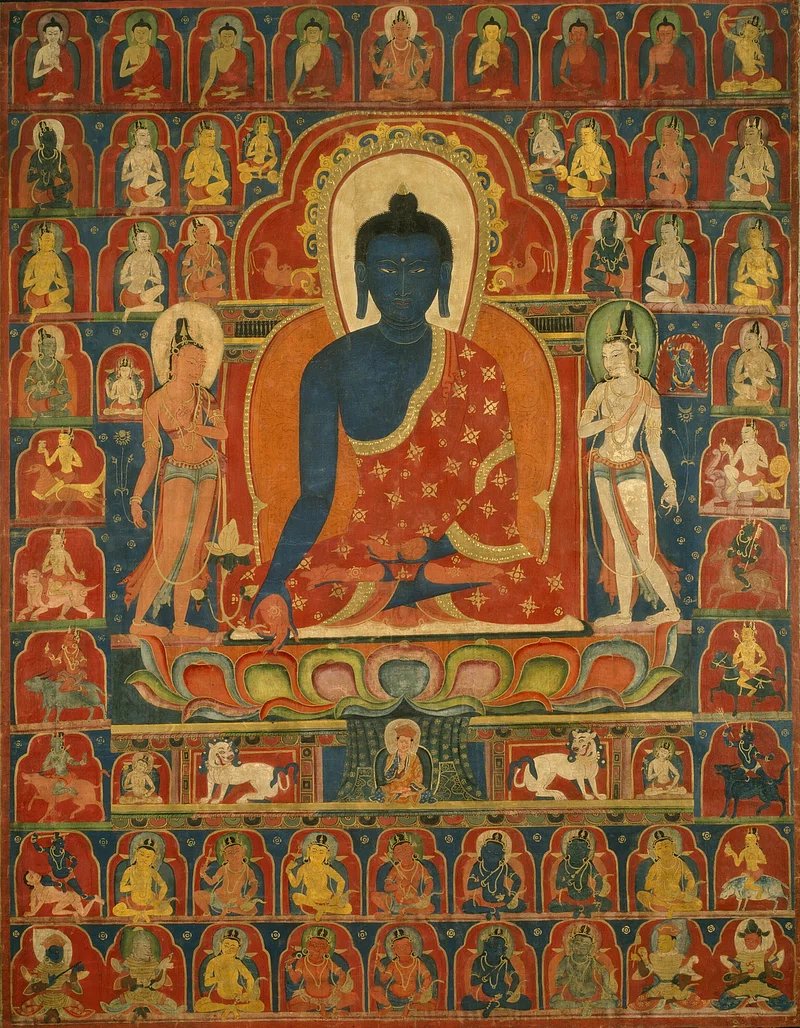
But you can learn the foundations. And doing so inside a family home in Bhaktapur or Patan, under the guidance of someone who has practiced this art their entire life, is one of the most memorable craft experiences Nepal offers.
A beginner thangka homestay typically covers these steps:
Preparing the canvas by coating and smoothing it is a careful, slow process that teaches you right away that this is a craft where rushing is not an option.
Learning to sketch the basic geometric grids that all thangka compositions are built on, which shows you the mathematical precision behind what looks like pure artistry.
Mixing and applying mineral pigments using traditional techniques, including gold where appropriate, and understanding why the colors carry specific symbolic meaning in Buddhist teaching.
Practicing fine brushwork on simple details before attempting any figures, because the level of control required takes real time to develop even slightly.
Understanding the iconography, meaning which deity has which symbols, postures, and colors, so that what you are painting starts to make sense as a whole.
Even a basic five to seven day introduction to thangka painting will leave you with a completely new understanding of this art form and a deep respect for the people who have dedicated their lives to it.
Lokta Paper Making and Felt Crafts: Shorter but Equally Rewarding
Not every craft homestay needs to be a week long. Two of Nepal's most distinctive crafts, lokta paper making and wool felt work, can be learned meaningfully in one to three days and are a great fit for travelers with a shorter schedule.
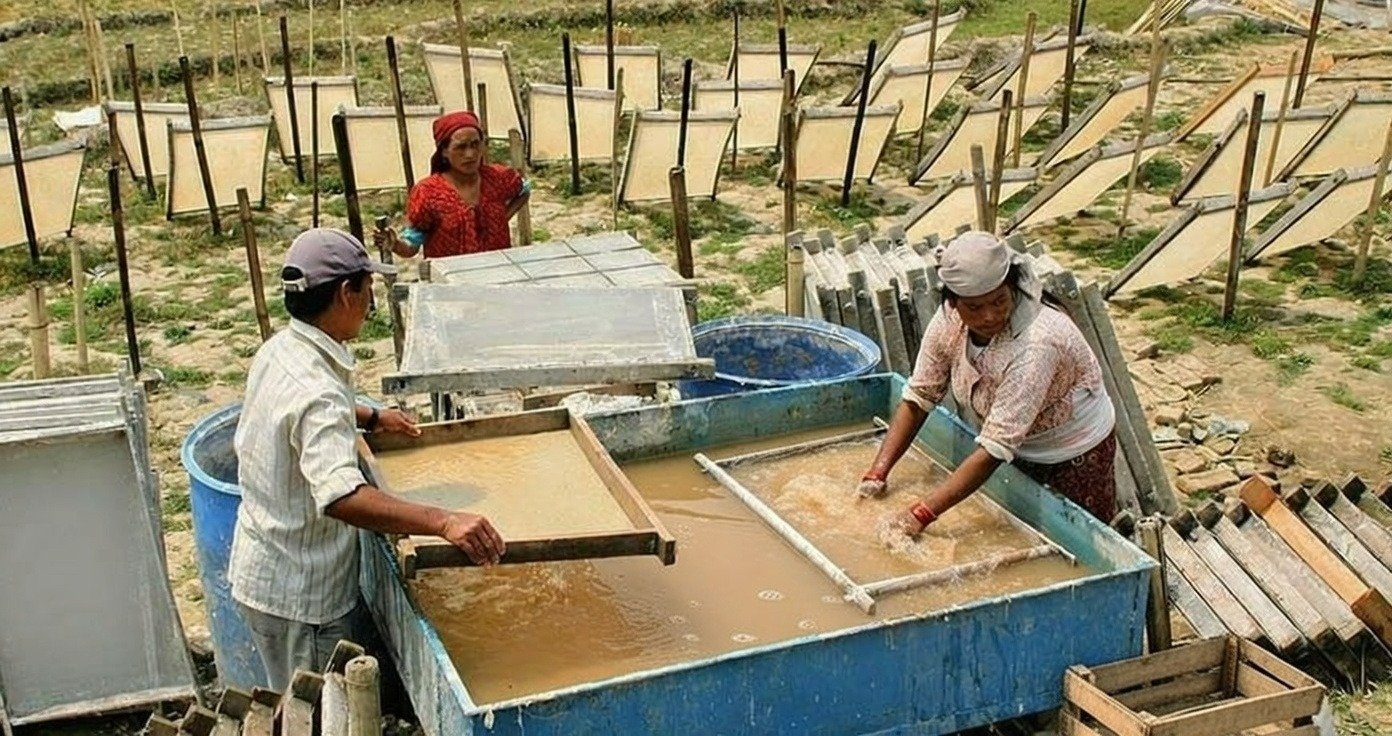
Lokta paper is made from the bark of the lokta bush, which grows in Nepal's highland forests. The bark is boiled, beaten into a pulp, spread on frames, and dried in the sun to create thick, textured sheets that are used for traditional books, wrapping, and art. The process is simple enough to learn quickly and satisfying in a very direct, physical way.
Felt crafts using Nepali wool, often from highland sheep or yaks, are another option. Families in Pokhara and Kathmandu make felt animals, slippers, bags, and decorations using a wet felting technique that is easy to learn and endlessly creative. Many homestay programs that include felt crafts also show you how the wool is sourced and prepared before it becomes the finished product.
Here is a quick comparison of these two crafts for travelers deciding between them.
Both are excellent entry points into Nepali craft culture, especially if this is your first homestay experience or if you are traveling with children.
What Makes a Nepal Craft Homestay Worth Your Time
Not every program that advertises craft learning in Nepal delivers a real experience. Some are genuine family homestays where the craft is part of daily life. Others are closer to tourist workshops with a bed attached. Here is how to tell the difference before you book.
The host family should be the teacher, not a separate instructor brought in for guests, because the personal relationship between learner and teacher is what makes the experience genuine and not just a class in someone's spare room.
Check how many hours of hands-on practice are included each day, because a program that offers two hours of crafting and fills the rest with sightseeing is not really a craft learning homestay.
Read reviews that mention specific skills or moments, not just general praise, because detailed reviews from past guests are the clearest sign that real learning happened during the stay.
Ask whether you leave with something you made yourself, because programs serious about skill transfer make sure guests have a finished object to take home, even if it is imperfect.
Look for programs connected to local cooperatives or cultural organizations, because these tend to have stronger accountability and more genuine community involvement than privately run tourist operations. If you are traveling with children, family-friendly activities in Nepal homestays are worth looking into alongside the craft programs, since many families offer both.
How Nepal Craft Homestays Support Local Families and Keep Traditions Alive
When you pay for a craft homestay in Nepal, most of that money goes directly into a family household. This is very different from buying a souvenir in a shop, where the family who made it may receive only a small share of what you pay.
According to the World Crafts Council, artisan craft production is one of the largest sources of rural income in developing countries, second only to farming in many regions. In Nepal specifically, craft income is a major part of the economy in towns like Bhaktapur and Palpa. When that income comes through direct homestay programs rather than through export chains or tourist shops, a much bigger share stays with the people doing the actual work.
Many traditional crafts in Nepal are genuinely at risk of disappearing within a generation. Young people in craft families often face a real choice between continuing a skill that earns unpredictably and moving to a city for steadier work. When homestay programs create reliable income from teaching, they change that calculation. Some guests go even further, and if you want to understand how that works, the story of how homestay guests fund rural education in Nepal shows what a longer-term relationship between visitor and family can look like. Your visit gives a family a good reason to keep practicing and to teach their children to do the same.
Final Thoughts
A pot shaped badly on your first try, then slowly improved with a family elder guiding your hands. A strip of Dhaka fabric you wove yourself, knowing now what every step of that process feels like. A square of lokta paper drying in a Kathmandu courtyard, made from bark that grew in the hills above the valley.
These are not things you buy. They are things you do, with people who have done them their whole lives, in places where the craft is still part of how a family makes its living and keeps its identity.
Nepal makes this kind of travel genuinely possible. The craft traditions are alive, the families are welcoming, and the homestay programs that connect travelers with those families are among the most meaningful experiences the country has to offer.
If you are ready to try it, picking up a few Nepali phrases for homestay guests before you arrive will make your first conversation with a host family feel much warmer from the start. Then explore Nepal homestay programs that include hands-on craft learning. Whether you want to shape clay in Bhaktapur, learn to weave in Palpa, or try your first brushstroke on a thangka canvas in Patan, there is a family in Nepal ready to teach you. All you have to do is show up willing to learn.
Browse Nepal homestay programs with craft learning and find the experience that fits your trip.
FAQ
Do I need any craft experience before joining a Nepal homestay?
No experience is needed for any of the crafts listed in this guide. Host families in Nepal are used to teaching complete beginners and will adjust their pace to match yours. Being curious and patient matters far more than any prior skill.
Which craft is best for a short visit to Nepal?
If you have only one to two days, lokta paper making or wool felt crafts are the most accessible. If you have three to five days, pottery in Bhaktapur or Dhaka weaving in Palpa will give you a more complete and memorable experience.
Will I be able to bring home what I make?
In most cases, yes. Paper, felt objects, and small woven pieces travel easily. Pottery needs to dry and sometimes be fired first, so check timing with your host before booking if taking your piece home matters to you.
Is it respectful to learn sacred crafts like thangka painting as an outsider?
Thangka painting is widely taught to respectful learners in Nepal, including foreigners, as long as the learning is approached with seriousness and genuine interest. Most teachers appreciate students who take the art form seriously and are happy to explain its spiritual significance as part of the teaching. Your host will let you know if any aspect of the craft is considered private or sacred.
How do I find a genuine craft homestay in Nepal rather than a tourist workshop?
Look for programs connected to community cooperatives, NGOs, or cultural organizations rather than large travel agencies. Ask specific questions about who teaches, how many hours of practice are included, and whether past guests have photos of things they made. Reading detailed traveler reviews on platforms like Responsible Travel or reaching out to organizations like the Nepal Crafts Council can help you identify the real experiences.
Can children join craft homestays in Nepal?
Many Nepali host families love teaching children and are very patient with younger learners. Lokta paper making and felt crafts are especially good for kids. Always check age recommendations with the specific program before booking.
Company Admin
Travel writer sharing authentic stories and experiences from Nepal's beautiful homestays.